
Daily Dose Of Jazz…
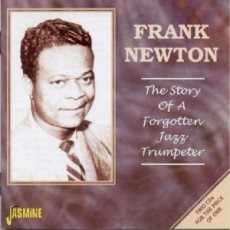
Frankie Newton was born William Frank Newton on January 4, 1906, growing up in Emory, Virginia. The trumpeter’s mellow and thoughtful style sometimes seemed out of place in during the swing era, however, he played in several New York bands in the 1920s and 1930s, including bands led by Lloyd Scott, Elmer Snowden, Cecil Scott, Sam Wooding, Chick Webb, Charlie Barnet, Andy Kirk and Charlie “Fess” Johnson.
In the 40s he played with bands led by Lucky Millinder, Pete Brown and Mezz Mezzrow. He played in clubs in New York and Boston, with musicians such as pianist James P. Johnson, drummer Sid Catlett and clarinetist Edmond Hall.
He accompanied Bessie Smith on her final recordings (November 24, 1933), Maxine Sullivan on “Loch Lomond” and several of Billie Holiday’s Café Society recordings, most notably Strange Fruit in 1939.
Although the lyrical trumpeter had a relatively brief but artistically rewarding career producing a couple of recordings, “At The Onyx Club” and “At The Cotton Club”, by the end of the 40’s he became less interested in music and gradually faded from the scene and concentrating more on painting.
Politically, Newton was known to be a communist and as an homage, historian Eric Hobsbawn has written jazz criticism for the New Statesmen under the pen name “Francis Newton”. Trumpeter Frankie Newton passed away on March 11, 1954 in New York City.

More Posts: trumpet
Daily Dose Of Jazz…
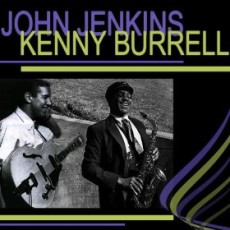
The hard bop alto saxophonist John Jenkins was born January 3, 1931 in Chicago, IL where he initially studied clarinet in high school but switched to saxophone after six months on the instrument. He played in jam sessions led by Joe Segal at Roosevelt College from 1949-1956 going on to play with Art Framer in 1955 and led his own group in Chicago later that year.
Jenkins had a sound similar to Jackie McLean and the 50’s saw his most active period. In 1957 he played with Charles Mingus s and recorded two albums as a leader, “Jenkins, Jordan & Timmons” on the New Jazz label and “John Jenkins with Kenny Burrell” on Blue Note.
He played as a sideman with Donald Byrd, Hank Mobley, Paul Quinichette, Clifford Jordan, Sahib Shihab and Wilbur Ware. in the late 1950s and early 1960s, but essentially dropped out of music after 1962, aside from a few dates with Gloria Coleman.
After leaving the jazz world John worked as a messenger in New York and dabbled in jewelry; he sold brass objects at street fairs in the 1970s. After 1983 he began practicing again and playing live on street corners and he played with Clifford Jordan shortly before his death on July 12, 1993.

More Posts: saxophone
Daily Dose Of Jazz…
Cristian Amigo was born January 2, 1963 in Santiago, Chile. He emigrated with his family to the United States as a young child. At 12 years old, he began studying guitar seriously and two years later the family moved to Miami and began performing with a rock band he formed, Six Feet Under. He attended Hialeah-Miami Lakes Senior School and while a student there taught classes in guitar to his peers. During high school he took courses in music theory, classical guitar and jazz at Miami-Dade Community College.
Amigo entered the music program at Florida State University at age 17, studied classical guitar, then enrolled in the University of Miami and became an active recording session player. His first recording session at age 17 was with Narada Michael Walden prior to moving to Los Angeles to continue his education studying jazz with Kenny Burrell and composition with Wadada Leo Smith, earning a doctorate in Ethnomusicology.
Cristian would go on to become a film composer, bandleader, music producer, jingle producer, concert producer and music teacher at Plaza de la Raza and others. He has performed in African, Arabic, funk, hard rock, free jazz, jazz, and reggae groups working with Hans Zimmer, Wadada Leo Smith, David Ornette Cherry and Carlos Hayre.
His awards include Guggenheim and Van Leir Fellowships, he has been produced by Brooklyn Philharmonic, New York Foundation for the Arts, American Composers Forum, Danish Arts Council among numerous others. Amigo moved to New York City from Los Angeles in 2003 and quickly established himself on the Latin music, free improv, “new music”, and theater scenes, and continues to perform, record and produce.

More Posts: guitar
Daily Dose Of Jazz…
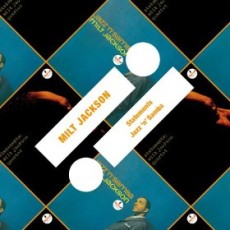
Milt Jackson was born Milton Jackson on January 1, 1923 in Detroit, Michigan. Discovered by Dizzy Gillespie and hired in 1946 for his sextet and also for his larger ensembles. He quickly acquired experience working with the most important figures in jazz of the era, including Woody Herman, Howard McGhee, Thelonious Monk and Charlie Parker.
In the Gillespie big band, Jackson fell into a pattern that led to the founding of the Modern Jazz Quartet. He was part of Gillespie’s small group swing tradition within a big band, consisting of pianist John Lewis, bassist Ray Brown and drummer Kenny Clarke. They would become a working group in their own right around 1950 and became the Milt Jackson Quartet but by the time Percy Heath replaced Ray Brown, in 1952 they became the Modern Jazz Quartet.
After some twenty years the MJQ disbanded in 1974 and Jackson pursued more money and his longed for improvisational freedom. The group reformed in 1981, however, and continued until 1993, after which Jackson toured alone, performing in various small combos, although agreeing to periodic MJQ reunions.
He recorded prolifically, his tunes, “Bluesology”, “Bags & Trane”, “The Late, Late Blues” and “Bag’s Groove” are jazz standards. He has recorded with J.J. Johnson, Roy McCurdy, B.B. King, John Coltrane, Wes Montgomery, Hank Mobley, Oscar Peterson, Stanley Turrentine, Don Sebesky, Cannonball Adderley and Ray Charles on the very short list.
A very expressive player, Bags, as he was affectionately known and referring to the bags under his eyes from staying up all night, differentiated himself from other vibraphonists in his attention to variations on harmonics and rhythm. He became one of the most significant vibist and was at the top of his game for 50 years playing bop, blues, and ballads with equal skill and sensitivity. Vibraphonist Milt Jackson, thought of as a bebop player but equally remembered for his cool swinging solos, left the jazz world on October 9, 1999 in Manhattan, New York.

More Posts: vibraphone
Daily Dose Of Jazz…
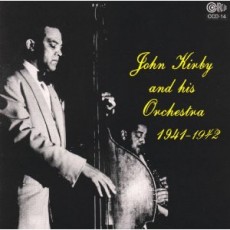
John Kirby was born in Winchester, Virginia on December 31, 1908 though some sources say he was born in Baltimore, Maryland orphaned, and adopted. He hit New York at 17, but after his trombone got stolen, he switched to tuba.
Kirby joined Fletcher Henderson’s orchestra as a tuba player in 1929. In the early 1930s, he performed some amazingly complicated tuba work on a number of Henderson’s recordings. He picked up on the double bass at the time when tuba was falling out a favor as the primary bass instrument of jazz bands.
About 1933 Kirby left Henderson to go with Chick Webb, went back with Henderson, then with Lucky Millinder and briefly led a quartet in 1935 but generally kept busy as bassist in others’ groups. Securing a gig at the Onyx Club and really got going as a bandleader in 1937. Soon the sextet was known as the Onyx Club Boys.
“The Biggest Little Band in the Land,” as it was called began recording in August 1937 and immediately had a hit with a swing version of “Loch Lomond” and though the group’s name would vary with time this would become one of the more significant “small groups” in the Big Band era and was also notable for making the first recording of the Shavers song “Undecided”. He recorded with Maxine Sullivan for Vocalion Records and accompanied Billie Holiday.
John tended toward a lighter, classically influenced style of jazz, often referred to as chamber jazz. He kept trying to lead a group in clubs and in the studio, occasionally managing to attract such talents as Dizzy Gillespie, Benny Carter, Ben Webster, Clyde Hart, Budd Johnson and Zutty Singleton and Sarah Vaughan.
As John Kirby’s career declined, he drank too much, was beset by diabetes and moved to Hollywood, California, where he died on June 14, 1952 just before a planned comeback.