


THE OX NOY TRIO
Every once in a while, an opportunity comes along that reminds me why I built The Velvet Note in the first place. This is one of those weekends. Our Signature Series welcomes guitarist Oz Noy, one of the most original voices in contemporary jazz and fusion, joined by legendary drummer Dave Weckl and brilliant Hammond B-3 master Brian Charette.
Individually, each of these musicians has earned the respect of audiences and fellow artists around the world. Together, they create something that’s spontaneous, fearless, and impossible to predict. It’s the kind of music that can only happen when extraordinary musicians trust each other enough to take chances—and invite us along for the ride. About the musicians:
Oz Noy ~ Internationally acclaimed guitarist known for blending jazz, blues, funk, and rock into a uniquely original style. HE Has performed and recorded with artists including Eric Johnson, Mike Stern, Richard Bona, and Vinnie Colaiuta.
Dave Weckl ~Widely regarded as one of the most influential drummers of the modern era and a longtime member of the Chick Corea Elektric Band. Multiple Modern Drummer magazine award winner whose recordings and educational materials have inspired generations of drummers worldwide.
Brian Charette ~ Grammy-nominated Hammond B-3 organist celebrated for redefining the role of the jazz organ in contemporary music. e hHas performed and recorded with leading artists including Paul Simon, Joni Mitchell, Chaka Khan, and many of today’s top jazz musicians.
Cover: $64.00
More Posts: adventure,bandleader,club,drums,genius,guitar,instrumental,jazz,music,organ,preserving,travel
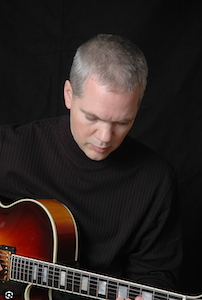
DAVE FRANKENPOHL
Guitarist Dave Frackenpohl brings his Trio featuring vocalist .Lavahi and bassist Kevin Smith to the stage with a stirring combination of original music and loved favorites to Churchill Grounds Dave has been lauded by his peers as breathing life into incredible originals that speak to the heart as well as stimulate the imagination.
Combining his skills with the soaring and soulful singing of Lavahi and the grounded virtuosity of Kevin Smith, the show is sure to bring a smile to your face whether you’re a long time jazz fan or bringing a date for your first experience.
Cover: $25.00
More Posts: adventure,bandleader,bass,club,genius,guitar,jazz,music,preserving,travel,vocal
Daily Dose Of Jazz…
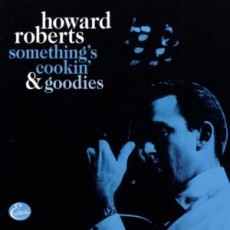
Howard Roberts was born on October 2, 1929 in Phoenix, Arizona and began playing guitar at age 8. By age15 he was playing professionally locally. 1950 saw him moving to Los Angeles, California where he began jamming with Sonny Stitt, Dexter Gordon and Buddy DeFranco and working with musicians, arrangers and songwriters including Neal Hefti, Henry Mancini, Bobby Troup, Chico Hamilton, George Van Eps and Barney Kessel. 1952 was the year Roberts played on his first record date, Jam Session No. 10 with Gerry Mulligan and Jimmy Rowles. Around 1956, Bobby Troup signed him to Verve Records and he decided to concentrate on recording, both as a solo artist and session musician.
Roberts played rhythm guitar, lead guitar, bass and mandolin in the studio, for television and movie projects on such projects as The Twilight Zone, The Munsters, I Dream of Jeannie. He would work on Julie London’s Blue Moon recording, with Peggy Lee, George Auld, Shelley Fabares, Chet Atkins, Dean Martin, The Monkees, Roy Clark and many others. As a member of The Wrecking Crew,and part of Phil Spector‘s Wall of Sound, in 2007 he was inducted into the Musicians Hall of Fame and Museum in Nashville, Tennessee.
In 1961, Howard designed a signature guitar with a round sound hole and single pickup that was originally produced by Gibson’s Epiphone division. Two years later he recorded his first two albums of nine with Capitol, before signing with ABC/Impulse Records. From the late 1960s, Roberts began to focus on teaching, traveling around the country giving guitar seminars, and writing several instructional books.
For some years he also wrote an acclaimed column “Jazz Improvisation” for Guitar Player magazine and founded the Guitar Institute of Technology and Playback Publishing. Guitarist Howard Roberts died of prostate cancer in Seattle, Washington on June 28, 1992, leaving a jazz catalogue of more than two-dozen albums as a leader and sideman.
More Posts: guitar

STANLEY JORDAN TRIO
In a career that took flight in 1985 with commercial and critical acclaim, guitar virtuoso and 4-time Grammy nominated Stanley Jordan has consistently displayed a chameleonic musical persona of openness, imagination, versatility and maverick daring.
Be it bold reinventions of classical masterpieces or soulful explorations through pop-rock hits, to blazing straight ahead jazz forays and ultramodern improvisational works-solo or with a group, Jordan can always be counted on to take listeners on breathless journeys into the unexpected.
Stanley has collaborated and share the stage with many greats including Art Blakey, Richie Cole, Stanley Clarke, Kenny Rogers, Kevin Eubanks, Sharon Isbin, Muriel Anderson, the Dave Matthews Band, the String Cheese Incident, Phil Lesh, Moe and Umphrey’s McGee.
The Trio:
Stanley Jordan ~ guitar
Kenwood Dennard ~ drums
Wes Wirth ~ bass
Cover: $45.00 ~ $55.00 | $4.16 ~ $4.86 fee
Streaming: $15.00 + $2.05 fee
More Posts: adventure,bandleader,bass,club,drums,genius,guitar,instrumental,jazz,music,preserving,travel

Requisites
Movin’ Along ~ Wes Montgomery | By Eddie Carter
Submitted for your approval this morning is an overlooked, underrated gem by one of my favorite jazz guitarists: Wes Montgomery. Movin’ Along (Riverside RLP 342/RLP 9342) was his third release as a leader and one of six albums he recorded in 1960. Two as a leader, plus one each with Cannonball Adderley, Nat Adderley, Harold Land and his brothers. All six albums received critical acclaim, underscoring how rapidly Wes Montgomery’s star was rising. The personnel on this release are James Clay on flute (tracks: A1, A2, A4, B1) and tenor sax (B2); Wes Montgomery on guitar (A1, A3, B2, B3) and bass guitar (A2, A4, B1); Victor Feldman on piano, Sam Jones on bass, and Louis Hayes on drums. I own the 1977 Victor Musical Industries Japanese Mono reissue (Riverside SMJ-6199M).
Wes Montgomery’s Movin’ Along, which opens the album, is a perfect tune to listen to and unwind to after a long workday or week. The quintet’s soothing, soul-pleasing melody starts at a leisurely pace. James steps up first with a relaxing solo as enjoyable as spending time with old friends, then Wes follows with a velvety-smooth reading. Victor takes a mellow stroll last before the group’s theme reprise fades out softly. The temperature moves upward for the ensemble’s spirited theme to Tune-Up by Miles Davis. Wes switches to bass guitar and gets a nice little swing groove going in the opening statement. James cruises into the second interpretation with vigorous enthusiasm, and Victorhas the last word with a few energetic choruses ahead of the theme’s restatement.
Ghost of a Chance by Bing Crosby, Ned Washington, and Victor Young is a beautiful ballad from the thirties that later became a jazz standard. This rendition becomes a quartet showcase for Wes and the rhythm section. The foursome begins the melody delicately, then steps aside for the guitarist’s thoughtful and tender opening solo. Victor shares a reflective moment of lyrical beauty in a short statement leading to the gentle closing chorus. Sandu by Clifford shifts the mood to a medium groove for the opening ensemble, with Wes back on bass guitar. Wes takes the reins first, and the listener will snap their fingers and tap their toes along. Sam comes in next for a short walk before engaging in a brief exchange with Wes before the theme’s return.
Side Two starts with Body and Soul, by Edward Heyman, Robert Sour, Frank Eyton, and Johnny Green. Wes, on bass guitar, introduces a warm, gentle melody as soothing as a summer breeze. The rhythm then becomes lively for James’s spirited opening solo. Wes follows with a wonderful reading, and Victor wraps up with a bright and sparkling finale. Wes slows down softly to conclude the song beautifully. Wes Montgomery’s So Do It slows the ensemble’s beat down slightly to medium for their opening chorus, featuring James on tenor sax. Wes moves right into the first solo with a bouncy effervescence. James handles the second statement with a few inspired ideas. Victor shapes the third interpretation into something special. Wes, Louis, and Sam take turns in a short three-way conversation before the quintet takes the song out.
Sam Jones’s Says You ends the album with the group’s upbeat theme. Wes gets things started with a cheerful, engaging solo. Victor follows with an easygoing interpretation, and Sam takes a brief walk before the quartet returns for the climax. Orrin Keepnews produced the album, and Wally Heider managed the recording console. The Victor reissue sounds excellent, offering a spacious soundstage that emerges from your speakers with superb fidelity. Wes Montgomery possessed a special gift for drawing listeners into his music, giving them a glimpse into the creative world of a true master. is one of the best albums in his discography. With the added talents of James Clay and the Cannonball Adderley Quintet’s rhythm section, I highly recommend checking it out on your next record-shopping trip!
~ Body and Soul, Ghost of a Chance – Source: JazzStandards.com © 2026 by Edward Thomas Carter

More Posts: choice,classic,collectible,collector,guitar,history,instrumental,jazz,music