

Daily Dose Of Jazz…
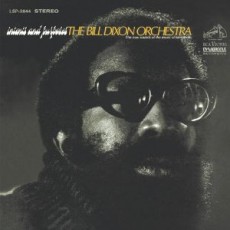
Bill Dixon was born on October 5, 1925 in Nantucket, Massachusetts and his family later moved to Harlem, New York City when he was about 7. It wasn’t until some twenty years later that he became interested in music and trumpet began his five-year studies at the Hartnette Conservatory of Music in 1946. He studied painting at Boston University, the WPA Arts School and the Art Students League. During the early 1950s while employed at the United Nations, he founded the UN Jazz Society.
By the 1960’s Dixon established himself as a major force in the jazz avant-garde movement, organizing and producing the “October Revolution in Jazz”. This first free-jazz festival comprised four days of music and discussions at the Cellar Café in Manhattan with musicians such as Cecil Taylor and Sun Ra participating.
Bill would later found the Jazz Composers Guild, become a professor of music at Bennington College, establish their Black Music Division, and was one of four featured musicians in the Canadian documentary Imagine the Sound in 1981 with Cecil Taylor, Archie Shepp and Paul Bley.
Dixon recorded relatively little over the decade and a half beginning in the late Sixties but co-led a few sessions with Archie Shepp, appeared on Cecil Taylor’s “Conquistador!” and some solo trumpet recordings has emerged. His recording career as a leader and sideman would pick up in the 80s into the new millennium with his last album being issued posthumously in 2011.
On June 16, 2010, Bill Dixon, who played trumpet, flugelhorn and piano died in his sleep at his home after suffering from an undisclosed illness.
More Posts: flugelhorn,piano,trumpet
RUSSELL GUNN + BLACKHAWK
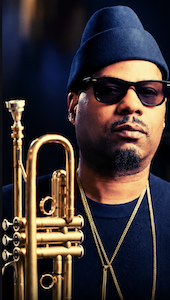
Two-time GRAMMY-nominated trumpeter, composer, arranger and producer Russell Gunn returns to this intimate room with one of his most ambitious statements yet: his album release weekend of Afrikan-Amerikan Book of the Dead: The Book of Going Forth By Any Means Necessary, a provocative seven-song work that draws inspiration from the ancient Egyptian Book of the Dead and reimagines the idea of a spiritual guide through the history, identity, resilience and forward movement of Black Americans. Featuring six original Gunn compositions and a Duke Ellington classic, the project brings together the fearless musical language that has defined Gunn’s career—jazz steeped in the Black musical continuum, alive with gospel, funk, hip-hop, groove and uncompromising improvisation.
The album also introduces Blackhawk, Gunn’s hand-selected ensemble whose name pays tribute to Miles Davis’ legendary In Person Friday and Saturday Nights at the Blackhawk, the recording Gunn credits with profoundly shaping his understanding of how jazz should feel. At its heart, however, Afrikan-Amerikan Book of the Dead is not a meditation on death, but an affirmation of life: music concerned with knowing who you are, understanding what came before you and moving forward with purpose, pride and possibility.
Cover: $59.00
More Posts: adventure,bandleader,club,composer,genius,jazz,music,preserving,travel,trumpet

JOE GRANSDEN & KENNY BANKS SR.
The Art of The Song
Two of Atlanta’s finest jazz artists come together for an evening celebrating the enduring beauty of the Great American Songbook. Joe Gransden and Kenny Banks Sr. bring warmth, soul, and swing to timeless songs, shaped by their deep musical connection and years of shared artistry. With elegance, spontaneity, and a true love of the music, they make each performance feel both familiar and fresh.
Cover: $40.00
More Posts: adventure,bandleader,club,genius,jazz,music,piano,preserving,travel,trumpet,vocal
Daily Dose Of Jazz…
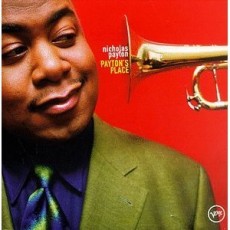
Nicholas Payton was born on September 26, 1973 in New Orleans, Louisiana, the son of bassist and sousaphonist Walter Payton. He took up the trumpet at age four and by nine was playing in the Young Tuxedo Brass Band. Upon leaving school, he enrolled first at the New Orleans Center for Creative Arts and then at the University of New Orleans under the tutelage of Ellis Marsalis.
Payton toured with Marcus Roberts and Elvin Jones in the early 90s, signed a recording contract with Verve Records, and released his first album, From This Moment in 1994. In 1996 he performed on the soundtrack of the movie Kansas City.
After seven albums on Verve, Nicholas signed with Warner Bros. and would perform and record with Wynton Marsalis, Dr. Michael White, Nancy Wilson, Christian McBride, Joshua Redman, Roy Hargrove Clark Terry, Allen Toussaint, and Joe Henderson among others. He is a founding member of the SFJAZZ Collective and in 2008, he joined The Blue Note 7 in 2008, releasing an album the following year that produced a U.S. promotional tour.
Trumpeter Nicholas Payton also plays piano and is a prolific blogger and has written a notable blog titled “On the Difference Between Prejudice and Racism…” in which Payton theorizes that blacks cannot be racist because a prerequisite to racism is power.
He has recorded more than a dozen albums as a leader and sideman, received a Grammy Award for Best Instrumental Solo for his playing on the album Doc Cheatham & Nicholas Payton and continues to compose, record and perform.
THAD WILSON JAZZ ORCHESTRA
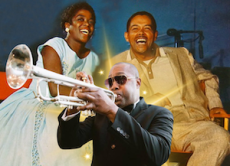
The Thad Wilson Jazz Orchestra performs a special tribute to two of jazz’s most beloved vocal legends, Billy Eckstine and Sarah Vaughan. Led by acclaimed trumpeter, composer, and arranger Thad Wilson, the orchestra brings together some of the finest musicians in the DMV for an evening celebrating the elegance, swing, and sophistication of these iconic artists.
Featuring special guest vocalists Alison Crockett and Steve Washington—two of the region’s most respected and in-demand jazz performers—the concert will showcase classic standards, romantic ballads, and swinging favorites associated with Eckstine and Vaughan. With lush big band arrangements, inspired improvisation, and unforgettable vocal performances, this tribute honors the enduring legacy of two voices that helped shape the sound of jazz, while offering fresh interpretations for today’s audiences.
Cover: $45.00 ~ $55.00 | $4.16 – $4.86 Fees
More Posts: adventure,bandleader,club,genius,history,instrumental,jazz,music,preserving,travel,trumpet,vocal