

Daily Dose Of Jazz…
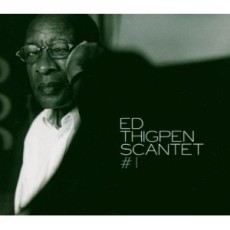
Edmund Leonard Thigpen was born on December 28, 1930 in Chicago, Illinois but was raised in Los Angeles, California where he attended the same high school, Thomas Jefferson, as fellow jazz greats Dexter Gordon, Art Farmer and Chico Hamilton. He majored in sociology at Los Angeles City College, left for East St. Louis to pursue music while living with his father, also a drummer, who played with Andy Kirk’s Clouds of Joy.
Ed first worked professionally in New York City with the Cootie Williams orchestra in 1951 at the Savoy Ballroom, during this decade he played with musicians such as Dinah Washington, Gil Melle, Oscar Pettiford, Eddie Vinson, Paul Quinichette, Charlie Rouse, Lennie Tristano, Jutta Hipp, Johnny Hodges, Dorothy Ashby, Bud Powell and Billy Taylor.
In 1959 he replaced guitarist Herb Ellis in the Oscar Peterson Trio in Toronto, Canada, recorded with Teddy Edwards-Howard McGhee in 1961, led his own 1966 session “Out of the Storm” for Verve, and went on tour with Ella Fitzgerald for five years beginning in 1967.
A move to Copenhagen in 1974 saw Thigpen collaborating with several other American expatriate jazz musicians who over the past two decades had settled in the city such as Kenny Drew, Ernie Wilkins, Thad Jones, along with native Danes Mads Vinding, Niels-Henning Orsted Pederson, Alex Riel and Sven Asmussen. He also worked with visiting musicians Clark Terry, Eddie “Lockjaw” Davis, Milt Jackson and Monty Alexander.
Ed Thigpen, a drummer with over 50 albums to his credit as a leader and sideman, passed away peacefully after a brief period in Copenhagen’s Hvidovre Hospital on January 13, 2010 at the age of 80.
More Posts: drums,percussion
Daily Dose Of Jazz…
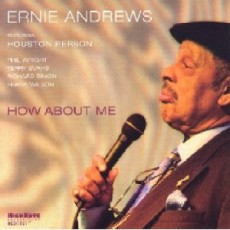
Ernie Andrews was born on December 25, 1927 in Philadelphia, Pennsylvania and spent his earliest years singing in his mother’s church. When he was becoming teen age his family move to Los Angeles, California where he studied drums and continued singing at Jefferson High School. His early influences included Ella Fitzgerald, Billy Eckstine, Al Hibbler, Johnny Mercer, Jimmy Rushing and “Big” Joe Turner.
Discovered by songwriter Joe Greene in 1947 when he won an amateur contest at Central Avenue’s Lincoln Theatre, Ernie was taken into the studio and recorded him at the ripe age of 17.The hit “Soothe Me” sold 300,000 copies and Andrews became a singer to be reckoned with. His next big hit came with Benny Carter called “Make Me A Present Of You” and by this time he was not only working at home but also touring playing clubs, after-hours rooms and concerts.
By 1959, Andrews had joined Harry James’ band, touring the U.S. and South America for nine years, which time he considers his most valuable learning experience. In 1967, he recorded the jazz classic “Big City” with Cannonball Adderley on Capital Records, rejoined James in 68, based himself in Baltimore in ’69, began a solo career and had another big hit with “Bridge Over Troubled Waters”. Her returned to Los Angeles in 1974 where he has resided for more than 50 years.
He has the ear to improvise and a rich resonant voice, and plays his vocal chords as a musician plays his horn. With his special strut, unique mannerisms and a performance that portrays the gamut of emotional experience, he consistently moves audiences to standing ovations. Vocalist Ernie Andrews continued to play clubs, concerts and jazz festivals throughout the world, often performing in Las Vegas, until his transition on February 21, 2022, at the age of 94.

More Posts: vocal
Daily Dose Of Jazz…
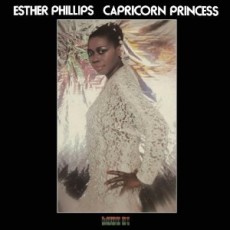
Esther Phillips was born Esther Mae Jones on December 23, 1935 in Galveston, Texas. He parents divorced when she was young and she shared her childhood between Houston and Los Angeles and brought up singing in church. At age fourteen she entered and won a local L.A. amateur talent contest that culminated in a recording with Johnny Otis for Modern Records and added her to his traveling revue, billed as Little Esther Phillips, a name she reportedly took from a gas station sign.
Her first hit record was “Double Crossing Blues” in 1950 for Savoy Records and after several hit records with Savoy that went to number one or hit the Billboard charts in the top ten, she was counted as one of the very few female artists that enjoyed such success in their debut year. She left Otis and Savoy for Federal Records but just a quickly as the hits came, they stopped, in part because she no longer worked with Otis and her increasing drug use that had her addicted by the middle of the decade.
By 1954, she was back home in Houston recuperating with her father, working small nightclubs around the South, punctuated by periodic hospital stays in Lexington, Kentucky, stemming from her addiction. In 1962, Kenny Rogers re-discovered her while singing at a Houston club and got her signed to his brother Lenox label, which assisted in her comeback. From Lenox she went to Atlantic Records, dropped “Little” from her name, and covered the Beatles’ “And I Love Him” and they flew her to the UK for her first overseas performance.
With the ushering in of 1972 she realized one of her biggest with her first album “From A Whisper To A Scream” for Creed Taylor’s Kudu Records with an account of drug use on the lead track in Gil Scott-Heron’s “Home Is Where The Hatred Is”. The song went on to be nominated for a Grammy Award but when Phillips lost to Aretha Franklin, the latter presented the trophy to Phillips, saying she should have won it instead.
While at Kudu she scored her biggest hit single with a disco-style update single of Dinah Washington’s “What A Difference A Day Makes” that reached the U.S. Top 20 and the UK Top 10. The subsequent album had her working with the Brecker Brothers, Joe Beck, David Sanborn, Steve Khan and Don Grolnick. She continued to record and perform throughout the 1970s and early 1980s, completing a total of seven albums on Kudu and four with Mercury Records.
At age 48, Esther Phillips died in Carson, California on August 7, 1984 from kidney and liver failure due to her on-going battle she waged with heroin dependency.
More Posts: vocal
Daily Dose Of Jazz…
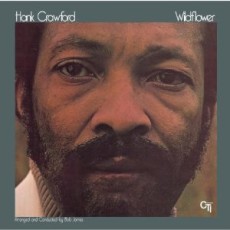
Hank Crawford was born Bennie Ross Crawford, Jr. on December 21, 1934 in Memphis, Tennessee. He began formal piano studies at age nine and was soon playing for his church choir. His father had brought an alto saxophone home from the service and when Crawford entered Manassas High School, he took it up in order to join the band, hanging out with George Coleman, Booker Little, Harold Mabern and Frank Strozier. At eighteen he appeared on an early 1952 Memphis recording for B. B. King playing alongside Ben Branch and Ike Turner.
In 1958 Crawford attended Tennessee State University, majored in music studying theory and composition, played alto and baritone saxophone in the Tennessee State Jazz Collegians and led his own rock ‘n’ roll quartet, “Little Hank and the Rhythm Kings”. It was during this period that he met Ray Charles and got his nickname “Hank” because he looked and sounded like local legendary saxophonist Hank O’Day.
Charles hired Crawford originally as a baritone saxophonist but he switched to alto in ’59 and became musical director until ’63 when he left to form his own septet, having already established himself with several albums on Atlantic Records, recording a dozen albums between 1960 and 1970. He also arranged for Etta James, Lou Rawls and others, although much of his career has been in R&B. However, in the Seventies, Hank had several successes on the jazz and pop charts.
In 1983 a move to Milestone Records gave him the opportunity to become a premier arranger, soloist, and composer, writing for small bands—that include guitarist Melvin Sparks, Dr. John and organist Jimmy McGriff, the later with whom he toured extensively and co-led dates for Milestone’s “Soul Survivor”, Steppin’ Up”, “On The Blue Side” and Road Tested”. The new century found Crawford pursuing a more mainstream jazz sound with the “World of Hank Crawford”, covering Ellington and Tadd Dameron compositions.
Hank Crawford, alto and baritone saxophonist in the hard bop, R&B, jazz-funk and soul jazz genres, credits Charlie Parker, Louis Jordan, Earl Bostic and Johnny Hodges as early influences. His piercing full-bodied signature sanctified church sound, easily recognizable, will live on through his music since his passing on January 29, 2009 at 74.
Daily Dose Of Jazz…
Ira Gitler was born December 18, 1928 in Brooklyn, New York and grew up listening to swing bands in the late 1930s and 1940s, before discovering the new music of Charlie Parker and Dizzy Gillespie. In the early 1950s, he worked as a producer for many recording sessions of Prestige Records and is credited with coining the term “sheets of sound” in the late 1950s, to describe the playing of John Coltrane.
Ira was the New York editor of Down Beat magazine during the 1960s and has written for Metronome Magazine, Jazz Times, Jazz Improv, Modern Drummer, the New York Times, the San Francisco Chronicle, the Village Voice, Playboy, World Monitor and New York Magazine along with international publications Swing Journal in Japan, Music Jazz – Italy, Jazz Magazine, France.
Gitler was awarded a Guggenheim Fellowship in 1974, received a Lifetime Achievement Awards by the New Jersey Jazz Society in 2001, and by the Jazz Journalists Association in 2002.
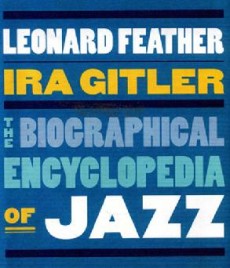
He is a jazz historian and journalist best known for “The Biographical Encyclopedia of Jazz, co-authored with Leonard Feather. He has written hundreds of liner notes for jazz recordings since the early 1950s and is the author of dozens of books about his two passions, jazz and ice hockey.