

Daily Dose Of Jazz…
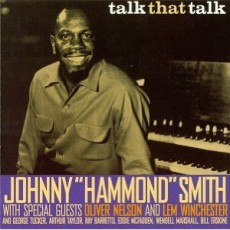
Johnny “Hammond” Smith was born John Robert Smith on December 16, 1933 in Louisville, Kentucky and earned the nickname “Hammond” for his renowned playing on the B3. In the early years of his career he played with Paul Williams and Chris Columbo before forming his own group. His bands featured singers Etta Jones, Byrdie Green, saxophonists Houston Person, Earl Edwards, guitarists Eddie McFadden, Floyd Smith, James Clark and vibist Freddie McCoy. However, his career took off as he was serving as accompanist to singer Nancy Wilson.
After a string of albums over a 10-year period at Prestige Records during the 60s, Johnny signed with CTI’s Kudu label, launching it with his soul/R&B project “Break Out” that featured Grover Washington Jr. as a sideman prior to the launch of his career as a solo recording artist. Three further albums followed and he became “Johnny Hammond”, dropping “Smith” from his name.
Adapting to the changing sound of the music Johnny’s style had become increasingly funky. This culminated in two popular albums with the Mizell Brothers, “Gambler’s Life” (1974) for the CTI offshoot, Salvation and then in 1975, “Gears” after switching to another jazz label, Milestone Records, incorporating electric and acoustic pianos as well.
As an educator he taught at Cal Poly Pomona music department for several years, penned “Quiet Fire” for Nancy Wilson’s 1989 “Nancy Now” album and remained a hard bop and soul jazz organist until his passing on June 10, 2004.
More Posts: organ
Daily Dose Of Jazz…
Curtis DuBois Fuller was born in Detroit, Michigan on December 15, 1934 to Jamaican parents who died when he was very young and raised in an orphanage. He took up the trombone while in Detroit and became friends with schoolmates Paul Chambers and Donald Byrd and also knew Tommy Flanagan, Thad Jones and Milt Jackson.
After two years of army service ending in 1955, where he played in a band with Chambers and the Adderley brothers, Fuller joined the quintet of another Detroit musician, Yusef Lateef. By 1957 the quintet moved to New York and Curtis recorded his first sessions as a leader for Prestige Records.
Alfred Lion of Blue Note Records heard him playing with Miles Davis in the late Fifties and featured him as a sideman on record dates led by Sonny Clark and John Coltrane. His work on Trane’s “Blue Train” album is probably his best-known recorded performance. This was followed with four Fuller led dates for Blue Note.
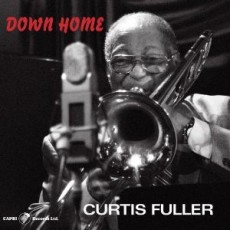
Over his career Curtis has worked with Slide Hampton, Bud Powell, Jimmy Smith, Wayne Shorter, Abbey Lincoln, Lee Morgan, Hank Mobley, Blue Mitchell and Joe Henderson, and that’s the very short list. He performed with Dizzy Gillespie’s band, toured with Count Basie, was the sixth Jazz Messenger with Art Blakey in 1961, was the first trombonist to hold membership in the Art Farmer-Benny Golson Jazztet, and has recorded for Savoy, Epic, Impulse, Status, Challenge, Timeless and Capri among others and his latest album, “Down Home” on Capri.
In addition to continuing to perform and record, he was a faculty member of the New York State Summer School of the Arts – School of Jazz Studies. Trombonist Curtis Fuller passed away on May 8, 2021.

More Posts: trombone
Daily Dose Of Jazz…
Cecil Payne was born December 14, 1922 in Brooklyn, New York. He received his first saxophone at age 13, asking his father for one after hearing Count Basie’s version of Honeysuckle Rose performed by Lester Young and took lessons from Pete Brown, a local alto sax player.
Payne began his professional recording career with J. J. Johnson on the Savoy label in 1946. During that year he played with Roy Eldridge, through whom he met Dizzy Gillespie. His earlier recordings would largely fall under the “swing” category, until Gillespie hired him, a relationship that lasted until 1949.
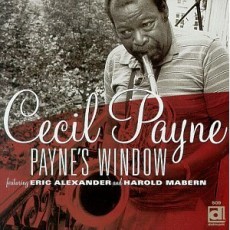
By the early 50s, Cecil found himself working with Tadd Dameron, Illinois Jacquet, James Moody, Machito, Woody Herman, Count Basie and freelancing around New York, frequently performing with Randy Weston. Throughout his fifty plus year career baritone saxophonist he recorded as a leader and a sideman for Decca, Savoy, the Charlie Parker label, Muse, Spotlite and Strata East, and regularly for Delmark Records in the nineties, when he was in his seventies, and on into the new millennium.
Cecil Payne, baritone and alto saxophonist and flautist, passed away on November 27, 2007. Although largely unknown to the public he was one of the pioneers in adapting the baritone saxophone to bebop and post-bop.
Daily Dose Of Jazz…
McCoy Tyner was born Alfred McCoy Tyner on December 11, 1938 in Philadelphia, Pennsylvania, the oldest of three children. He was encouraged to study piano by his mother. He began studying the piano at age 13 and within two years, music had become the focal point in his life. His early influences included Bud Powell, a Philadelphia neighbor.
Tyner’s first main exposure came with Benny Golson in 1960, being the first pianist in the Golson/Art Farmer legendary Jazztet. After departing the Jazztet, Tyner replaced Steve Kuhn in John Coltrane’s group the same year during its extended run at the Jazz Gallery. Coltrane had featured one of the McCoy’s compositions, “The Believer”, as early as 1958. He appeared on the saxophonist’s popular recording of “My Favorite Things” for Atlantic Records followed by Live at the Village Vanguard, Ballads, Live at Birdland, Crescent, A Love Supreme and The John Coltrane Quartet Plays on Impulse.
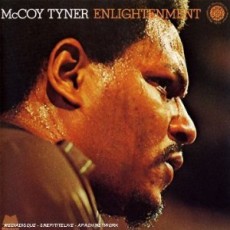
As a leader, Tyner recorded a number of highly influential albums in his own right during and post Coltrane tenure and as a sideman for many of the projects of Impulse and Blue Note. But by 1966, Tyner was rehearsing with a new trio and would now fully embark on his career as a leader. At Blue Note a string of albums were released such as The Real McCoy, Tender Moments, Sahara, Fly With The Wind and Time For Tyner, incorporating different configurations and instruments were utilized like flute, koto, string orchestra, percussion, and harpsichord along with African and Asian elements.
He currently records and has enlisted the talents of Avery Sharpe, Charnett Moffett, Eric Harland, Gerald Cannon, Gary Bartz, Eric Kamau Gravatt. Tyner still records and tours regularly though his schedule has been pared down due to his age.
More Posts: piano

Daily Dose Of Jazz…
Donald Byrd was born Donaldson Toussaint L’Ouverture Byrd II on December 9, 1932 in Detroit, Michigan. He studied music and trumpet at Cass Technical High School, performing with Lionel Hampton prior to graduating. Joining the Air Force he played with the band, followed by matriculation through Wayne State University and the Manhattan School of Music.
He came to prominence while at the Manhattan School when he joined Art Blakey’s Jazz Messengers replacing Clifford Brown. By 1955 he was recording with Jackie McLean and Mal Waldron, left the Messengers a year later and performed with John Coltrane, Sonny Rollins, Herbie Hancock and Thelonious Monk.
Byrd’s first full-time band was a quintet that he co-led from 1958-61 with Pepper Adams, an ensemble with hard driving performances as captured live on “At The Half Note Café”. In June 1964, Byrd jammed with jazz legend Eric Dolphy in Paris and throughout the rest of the decade and into the 70s was a leader and notable sidemen for Blue Note’s stable of jazz greats.
In the 1970s, Donald moved away from his previous hard-bop jazz base and began to record jazz-fusion, jazz-funk, soul-jazz, and rhythm and blues. Teaming up with the Mizell Brothers, he recorded Black Byrd in 1972 that subsequently became Blue Note’s highest selling album ever. Three subsequent big selling albums called “Street Lady”, Places and Spaces, and “Steppin’ Into Tomorrow” followed this. In 1973, he created the Blackbyrds, a fusion group consisting of his best students that scored several major hits including “Happy Music”, “Walking In Rhythm” and “Rock Creek Park”. Byrd is best remembered as one of the only bebop jazz musicians who successfully pioneered the funk and soul genres while simultaneously remaining a pop artist.
Dr. Donald Byrd holds three master degrees, a law degree and a doctorate and has pursued a career as an educator teaching at Rutgers University, Hampton Institute, New York University, Howard University, Queens College, Oberlin College, Cornell University and was named artist-in-residence at Delaware State University. The trumpeter passed away at the age of 80 in Teaneck, New Jersey on February 4, 2013 leaving a legacy of recordings that spanned the jazz idiom.
More Posts: trumpet