


Daily Dose Of Jazz…
Red Richards was born Charles Coleridge Richards on October 19, 1912 in New York City and began playing classical piano at age ten. After hearing Fats Waller at age 26 he concentrated on jazz. His first major professional gig was with Tab Smith at the Savoy Ballroom in New York from 1945 to 1949. He went on to play and record with Pee Wee Russell, Bob Wilber, Sidney Bechet, Buck Clayton, Big Chief Moore, Muggsy Spanier, Fletcher Henderson through the Fifties.
Richards toured Italy and France with Mezz Mezzrow, accompanied Frank Sinatra while in Italy, became a solo performer for a year in Columbus, Ohio, and played with Wild Bill Davison in the late 50s and again in 1962.
In 1960 Red formed Saints & Sinners with Vic Dickenson, playing with this ensemble until 1970. He joined jazz drummer Chuck Slate’s band in 1971, recorded an album with him called “Bix ‘N All That Jazz”. Through the mid-Seventies he worked with Eddie Condon, put together his own trio for two years, played with Panama Francis and the Savoy Sultans, touring with them from 1979 through the Eighties.
Pianist Red Richards recorded nine albums as a leader, recorded with Bill Coleman in 1980 and continued to tour nearly till the time of his death on March 12, 1998 in Scarsdale, New York.
More Posts: piano
Daily Dose Of Jazz…
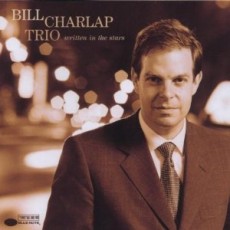
Bill Charlap was born William Morrison Charlap on October 15, 1966 in New York City. Coming from a musical background and a distant cousin to famed jazz pianist Dick Hyman. His mother, singer Sandy Stewart had the hit “My Coloring Book”, his father, Broadway composer Moose Charlap.
Charlap began playing piano at age three. He later studied classical music but remained most interested in jazz. Over his career he has worked with Gerry Mulligan, Benny Carter, Tony Bennett, Phil Woods, Scott Hamilton, Ron Carter, and others. In the mid-90s, he was the musical director of Midnight in the Garden of Good and Evil, A Celebration of Johnny Mercer, part of New York’s JVC Jazz Festival. In 1995 he joined the Phil Woods Quintet.
Charlap has recorded seven albums as a leader or co-leader for Blue Note, has had two Grammy nominated CDs: “Somewhere” and “The Bill Charlap Trio, Live At The Village Vanguard”. He has recorded two albums as a leader for Venus Records, as well as eight albums as a member of the New York Trio.
Bill appears at least twice a year for lengthy runs at some of the world’s major jazz clubs with his rhythm section, consisting of double bassist Peter Washington and drummer Kenny Washington. He became the Artistic Director of New York’s 92nd Street Y “Jazz in July” six program series in 2004. In 2008, the pianist became part of The Blue Note 7, celebrating the 70th anniversary of the label, recording Mosaic with promotion tour around the world. He continues to compose, record and tour.
More Posts: piano

JOBIM & THE MUSIC OF BRAZIL
In the 1960s, Antonio Carlos “Tom” Jobim brought the bossa nova craze to the United States, and this infectious and sensuous sound soon became beloved throughout the world. We celebrate Jobim’s centennial and the jazz genres of Brazil—including bossa nova, samba and choro.
Performers:
Eliane Elias: Piano
Anat Cohen: Clarinet
Trio da Paz: Ensemble
Shelly Berg and the Frost School of Music’s Henry Mancini Institute Orchestra
Tickets: $52.65 – $152.10 | Includes fees.
More Posts: adventure,bandleader,clarinet,genius,instrumental,jazz,music,piano,preserving,travel,vocal

Daily Dose Of Jazz…
Yusef Lateef was born William Emanuel Huddleston on October 9, 1920 in Chattanooga, Tennessee and by the time he was five his family moved to Detroit. Throughout his early life Lateef came into contact with many Detroit-based jazz musicians who went on to gain prominence, including vibraphonist Milt Jackson, bassist Paul Chambers, drummer Elvin Jones and guitarist Kenny Burrell
Proficient on saxophone by graduation from high school at the age of 18, he launched his professional career and began touring with a number of swing bands. In 1949, he was touring with Dizzy Gillespie and his orchestra. In 1950, Lateef returned to Detroit and began his studies in composition and flute at Wayne State University. It was during this period that he converted to Islam.
Lateef began recording as a leader in 1957 for Savoy Records overlapping with Prestige Records subsidiary label New Jazz, collaborating with Wilbur Harden, Herman Wright, Frank Gant, and Hugh Lawson among others. By 1961, with the recording of Into Something and Eastern Sounds his dominant presence within a group context had emerged and his ‘Eastern’ influences are clearly audible in all of these recordings.
Along with trumpeter Don Cherry, Yusef can lay claim to being among the first exponents of the world music as sub-genres of jazz. He played on numerous albums, was a member of Cannonball Adderley’s Quintet during the early Sixties, was a major influence on John Coltrane, he began to incorporate contemporary soul and gospel phrasing into his music, founded his own label YAL Records and was commissioned by the WDR Radio Orchestra to compose the African American Epic Suite.
Lateef has written and published a number of books including two novellas and Yusef Lateef’s Flute Book of the Blues. He has received the Jazz Master Fellowship Award from the National Endowment for the Arts, and has had aired a special-documentary program for Lateef, titled A Portrait of Saxophonist Yusef Lateef In His Own Words and Music. He has recorded nearly six-dozen records as both a leader and sideman and continued to compose, perform, record and tour until his transition at age 93 on December 23, 2013 in Shutesbury, Massachusetts.
More Posts: bamboo flute,bassoon,koto,oboe,piano,saxophone,shehnai,shofar,vocal

Daily Dose Of Jazz…
Gerry Moore was born Gerald Asher Moore on October 8, 1903 in London, England. As a pianist, he spent the years 1922-1939 working freelance jazz gigs in his hometown, playing movie palaces and nightclubs. Among the clubs in which he worked are Sherry’s and the Empress Rooms through the Twenties and in the 30s he played Chez Rex Evans, the Bag o’ Nails, the 43 Club and Mema’s.
In 1939 Gerry worked with Buddy Featherstonhaugh, Adelaide Hall, Vic Lewis, and with Max Geldray in Germany, along with Carlo Krahmer at the Paris Jazz Fair and the Palm Beach Hotel in Cannes. He played with Harry and Laurie Gold and worked as a pianist on the Queen Mary and Caronia in the Fifties. From the mid-1960s up until his passing on January 29, 1993 in Twickenham, pianist Gerry Moore played the clubs of London.
More Posts: piano