

Daily Dose Of Jazz…
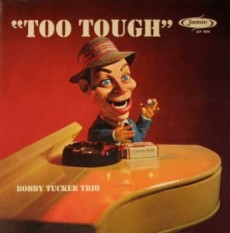
Bobby Tucker was born Robert Nathaniel Tucker on January 8, 1923 in Morristown, New Jersey. His rise to recognition came On November 12, 1946 when during Billie Holiday’s stay at the Down Beat Club he was drafted to accompany Holiday because Eddie Heywood refused his opportunity. Billie’s stay at the Down Beat was so successful due to Tucker’s playing that she decided to keep him as her accompanist. The partnership lasted until 1949, where Tucker quit due to Holiday’s abusive lover, John Levy (not the bassist) threatening him.
After leaving Holiday, Tucker began playing with Billy Eckstine, a partnership and friendship that last more than forty years. He recorded on multiple sessions with Billy but was featured on the 1960 album “No Cover, No Minimum”, in which he arranged and conducted the orchestra behind Eckstine. That same year Tucker also released his only known album under his own name “Too Tough”.
Bobby was especially sought out as an accompanist for singers among them Johnny Hartman, Lena Horne and Antonio Carlos Jobim. He was a musician’s musician whose quiet yet prolific career renders little biographical information, yet spanned the jazz age from the 40s to the 60s and beyond with his friend Billy Eckstine.
Pianist, arranger and conductor Bobby Tucker passed away of a heart attack on April 12, 2007 in his hometown of Morristown, New Jersey at the age of 85.
Daily Dose Of Jazz…
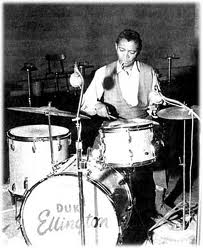
Sam Woodyard was born January 7, 1925 in Elizabeth, New Jersey. He learned to play the drums by teaching himself, with no instruction. He began playing locally around Newark, New Jersey area in the 1940s. Sam gigged with Paul Gayten in an R&B group, moving on in the early 50s to play with Joe Holiday, Roy Eldridge, and Milt Buckner. It was in 1955 that Woodyard would join Duke Ellington’s orchestra, remaining the ensemble’s drummer until 1966.
After his time with Ellington, Sam played behind Ella Fitzgerald prior to moving to Los Angeles, California. In the 1970s he played less due to health problems, but recorded with Buddy Rich and toured with Claude Bolling. In 1983 he played in a band with Teddy Wilson, Buddy Tate and Slam Stewart. His last recording was on Steve Lacy’s 1988 album “The Door”.
A little more than a month after this recording was completed, drummer Sam Woodyard passed away on September 20, 1988 in Paris, France.
More Posts: drums
Daily Dose Of Jazz…
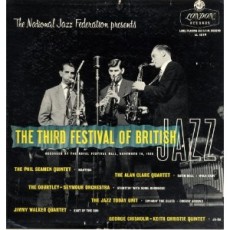
Keith Ronald Christie was born January 6, 1931 in Blackpool, England and began playing trombone at 14 while attending the Guildhall School of Music and Drama. He formed a band with his brother Ian in the late 1940s, and soon after the pair joined the band of Humphrey Lyttleton, recording copiously.
Keith served in the military early in the 1950s, reconvening to lead an ensemble with his brother in 1951 that lasted until 1953. He went on to work with other jazz musicians like John Dankworth, Cleo Laine, George Chisholm, Vic Ash and others in the mid 50s. He worked with Ted Heath as well as Allan Ganley in the Jazzmakers from the late 50s to early 60s, with brief stints in other bands through the end of the decade.
During this period he joined Benny Goodman on a European tour, also playing with Tubby Hayes, Paul Gonsalves, Kenny Wheeler, Ronnie Ross, and Bobby Lamb among others. In the mid-1970s Keith Christie suffered and recovered from a fall but his continuing battles with alcoholism eventually resulted in the trombonist’s early death on December 16, 1980 in London, England.
More Posts: bandleader,trombone
Daily Dose Of Jazz…
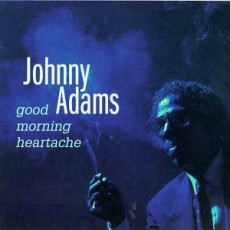
Laten John Adams was born in New Orleans, Louisiana on January 5, 1932 the oldest of ten children and became a professional musician after leaving school. He began his career-singing gospel with the Soul Revivers and Bessie Griffin’s Consolators, but crossed over to secular music in 1959. He recorded Dorothy LaBostrie’s “I Won’t Cry” on the RIC label and produced by teenager Mac Rebennack a.k.a. Dr. John who would later give him a #27 hit in 1962 with “A Losing Battle”.
In 1963, Adams went on to record for Modern Records and Watch Records with limited success until he signed with SSS International. Having three hits on the billboard charts and an album “Heart and Soul” he moved unsuccessfully to other labels like Atlantic and Ariola. During this period he held down a regular gig at Dorothy’s Medallion Lounge in New Orleans and toured the southern nightclub circuit.
In 1983 signing with Rounder Records, Johnny recorded a series of nine critically acclaimed albums beginning with “From the Heart” in 1984, encompassing a wide range of jazz, blues and R&B styles while highlighting Adams’ voice. By 1991 “The Real Me” album brought him a number of accolades, including a W.C. Handy Award. He began touring internationally, working and recording with such musicians as Aaron Neville, Harry Connick Jr. Lonnie Smith and Dr. John.
Johnny Adams, jazz, blues and gospel singer, passed away on September 14, 1998 in Baton Rouge, Louisiana after a long battle with prostate cancer.
More Posts: vocal
Daily Dose Of Jazz…
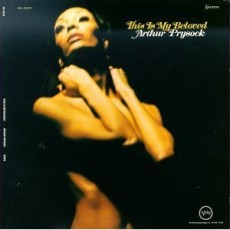
Arthur Prysock was born on January 2, 1929 on Spartanburg, South Carolina but was raised on a farm in North Carolina. He left home at 16, moved to Hartford, Connecticut and found work with an aircraft company during World War II until they discovered he was underage. He then found a day job as a cook, singing around town at night with a band.
In 1944 bandleader Buddy Johnson signed the baritone as a vocalist, singing on several Johnson hits on Decca Records and became a mainstay of the live performance circuits. By 1952 Prysock went solo, signed with Decca, recorded “I Didn’t Sleep a Wink Last Night” and in 1960s covered Ray Noble’s ballad “The Very Thought Of You” and “It’s Too Late Baby, It’s Too Late”. Signing with Verve Records he recorded “Arthur Prysock & Count Basie” and “A Working Man’s Prayer”.
In the seventies, he had a surprise disco hit with “When Love Is New” and in 1985, recorded his first new album in almost a decade, “Arthur Prysock” He gained further attention for his tender, soulful singing on a beer commercial, “Tonight, Tonight, Let It Be Lowenbrau”.
Over the course of a prolific 43-year career, Arthur, who had been influenced by Billy Eckstine, was seen primarily in front of big bands. He recorded nearly 60 albums for Mercury, Old Town, Milestone and Decca record labels, including the orated “This Is My Beloved”. In 1995 he received the Pioneer Award from the Rhythm and Blues Foundation.
His tender music has been a staple of jazz radio in the wee hours of the morning, and of cheek-to-cheek dancing in smoke-filled cocktail lounges. Arthur Prysock, the baritone romantic crooner that never lost his vocal strength, rich resonance or his deep, velvety tones, passed away on June 21, 1997.
More Posts: vocal