

Daily Dose Of Jazz…
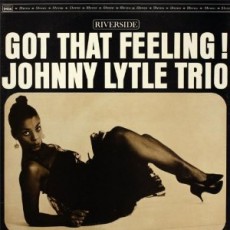
Johnny Lytle was born John Dillard Lytle on October 13, 1932 in Springfield, Ohio, the son of a trumpeter father and an organist mother. He began playing the drums and piano at an early age. Before studying music in earnest, he was a boxer and was a successful Golden Gloves champion. During the late ’50s, Lytle continued to box, but landed jobs as a drummer for Ray Charles, Jimmy Witherspoon and Gene Ammons.
Switching from drums to vibraphone Johnny toured with organist Hiram “Boots” Johnson in 1955 and then formed his first group in 1957 with saxophonist Boots Johnson, organist Milton Harris and drummer William “Peppy” Hinnant. He so impressed Grammy winning producer Orrin Keepnews who signed him to his Jazzland label in 1960.
Known for his great hand speed and showmanship, Lytle was also a songwriter, penning many of his own hits, including “The Loop,” “The Man,” “Lela,” “Selim” (honoring Miles Davis), and the jazz classic “The Village Caller”. He recorded more than 30 albums for various jazz labels including Tuba, Jazzland, Solid State and Muse. Throughout his career he performed and recorded with a host of jazz greats including Louis Armstrong, Lionel Hampton, Miles Davis, Nancy Wilson, Bobby Timmons and Roy Ayers.
Johnny never recorded with any of the major record labels fearing loss of control of his music and creative development, thus never gaining the status of a jazz icon like some of his peers, but finding success early in his career with chart-topping albums like A Groove, The Loop, and Moonchild. Nicknamed “Fast Hands,” he always kept an audience’s attention, was popular on the jazz circuit and built a respectable catalog of music with recordings in the ’70s,’80s and ’90s. Johnny toured throughout the U.S. and Europe, with his last performance one month before his passing on December 15, 1995 in his hometown of Springfield. The street where the vibraphonist and drummer used to live was renamed Johnny Lytle Avenue in his honor.
More Posts: drums,vibraphone
Daily Dose Of Jazz…
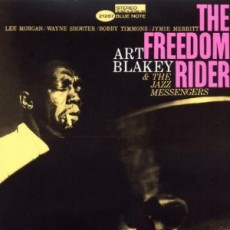
Art Blakey was born Arthur Blakey on October 11, 1919 in Pittsburgh, Pennsylvania. By the time he was a teenager, he was playing the piano full-time, leading a commercial band. Shortly afterwards, he taught himself to play the drums in the aggressive swing style of Chick Webb, Sid Catlett and Ray Bauduc. He joined Mary Lou Williams in 1942, then toured with the Fletcher Henderson Orchestra, spent three years with Billy Eckstine’s big band and became associated with the bebop movement along with his fellow band members Miles Davis, Dexter Gordon, Fats Navarro, Dizzy Gillespie, Charlie Parker, and Sarah Vaughan and others.
He recorded on Thelonious Monk’s first and last sessions as a leader, organized a rehearsal band called the Seventeen Messengers in 1947, recorded with an octet call the Jazz Messengers co-led with Horace Silver, and the group recorded with Clifford Brown, Lou Donaldson and Gene Ramey live at Birdland and formed a regular cooperative group with Hank Mobley and Kenny Dorham in 1953.
Along with Kenny Clarke and Max Roach, Art was one of the inventors of the modern bebop style of drumming. Known as a powerful musician and a vital groover, his brand of bluesy, funky hard bop was and continues to be profoundly influential on mainstream jazz. For more than 30 years his band, Art Blakey and the Jazz Messengers, included many young musicians who went on to become prominent names in jazz.
Blakey’s Messengers would go on to enlist musicians like Doug Watkins, Donald Byrd, Johnny Griffin, Benny Golson, Jymie Merritt, Lee Morgan, Bobby Timmons, Curtis Fuller, Freddie Hubbard, Cedar Walton and Wayne Shorter, all of whom made an indelible impression on Blakey’s repertoire with their original compositions such as Dat Dere, Moanin’ and Lester Left Town.
Art recorded dozens of albums both as a sideman and a leader with a constantly changing group of Jazz Messengers, toured with the Giants of Jazz in early Seventies, revitalized the band in the 80s with players like Wynton Marsalis, Johnny O’Neal , Philip Harper , Terence Blanchard, Joanne Brackeen, Donald Harrison, Kenny Garrett, Bobby Broom, Robin Eubanks, Kevin Eubanks, Ralph Peterson Jr.. and Mulgrew Miller
Over the years group members went on to find their own star including but not limited to Brian Lynch, Javon Jackson, Geoffrey Keezer, Valery Ponomarev, Wallace Roney, Charles Fambrough, Essiet Okon Essiet, Kenny Washington, Chuck Mangione, Keith Jarrett, Woody Shaw, Branford Marsalis, Terence Blanchard, Donald Harrison, and Reggie Workman.
Also known as Abdullah Ibn Buhaina after converting to Islam and nicknamed “Bu”, was inducted into the Jazz Hall of Fame in 1982, won a Grammy for Best Group Jazz Instrumental Performance for New York Scene, was inducted in the Newport Jazz Festival and Down Beat Jazz Hall of Fames, and was posthumously inducted into the Grammy Hall of Fame in 2001 and was awarded the Grammy Lifetime Achievement Award in 2005. Drummer, bandleader, educator and mentor Art Blakey died on October 16, 1990.
More Posts: drums
FRANKIE QUIÑONES & THE LATIN JAZZ COLLECTIVE
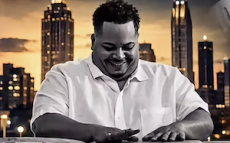
Frankie Quiñones & The Latin Jazz Collective for an unforgettable evening of world-class Latin jazz, salsa, Afro-Cuban rhythms, and soulful improvisation. Experience the energy, passion, and musical mastery of Atlanta’s premier Latin jazz ensemble as they bring together vibrant percussion, dynamic horns, and captivating melodies for a night that will move your soul and your feet.
Frankie, aka Frankie Q, started playing drums and percussion in the church and began taking music seriously in hisjunior year of highschool where he joined a local band back home in Buffalo, New York. After high school he applied and got accepted to Berklee College of Music. It was not an easy journey, but he wouldn’t trade it for the world. Each setback and disappointment added to his music and has enhanced the story he tells via the drum. He doesn’t believe in overcoming, he believes in staying, fighting and showing up. Every experience adds to who you are and the story that you tell in your music, and choosing to play it and live in every moment.
Frankie Quiñones ~ Congas, Drums, Percussion
Tony Castillo ~ Piano
Jhon Martez ~ Trumpet
Justin Raines ~ Bass
Luis “Chunky” Gonzalez ~ Drums
Solaya ~ Vocals | Special Guest
Cover: $25.00
More Posts: adventure,bandleader,club,drums,genius,instrumental,jazz,music,percussion,preserving,travel
TED HOWE TRIO
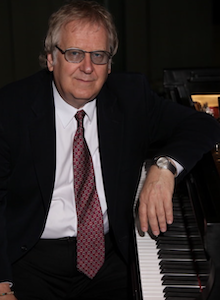
Ted’s natural persistence and relentless fascination of developing his craft dominated his life. He soon became not only a student at Berklee, but a professor of piano arranging, theory and improvisation — all before reaching the age of 24. He joined the faculty of Georgia State University where he assisted in developing its first jazz education program.
Ted has produced “An Evening Of Duke Ellington With Ted Howe & The Ruth Mitchell Dance Theatre”, a full fledged ballet featuring 21 dancers, choreographed by members of the Alvin Ailey Dance Company. The ballet music was entirely Ted’s arrangements of Duke’s music set to dance. Premiering in Atlanta to glowing reviews, the ballet was performed to sold out houses.
As a Summit Records artist he has released three albums and has performed with a long list of sixty-nine musicians and vocalists that included Henry Mancini, Diahann Carroll, Russell Malone, Lainie Kazan, Morgana King, Tiger Okoshi, Carol Channing, Rene Marie, Herb Pomeroy, Ed Thigpen, Billy Daniels, Mel Torme and more.
The Band:
Ted Howe: Piano
Neal Starkey: Bass
Jerry “Guru” Fields: Drums
Cover: $30.00
More Posts: adventure,bandleader,bass,club,drums,genius,instrumental,jazz,piano,preserving,travel
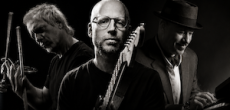
THE OX NOY TRIO
Every once in a while, an opportunity comes along that reminds me why I built The Velvet Note in the first place. This is one of those weekends. Our Signature Series welcomes guitarist Oz Noy, one of the most original voices in contemporary jazz and fusion, joined by legendary drummer Dave Weckl and brilliant Hammond B-3 master Brian Charette.
Individually, each of these musicians has earned the respect of audiences and fellow artists around the world. Together, they create something that’s spontaneous, fearless, and impossible to predict. It’s the kind of music that can only happen when extraordinary musicians trust each other enough to take chances—and invite us along for the ride. About the musicians:
Oz Noy ~ Internationally acclaimed guitarist known for blending jazz, blues, funk, and rock into a uniquely original style. HE Has performed and recorded with artists including Eric Johnson, Mike Stern, Richard Bona, and Vinnie Colaiuta.
Dave Weckl ~Widely regarded as one of the most influential drummers of the modern era and a longtime member of the Chick Corea Elektric Band. Multiple Modern Drummer magazine award winner whose recordings and educational materials have inspired generations of drummers worldwide.
Brian Charette ~ Grammy-nominated Hammond B-3 organist celebrated for redefining the role of the jazz organ in contemporary music. e hHas performed and recorded with leading artists including Paul Simon, Joni Mitchell, Chaka Khan, and many of today’s top jazz musicians.
Cover: $64.00
More Posts: adventure,bandleader,club,drums,genius,guitar,instrumental,jazz,music,organ,preserving,travel