

Jazz In Film
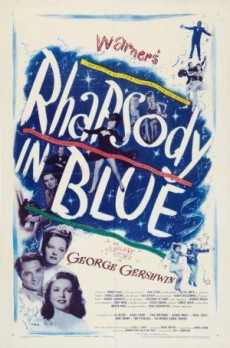
Rhapsody in Blue (1945): Hollywood’s Glamorous Portrait of Gershwin
Directed by Irving Rapper and starring Robert Alda, Joan Leslie, and Alexis Smith, Rhapsody in Blue is Hollywood’s lavish 1945 attempt to capture the life and genius of George Gershwin—one of America’s most beloved composers, who died tragically young at just 38 years old in 1937.
The Hollywood Treatment
As with most biopics of the era, the film takes considerable liberties with historical fact. The story centers on Gershwin as a driven, ambitious composer whose relentless need to succeed comes at a steep personal cost—destroying his relationships with a fictional singer named Julie Adams (Joan Leslie) and an equally fictional socialite Christine Gilbert (Alexis Smith).
These romantic subplots are pure Hollywood invention, designed to give audiences the kind of emotional drama they expected from a major studio production. The real George Gershwin’s personal life was more complex and less cinematically tidy, but Warner Bros. wasn’t particularly interested in documentary accuracy, they wanted a story of artistic genius struggling between ambition and love.
The Music Is the Real Star
What the film does deliver magnificently is Gershwin’s extraordinary music. The soundtrack features selections from his remarkable catalog: the jazz-inflected concert works like the titular “Rhapsody in Blue” and “An American in Paris,” beloved songs from his Broadway shows and Hollywood films, and glimpses of his ambitious opera Porgy and Bess.
Hearing these works performed in a 1945 film, still relatively close to when they were composed, gives the movie a period authenticity that transcends the fictionalized biography. This is what audiences in the 1940s heard when they thought of Gershwin, presented with the full resources of a major Hollywood studio’s orchestra.
Notable Appearances
The film includes memorable appearances by bandleader Paul Whiteman and His Orchestra—significant because Whiteman commissioned and premiered “Rhapsody in Blue” in 1924, making him an actual part of Gershwin’s story rather than Hollywood invention.
Also featured is the remarkable pianist and singer Hazel Scott, one of the few Black performers given significant screen time in a major Hollywood production of that era. Scott was a genuine virtuoso and a pioneering artist who fought against racial stereotyping in Hollywood—her presence adds both musical credibility and historical significance to the film.
Worth Watching Despite the Liberties
Rhapsody in Blue won’t teach you accurate biographical facts about George Gershwin—for that, you’ll need to read a proper biography. But as a celebration of his music and a snapshot of how Hollywood mythologized its cultural heroes in the 1940s, it remains an entertaining, gorgeously photographed production.
Robert Alda, Alan’s dad, brings charm and intensity to his portrayal of Gershwin, even if the script gives him more romantic angst than the real composer likely experienced. And ultimately, any film that introduces audiences to Gershwin’s genius—however fictionalized the surrounding story, serves a valuable purpose.
For anyone who loves Gershwin’s music or classic Hollywood biopics, Rhapsody in Blue delivers the glamour, the drama, and most importantly, the unforgettable melodies that made George Gershwin an American icon.
Just don’t expect historical accuracy—expect beautiful music wrapped in beautiful Hollywood fantasy.
More Posts: film