

Daily Dose Of Jazz…
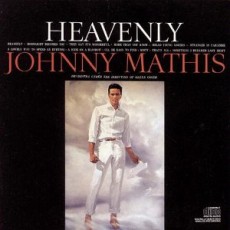
Johnny Mathis was born John Royce Mathis in Gilmer, Texas on September 30, 1935. The family moved to San Francisco, California, where he grew up on 32nd Avenue in the Richmond District. His father a vaudevillian, saw his son’s talent, bought a piano and encouraged him by teaching him songs and routines that he performed at home, school and church functions.
At thirteen, Johnny began study with voice teacher Connie Cox, and for six years he learned vocal scales and exercises, voice production, classical and operatic skills. A star athlete in high school he earned four athletic letters, and then enrolled at San Francisco State University on scholarship to become a teacher. However, spotted by Helen Noga, co-owner of The Black Hawk Club at a jam session, she became his manager, got jazz producer George Avakian to hear him and he subsequently sent a telegram to Columbia Records noting: Have found phenomenal 19-year-old boy who could go all the way. Send blank contracts.
The rest, as they say is history. His first album Johnny Mathis: A New Sound In Popular Song was a slow-selling jazz album. Staying in New York to play the clubs, his second album, produced by Mitch Miller,, defined his sound – soft, romantic ballads. Miller paired him with arranger/conductor Ray Conniff, then with Ray Ellis, Glenn Osser, and Robert Mersey By 1956 Johnny recorded two of his most popular songs – “Wonderful, Wonderful” and “It’s Not For Me To Say”. He would appear in films by MGM and 20th Century Fox, the Ed Sullivan Show and The Pat Boone Chevy Showroom.
After splitting from Noga, Mathis established Jon Mat Records to produce his recordings, Rojon Productions to handle all of his concert, theater, showroom and television appearances, and all promotional and charitable activities, hired a new manager and business partner, signed with Mercury, then Columbia Records, the latter being his permanent label. His recordings have been used in Close Encounters of the Third Kind, The X-Files and Mad Men; and his discography crosses all genres including jazz, pop, Brazilian, Spanish, Soul, R&B, rock, Broadway, Tin Pan Alley and disco.
He has the distinction of having the longest stay of any recording artist on the Columbia Record label, having been with the label from 1956 to 1963 and from 1968 to the present and makes him the third biggest selling recording artist of the 20th century, only after Elvis Presley and Frank Sinatra.
Johnny Mathis has received three Grammy awards including a Lifetime Achievement Award, has been inducted into the Grammy Hall of Fame, nominated for an Oscar, has taped twelve of his own television specials, made over 300 television guest appearances with 33 of them being on The Tonight Show and his songs have been heard in 100 plus television shows and films around the globe. He continues to perform but from 2000 onwards has limited his concert engagements to fifty to sixty appearances per year.
More Posts: vocal
Daily Dose Of Jazz…
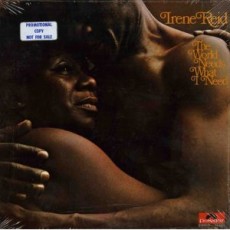
Irene Reid was born on September 23, 1930 in Savannah, Georgia, singing in church and in high school in Georgia. In 1947 after her mother passed, she moved to New York City. Toward the end of the year she tried out for an amateur contest at the Apollo Theater in Harlem, and won the competition for five straight weeks. Soon after she was offered a slot as the featured vocalist with Dick Vance at the Savoy Ballroom, which she held from 1948 to 1950.
In 1961–62, Reid sang with Count Basie‘s orchestra, and recorded for Verve Records. She would later perform in a Broadway production of the musical The Wiz She sang with Carmen McRae, Sarah Vaughan, Aretha Franklin, and B.B. King.
Irene receded from fame in the 1970s and 1980s, but launched a comeback near the end of that decade. She appeared at the Savannah Jazz Festival in 1991, 1994, and 1996, and continued releasing albums on Savant Records in the 1990s and 2000s.
In 2002, British DJ duo Beginerz sampled Reid’s vocals to make the club hit “Reckless Girl” and in 2003 Lil’ Kim sampled Reid’s vocals to make the hit “I Came Back For You”.
On January 4, 2008 jazz singer Irene Reid passed away, leaving for posterity more than a dozen albums.
More Posts: vocal

Daily Dose Of Jazz…
Helen Ward was born September 19, 1913 in New York City and was taught her piano by her father, appeared on WOR and WNYC radio broadcasts and also worked as a staff musician at the latter. Helen started singing in Benny Goodman ’s first band in 1934 and became one of the first popular swing “girl singers”, as they were then called, and among Goodman’s most popular.
Ward and Benny had a brief romance and he came very close to proposing marriage to her in either 1935 or 1936. However, according to Ward in the documentary, Adventures in the Kingdom of Swing, he called it off at the last minute, citing his career. She married financier Albert Marx the following year and left the band. She moonlighted during her time with Goodman with other bands including the Teddy Wilson orchestra in 1936 and Larry Kent and his Orchestra in November of that same year (under the name “Vera Lane”).
In 1938, Marx arranged for Goodman’s Carnegie Hall concert to be recorded for her as an anniversary present. That recording was later released as a dual LP set by Columbia Records in 1950. During the 1940s, Ward worked with the bands of Matty Malneck and Harry James and became a radio show producer for WMGM in 1946-1947. In 1952, she recorded an album of Dixieland tunes with “Wild” Bill Davison and also made several appearances with Larry Clinton and Peanuts Hucko in 1956.
Following her divorce to Marx, Ward later married the audio engineer William Savory, who was part of the team that invented the 33⅓ rpm long-playing record. She sporadically did studio work, occasionally toured with Goodman, worked briefly with Peanuts Hucko but effectively retired in 1960. A brief return in the late 70s and early 80s saw her singing in New York clubs and released her final album The Helen Ward Song Book Vol. I. Vocalist Helen Ward died April 21, 1998 in Arlington, Virginia.
More Posts: vocal
Daily Dose Of Jazz…
Jeffery Smith was born on September 14, 1955 in Queens, New York and began honing his voice at a very early age, under the influence of his mother, a classical singer. At the age of 18, he moved to Los Angeles, California and worked as a singer, actor and artist, landing several bit parts in television, and film, while performing in the local clubs.
In 1980 he starred in the production of “Hollywood & Highland” and was awarded the coveted 1981 Drama Critic’s Award, from Drama Logue Magazine. Returning to New York in 1985, the baritone co-starred on stage in “Jesus Christ Superstar”, “Hair” and “Capitol Cakewalk”, as well as performing in most of the city’s major clubs through 1991.
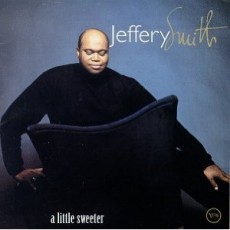
By 1991, Smith’s visit to Paris lasted for 7 years and while working with Claude Bolling , he recorded four albums, had two world tours with the big band, sang commercial jingles, and was signed with Universal/Verve for a 3-album deal, all of which received international acclaim. His 1995 debut recording “Ramona” was dedicated to his mother and produced by Shirley Horn, and his U.S. debut came in 1998 with the release of “A Little Sweeter” on the Verve label.
Jeffery Smith has worked with Wynton Marsalis, the Jazz at Lincoln Center Orchestra, Dianne Reeves, Kenny Barron, Regina Carter, Joe Lovano, Dee Dee Bridgewater and TK Blue.. He was the founder of the jazz cultivation not-for-profit Tri-Loxodonta Productions, a not-for-profit music organization cultivating jazz in upstate New York. Vocalist Jeffery Smith continued to perform internationally and record until he passed away on July 5, 2012..
More Posts: vocal
Daily Dose Of Jazz…
Michael Jay Feinstein was born September 7, 1956 in Columbus, Ohio. At the age of five, he studied piano for a couple of months until his teacher became angered that he wasn’t reading the sheet music she gave him, since he was more comfortable playing by ear. As his mother saw no problem with her son’s method, she took him out of lessons and allowed him to enjoy music his own way.
After graduating from high school, Feinstein worked in local piano bars for two years, moving to Los Angeles when he was 20. He catalogued Ira Gershwin’s extensive collection of phonograph records, unpublished sheet music and rare recordings. This led to the development of a close relationship with Gershwin’s neighbor, Rosemary Clooney.
By the mid-1980s, Feinstein was a nationally known cabaret singer-pianist who dedicating himself to the Great American Songbook and recorded his debut titled Pure Gershwin in 1986. This led to more Americana with Irving Berlin, a live album from the Algonquin, “Over There” featuring music of the WWI era and “Pure Imagination” – a children’s album in 1992.
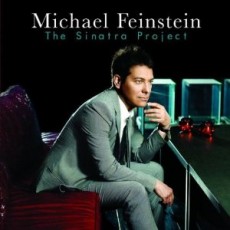
He has starred on Broadway, recorded several “composer” albums, and a series of “romance” albums and a Sinatra project. Feinstein then embarked on a Great American Songbook music project with Burton Lane, Jule Styne, Jerry Herman, Hugh Martin, Jimmy Webb, Jay Livingston, and Ray Evans.
Michael was appointed by the Library of Congress to the National Recording Preservation Board to safeguard America’s musical heritage; he is the artistic director of The Center for the Performing Arts, which is home to the Michael Feinstein Initiative, and is the owner of a nightclub in Manhattan, “Feinstein’s” in the Regency Hotel.
More Posts: vocal