

Daily Dose Of Jazz…
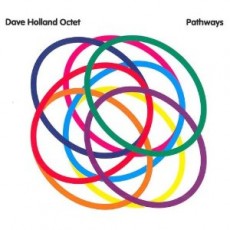
Dave Holland was born on October 1, 1946 in Wolverhampton, England and taught himself how to play stringed instruments, beginning at four on the ukulele, graduating to guitar and later bass guitar. Quitting school at age 15 to pursue a profession in a top 40 band, but gravitated to jazz buying albums of Ray Brown, Leroy Vinnegar, Charles Mingus and Jimmy Garrison and trading his electric bass in for an acoustic.
After moving to London in 1964, Holland began playing acoustic bass in small venues and studied with James Edward Merrett, learning to sight read, and enrolling in a three-year scholarship program at the Guildhall School of Music and Drama.
At 20, Holland was keeping a busy schedule in school, studios and Ronnie Scott’s Jazz Club playing behind American musicians like Coleman Hawkins, Ben Webster and Joe Henderson and British musicians such as John McLaughlin, Evan Parker and began a working collaboration with Kenny Wheeler that has continued to today.
In 1968 he joined Miles Davis’ group, recorded on Files de Kilimanjaro, In A Silent Way and Bitches Brew and Live at the Fillmore East, March 7, 1970: It’s About Time. Leaving Miles he joined the group Circle with Chick Corea that started a 34-year association with ECM record label. During the Seventies and 80s he worked as a leader and a sideman with Anthony Braxton, Stan Getz, John Abercrombie, Jack DeJohnette, Bonnie Raitt, Steve Coleman, Kevin Eubanks, Billy Higgins, Roy Haynes, Hank Jones, Billy Higgins, Pat Metheny and Marvin “Smitty” Smith.
Dave would go on to tour with Herbie Hancock, renew his affiliation with Joe Henderson and Betty Carter, formed his third quartet introducing Steve Nelson to the world, record dozens of albums as a leader and sideman, form his current quintet, win his first Grammy for big band album “What Goes Around”, win numerous other recognitions and he continues to compose, record, perform and tour.
More Posts: bass
Daily Dose Of Jazz…
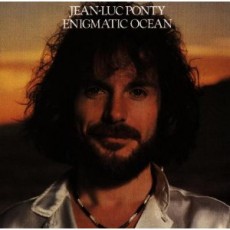
Jean-Luc Ponty was born September 29, 1942 in Avranches, France to parents who taught and played violin, piano and clarinet. At sixteen, he was admitted to the Conservatoire National Supérieur de Musique de Paris, graduating two years later with the institution’s highest award, Premier Prix. He was immediately hired by one of the major symphony orchestras, Concerts Lamoureux, where he played for three years.
While still a member of the orchestra in Paris, Ponty picked up a side gig playing clarinet for a college jazz band that regularly performed at local parties. This life-changing jumping-off point sparked an interest in the jazz sounds of Miles Davis and John Coltrane, compelling him to take up the tenor saxophone. After a night in a local club with his violin it only took four years to be widely accepted as the leading figure in jazz fiddle.
Adopting the electric violin was at first proved to be a handicap as few at the time viewed the instrument as having no legitimate place in the modern jazz vocabulary. With a powerful sound that eschewed vibrato, Jean-Luc distinguished himself with be-bop era phrasings and a punchy style, that by 1964, at age 22, he released his debut solo album for Philips, Jazz Long Playing. He would go on to record with violin greats like Stuff Smith, Stéphane Grappelli, and Svend Asmussen, perform at Monterey in 1967 with John Lewis, snag a recording contract and work with Gerald Wilson Big Band, the George Duke Trio and Niels-Henning Orsted Pederson.
In 1969, Frank Zappa composed the music for Jean-Luc’s solo album King Kong; in 1972 Elton John collaborated with Ponty on Honky Chateau, and within a year emigrated to America, making his home in Los Angeles, California. He worked with John McLaughlin Mahavishnu Orchestra, and in 1975 signed with Atlantic Records. For the next decade, Jean-Luc toured the world repeatedly and recorded 12 consecutive albums which all reached the top 5 on the Billboard Jazz charts.
Over the course of his prolific career, violinist Jena-Luc Ponty has performed with the Pittsburgh New Music Ensemble, Radio City Orchestra, with symphonies around the world, Stanley Clarke and Al Di Meola, a host of American and African musicians, collaborated with his pianist daughter Clara on several project, joined the 4th incarnation of Return To Forever in 2011 and continues perform, tour and record, adding to his more than four dozen album catalogue.
More Posts: violin
Daily Dose Of Jazz…
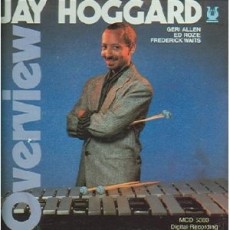
Jay Hoggard was born September 24, 1954 in Washington, D.C. but grew up in Mount Vernon, New York. His mother taught him how to play piano at a young age and picked up the saxophone long before age 15 when he started playing the vibraphone. He played with Anthony Davis and Leo Smith in the early 1970s around New England.
After moving to New York City in 1988 Jay worked again with Davis and with Chico Freeman, Sam Rivers, Cecil Taylor, James Newton, and Kenny Burrell. He would go on to collaborate and perform over the next few decades with Lionel Hampton, Milt Jackson, Tito Puente, Bobby Hutcherson, Billy Taylor, James Newton, Hilton Ruiz and Oliver Lake.
An international performer Hoggard has played on stages and jazz festivals in Africa, South America, Europe, Asia and the Caribbean and throughout the United States as well as appearing on television. Since 1978 he has recorded more than a dozen and a half sessions as a leader and many dates as a sideman. Vibraphonist Jay Hoggard currently teaches at his alma mater Wesleyan University.
More Posts: vibraphone

Daily Dose Of Jazz…
Billy Bang was born on William Vincent Walker on September 20, 1947 in Mobile, Alabama and while he was still an infant his family moved to the Bronx in New York City. As a child he attended a special school for musicians in Harlem and being small in physical size was assigned a violin instead his first choices, the saxophone or drums. It was around this time that he acquired the nickname of “Billy Bang”, derived from a popular cartoon character.
Billy studied the violin until he earned a hardship scholarship to a private high school in Stockbridge, Massachusetts, at which point he abandoned the instrument due to a lack of a music program. He had difficulty adjusting to school life, encountering racism and developing confusion about his identity, and his later onset of schizophrenia.
Bang left the school after two years, attended a school in the Bronx, dropped out when he was drafted, at 18 joined the Army and arrived in Vietnam in time for the Tet Offensive. Returning from the war he became politically active, fell in with an underground group of revolutionaries, purchased weapons and impulsively bought another violin from the same pawnshop.
He later joined Sun Ra‘s band. In 1977, Bang co-founded the String Trio of New York with guitarist James Emery and double bassist John Lindberg, exploring his experience in Vietnam in two albums: Vietnam: The Aftermath and Vietnam: Reflections.
Free jazz composer and violinist Billy Bang passed away on April 11, 2011 from complications due to lung cancer. He is survived by a legacy of some three-dozen albums.
More Posts: violin

Daily Dose Of Jazz…
John Fedchock was born on September 18, 1957 in Cleveland, Ohio and earned his degree in music education from Ohio State University. He holds a master’s degree in Jazz Studies and Contemporary Media from the Eastman School of Music.
Fedchock began his career as a trombonist in 1980 working for several years in the Woody Herman Orchestra, becoming noted for his arrangements. He has worked and toured with T.S. Monk, Gerry Mulligan, Louie Bellson, Bob Belden, Rosemary Clooney, and Susannah McCorkle among others. He has also been a part of the Manhattan Jazz Orchestra and the Carnegie Hall Jazz Band.
An avid educator, he is in demand as a clinician at colleges and universities, was the trombone chair for the IAJE Resource Team, a board member of the International Trombone Association and is a trombone instructor at Purchase College and Temple University. As a leader John recorded his first album in 1992 with the New York Big Band, which remains active to the present.
Trombonist John Fedchock has followed with eight more recordings, his latest being Justifiably J.J.: A Centennial Tribute (Live at the Jazz Kitchen, Indianapolis) and continues to perform, record and tour.
More Posts: trombone