

Daily Dose Of Jazz…
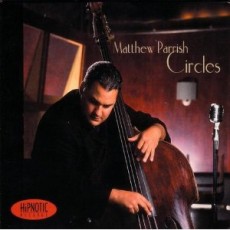
Matthew Parrish was born on October 14, 1969 in Fresno, California. Traveling with his parents most of his formative years, the bassist developed a wide appreciation for culture and arts and his family finally settled in New Jersey for his high school years. This led to his tenure at Rutgers Mason Gross School of the Arts. From there he moved to Philadelphia where his music studies really began at Ortliebs Jazz Haus.
At Ortliebs, Parrish played with Mickey Roker and Shirley Scott, backing everyone from Cecil Payne, Johnny Coles and Danny Turner to Sylvia Simms. He was soon partnered with Al Grey and while touring hit with Clark Terry, Marian McPartland, Dr. Lonnie Smith, Lou Donaldson, Joe Cohn, Savion Glover, Bill Charlap and many others.
Considering himself an East Coast player his list of accolades is more than sufficient to fall in the lineage of great Philly players. He has toured all over the world and his beautiful, warm and complex sound has earned him an impressive reputation in the music community. He has toured with Greg Osby, Stefon Harris and Regina Carter among others and continues to tour with the Dave Leonhardt group, Houston Person as well as the Vana Gierig Trio with Paquito D’Rivera. Bassist Matthew Parrish also continues to perfect his arrangements and compositions – a true passion for the music.

More Posts: bass

Daily Dose Of Jazz…
Yusef Lateef was born William Emanuel Huddleston on October 9, 1920 in Chattanooga, Tennessee and by the time he was five his family moved to Detroit. Throughout his early life Lateef came into contact with many Detroit-based jazz musicians who went on to gain prominence, including vibraphonist Milt Jackson, bassist Paul Chambers, drummer Elvin Jones and guitarist Kenny Burrell
Proficient on saxophone by graduation from high school at the age of 18, he launched his professional career and began touring with a number of swing bands. In 1949, he was touring with Dizzy Gillespie and his orchestra. In 1950, Lateef returned to Detroit and began his studies in composition and flute at Wayne State University. It was during this period that he converted to Islam.
Lateef began recording as a leader in 1957 for Savoy Records overlapping with Prestige Records subsidiary label New Jazz, collaborating with Wilbur Harden, Herman Wright, Frank Gant, and Hugh Lawson among others. By 1961, with the recording of Into Something and Eastern Sounds his dominant presence within a group context had emerged and his ‘Eastern’ influences are clearly audible in all of these recordings.
Along with trumpeter Don Cherry, Yusef can lay claim to being among the first exponents of the world music as sub-genres of jazz. He played on numerous albums, was a member of Cannonball Adderley’s Quintet during the early Sixties, was a major influence on John Coltrane, he began to incorporate contemporary soul and gospel phrasing into his music, founded his own label YAL Records and was commissioned by the WDR Radio Orchestra to compose the African American Epic Suite.
Lateef has written and published a number of books including two novellas and Yusef Lateef’s Flute Book of the Blues. He has received the Jazz Master Fellowship Award from the National Endowment for the Arts, and has had aired a special-documentary program for Lateef, titled A Portrait of Saxophonist Yusef Lateef In His Own Words and Music. He has recorded nearly six-dozen records as both a leader and sideman and continued to compose, perform, record and tour until his transition at age 93 on December 23, 2013 in Shutesbury, Massachusetts.
More Posts: bamboo flute,bassoon,koto,oboe,piano,saxophone,shehnai,shofar,vocal
Daily Dose Of Jazz…
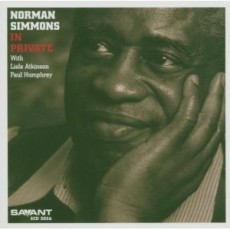
Norman Simmons was born on October 6, 1929 in Chicago, Illinois. As a child he was captivated by the sounds of the big band era, in particular, Duke Ellington’s orchestra. He started teaching himself piano and by sixteen enrolled in the Chicago School of Music, completing in four years.
In 1949 Norman formed his own group and began recording in 1952. An accomplished composer his tune “Jan” was a hit for tenorist Paul Bascomb the following year. Keeping a steady gig at the noted Chicago jazz spot “The Beehive” gave him the opportunity to back touring musicians like Wardell Gray, Lester Young and with Charlie Parker on his final Chicago performance in February 1955. But it was Ernestine Anderson who convinced him to move to New York City to continue working with her.
In New York Simmons performed with Johnny Griffin and played and wrote intricate arrangements for Eddie “Lockjaw” Davis. Upon the latter’s recommendation he teamed up with Carmen McRae for nine years before moving on with Betty Carter and Anita O’Day, where he found greater improvisational freedom. Late in the 70’s decade he began his long collaboration with Joe Williams and would work with Helen Humes and Sarah Vaughan among others.
As an educator he has taught at Paterson State College since 1982, participated in the Jazzmobile program for over twenty years, and has fostered music in public schools. His arrangement of Ramsey Lewis‘ 1966 hit of “Wade In The Water” became a large commercial success, he was a member of the Ellington Legacy Band beginning in 2002.
He arranged The Little Giant, The Big Soul-Band, and White Gardenia for Johnny Griffin, Teri Thornton‘s Devil May Care and Mark Murphy‘s Memories of You: Remembering Joe Williams.
Pianist, arranger, composer, and educator,Norman Simmons continued to perform, compose and arrange until he passed away on May 13, 2021.
More Posts: piano
Daily Dose Of Jazz…
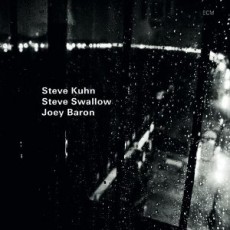
Steve Swallow was born on October 4, 1940 in Fair Lawn, New Jersey. As a child he studied piano and trumpet before turning to the double bass at age 14. While attending a prep school, he began trying his hand in jazz improvisation. In 1960 he left Yale, settled in New York City and played with Jimmy Giuffres trio with Paul Bley.
After joining Art Farmer‘s quartet in 1964, Swallow began to write. It is in the 1960s that his long-term association with Gary Burton’s various bands began. The early 1970s saw him switch exclusively to electric bass guitar, preferring the 5-string.
Steve became an educator in 1974 for two years teaching at the Berklee School of Music. In ‘78 he became an essential and constant member of Carla Bley‘s band, toured extensively with John Scofield in the early 1980s, has returned to this collaboration several times over the years.
Bassist Steve Swallow has consistently won the electric bass category in Down Beat magazine’s Critics and Readers yearly polls since the mid-80s. Having grown a catalogue of some five-dozen albums as a leader and sideman, he continues to compose, perform and record.
More Posts: bass
Daily Dose Of Jazz…
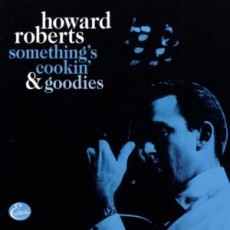
Howard Roberts was born on October 2, 1929 in Phoenix, Arizona and began playing guitar at age 8. By age15 he was playing professionally locally. 1950 saw him moving to Los Angeles, California where he began jamming with Sonny Stitt, Dexter Gordon and Buddy DeFranco and working with musicians, arrangers and songwriters including Neal Hefti, Henry Mancini, Bobby Troup, Chico Hamilton, George Van Eps and Barney Kessel. 1952 was the year Roberts played on his first record date, Jam Session No. 10 with Gerry Mulligan and Jimmy Rowles. Around 1956, Bobby Troup signed him to Verve Records and he decided to concentrate on recording, both as a solo artist and session musician.
Roberts played rhythm guitar, lead guitar, bass and mandolin in the studio, for television and movie projects on such projects as The Twilight Zone, The Munsters, I Dream of Jeannie. He would work on Julie London’s Blue Moon recording, with Peggy Lee, George Auld, Shelley Fabares, Chet Atkins, Dean Martin, The Monkees, Roy Clark and many others. As a member of The Wrecking Crew,and part of Phil Spector‘s Wall of Sound, in 2007 he was inducted into the Musicians Hall of Fame and Museum in Nashville, Tennessee.
In 1961, Howard designed a signature guitar with a round sound hole and single pickup that was originally produced by Gibson’s Epiphone division. Two years later he recorded his first two albums of nine with Capitol, before signing with ABC/Impulse Records. From the late 1960s, Roberts began to focus on teaching, traveling around the country giving guitar seminars, and writing several instructional books.
For some years he also wrote an acclaimed column “Jazz Improvisation” for Guitar Player magazine and founded the Guitar Institute of Technology and Playback Publishing. Guitarist Howard Roberts died of prostate cancer in Seattle, Washington on June 28, 1992, leaving a jazz catalogue of more than two-dozen albums as a leader and sideman.
More Posts: guitar