

Daily Dose Of Jazz…
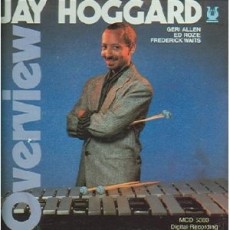
Jay Hoggard was born September 24, 1954 in Washington, D.C. but grew up in Mount Vernon, New York. His mother taught him how to play piano at a young age and picked up the saxophone long before age 15 when he started playing the vibraphone. He played with Anthony Davis and Leo Smith in the early 1970s around New England.
After moving to New York City in 1988 Jay worked again with Davis and with Chico Freeman, Sam Rivers, Cecil Taylor, James Newton, and Kenny Burrell. He would go on to collaborate and perform over the next few decades with Lionel Hampton, Milt Jackson, Tito Puente, Bobby Hutcherson, Billy Taylor, James Newton, Hilton Ruiz and Oliver Lake.
An international performer Hoggard has played on stages and jazz festivals in Africa, South America, Europe, Asia and the Caribbean and throughout the United States as well as appearing on television. Since 1978 he has recorded more than a dozen and a half sessions as a leader and many dates as a sideman. Vibraphonist Jay Hoggard currently teaches at his alma mater Wesleyan University.
More Posts: vibraphone
Daily Dose Of Jazz…
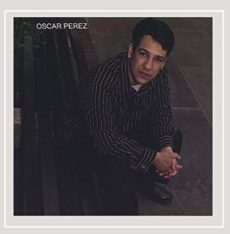
Oscar Perez was born on August 21, 1974 in Queens, New York City and from the age of seven he has been expressing himself on a piano. Raised on his father’s Cuban folk music, his piano lessons and playing in the church band made his commitment to the music his life before the ninth grade. Attending LaGuardia High School for the Performing Arts, jazz would take him on his musical and personal journey.
He studied with Robert Harris of Juilliard and Edgar Roberts of New York University before matriculating through the University of North Florida. Under the American Music Scholarship, he studied with jazz pianists Harry Pickens and Kevin Bales, and it was here that he began composing for small group and big band. He went on to study with Danilo Perez at the New England Conservatory in Boston, Massachusetts, weekend gigging in New York City, and a Master’s Degree at the Aaron Copland School of Music at Queens College in New York under the guidance of Sir Roland Hanna. While studying composition and arranging with Phillip Michael Mossman, he got many writing and arranging opportunities.
By his early twenties he was sharing the stage with Bunky Green, George Russell, Curtis Fuller and George Garzone and has played with Wycliffe Gordon, Christian McBride, Eddie Allen, Mike Lee, Steve Turre, Dave Stryker, Melissa Walker, Phoebe Snow and Charenee Wade. With saxophonist Adrian Cunningham he recorded Professor Cunningham And His Old School.
He was appointed music director for St Edward’s Church in Harlem, and the accompanist for the Nightingale/Bamford Gospel Choir. He recorded his debut CD Nuevo Comienzo in 2016 with his quintet, Afropean Affair, featuring guest artists trombonist Wycliffe Gordon and guitarist Peter Bernstein.
As an educator and performer he has taught and played at the Kupferberg Center at Queens College, the Juilliard School, Jazz Connections Camp at Montclair St. University, Carnegie Hall, the New York Pops, JazzHouse Kids and Jazz at Lincoln Center. He received the 2006 ASCAP/IAJE Commission in honor of Billy Strayhorn and premiered the work at the 2007 International Association of Jazz Education Convention. He was a finalist in the 2014 Jacksonville Jazz Piano Competition. Pianist Oscar Perez continues to compose, perform and record.
More Posts: piano
Daily Dose Of Jazz…
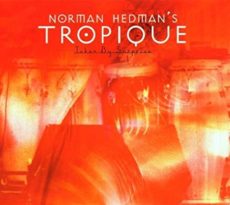
Norman Hedman was born July 17, 1945 in the West Indies and discovered his first hand drum, a conga, in a Brooklyn garbage can. Instinctively repairing the conga at age 12, he has been playing music ever since.
Hedman founded Tropique in 1995 and the percussion instruments of timbales, cowbells and congas formed his Latin jazz and island flavor sound. This first call percussionist brought together an array of talent from around the globe to create music that spanned teenage to silver generations appreciating and enjoying his music. His new and inventive concepts, clean, tight lines and original compositions were his hallmark of success.
Over the course of his career Norman composed five number one R&B hits with one receiving 5 Grammy awards, in addition to two platinum and two gold albums, composed three songs for movie soundtracks for Ali, Shaft and Dr. Doolittle 2. His One Step Closer, Taken By Surprise and Healing Hands albums by his group Norman Hedman’s Tropique were nominated for Best Latin Jazz Album.
He has worked with Arturo Sandoval, Nancy Wilson, Bobby Watson, Grady Tate, Pat Martino, Chico and Vaughn Freeman, Arthur Blythe, George Cables, John Hicks, Gary Bartz, Ahmad Alladeen, Giovannie Hidalgo, Hilton Ruiz, Horacee Arnold, Airto Moreira, Monguito Santamaria, Delmar Brown, Lew Soloff and Marcus Miller.
Percussionist, producer and composer Norman Hedman passed away from acute myeloid leukemia and pneumonia on September 29, 2008 in New York City.
More Posts: percussion
Daily Dose Of Jazz…
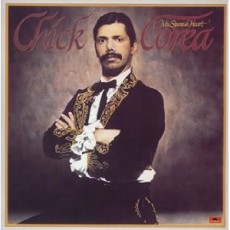
Chick Corea was born Armando Anthony Corea on June 12, 1941 in Chelsea, Massachusetts of Sicilian and Spanish descent. His father, a jazz trumpeter led a Dixieland band introduced him to the piano at the age of four. Growing up surrounded by jazz music, he was influenced at an early age by bebop stars Dizzy Gillespie, Charlie Parker, Bud Powell, Horace Silver and Lester Young. At eight Corea added drums, which later influenced his use of the piano as a percussion instrument.
Corea started taking piano lessons and musical composition at age eight and went on to spend several years in the drum and bugle corps, the Knights of St. Rose. By high school he was gigging, listening to Herb Pomeroy’s band at the time, and had a trio that performed Horace Silver’s music at a local jazz club.
A move to New York had him studying music at Columbia University and The Julliard School but found them both disappointing, subsequently immersing himself in the New York jazz scene. Corea’s first major professional gig was with Cab Calloway, followed by Blue Mitchell, Herbie Mann, Willie Bobo and Mongo Santamaria. He released his debut album Tones For Joan’s Bones in 1966 and has followed with an impressive discography.
He would venture into the avant-garde with Miles Davis on Filles de Kilimanjaro, In A Silent Way and Bitches Brew; and on Joe Farrell’s Song of the Wind. Hew would record and tour with Davis into the 70s until leaving to form the group “Circle” with Dave Holland, pushing more free jazz. Striking out on his own, in 1971 he formed the fusion band Return To Forever that featured Flora Purim on vocals and has spawned a multitude of albums with his most popular tune “Spain” coming from the Light As A Feather album.
He has done duet projects, delved into electric instrumentation, has won 18 Grammys out of 51 nominations, two Latin Grammy awards, has been inducted into the Grammy Hall of Fame for Now He Sings, Now He Sobs, formed the 5 Peace Band and continued to perform, tour and record until his death. Pianist, keyboardist, and composer Chick Corea passed away of a rare form of cancer at his home near Tampa Bay, Florida on February 9, 2021, at age 79
More Posts: piano
Daily Dose Of Jazz…
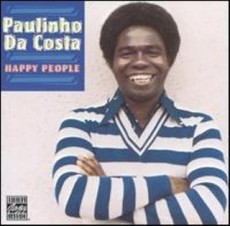
Paulinho da Costa was born Paulo Roberto da Costa on May 31, 1948 in Rio de Janiero, Brazil. Learning to play percussion as a child of five by exploring the different sounds of everything he could get his hands on. While still in his early teens, he joined several musical groups, traveling extensively throughout the world. Upon arriving in the United States, the multi-versed percussionist carved a sizable niche in the music community,
Over the course of five decades Paulinho has participated in thousands of recording sessions, performed on the soundtracks of nearly two hundred films and television shows, recorded seven albums as a leader for A&M, Concord and Pablo record labels, and has been a part of several Grammy winning albums.
He playing has crossed over to work in a variety of music genres including Brazilian, blues, Christian, country, disco, gospel, hip hop, jazz, Latin, pop, R & B, rock, soul and world.
He has performed, collaborated and recorded with an impressive list of musicians and vocalists from A to Z not limited to Bill Cunliffe, Chico Freeman, Chicago, Miles Davis, Earth Wind and Fire, Ricky Martin, Eliane Elias, Toots Thielemans, Sammy Nestico, Dizzy Gillespie, Cher, The Gap Band, Bobby McFerrin, Michael Jackson, Ramsey Lewis, Chet Atkins, Sadao Watanabe, Tori Amos, Stix Hooper and Quincy Jones to name just a few.
Percussionist Paulinho Da Costa is currently proficient on more than two hundred percussion instruments and is considered one of the most recorded musicians of modern times.
More Posts: percussion