

Daily Dose Of Jazz…
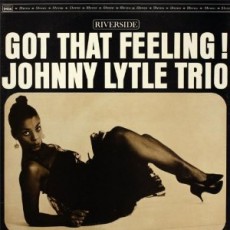
Johnny Lytle was born John Dillard Lytle on October 13, 1932 in Springfield, Ohio, the son of a trumpeter father and an organist mother. He began playing the drums and piano at an early age. Before studying music in earnest, he was a boxer and was a successful Golden Gloves champion. During the late ’50s, Lytle continued to box, but landed jobs as a drummer for Ray Charles, Jimmy Witherspoon and Gene Ammons.
Switching from drums to vibraphone Johnny toured with organist Hiram “Boots” Johnson in 1955 and then formed his first group in 1957 with saxophonist Boots Johnson, organist Milton Harris and drummer William “Peppy” Hinnant. He so impressed Grammy winning producer Orrin Keepnews who signed him to his Jazzland label in 1960.
Known for his great hand speed and showmanship, Lytle was also a songwriter, penning many of his own hits, including “The Loop,” “The Man,” “Lela,” “Selim” (honoring Miles Davis), and the jazz classic “The Village Caller”. He recorded more than 30 albums for various jazz labels including Tuba, Jazzland, Solid State and Muse. Throughout his career he performed and recorded with a host of jazz greats including Louis Armstrong, Lionel Hampton, Miles Davis, Nancy Wilson, Bobby Timmons and Roy Ayers.
Johnny never recorded with any of the major record labels fearing loss of control of his music and creative development, thus never gaining the status of a jazz icon like some of his peers, but finding success early in his career with chart-topping albums like A Groove, The Loop, and Moonchild. Nicknamed “Fast Hands,” he always kept an audience’s attention, was popular on the jazz circuit and built a respectable catalog of music with recordings in the ’70s,’80s and ’90s. Johnny toured throughout the U.S. and Europe, with his last performance one month before his passing on December 15, 1995 in his hometown of Springfield. The street where the vibraphonist and drummer used to live was renamed Johnny Lytle Avenue in his honor.
More Posts: drums,vibraphone
Daily Dose Of Jazz…
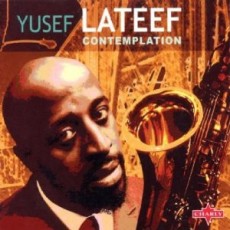
Yusef Lateef was born William Emanuel Huddleston on October 9, 1920 in Chattanooga, Tennessee and by the time he was five his family moved to Detroit. Throughout his early life Lateef came into contact with many Detroit-based jazz musicians who went on to gain prominence, including vibraphonist Milt Jackson, bassist Paul Chambers, drummer Elvin Jones and guitarist Kenny Burrell
Proficient on saxophone by graduation from high school at the age of 18, he launched his professional career and began touring with a number of swing bands. In 1949, he was touring with Dizzy Gillespie and his orchestra. In 1950, Lateef returned to Detroit and began his studies in composition and flute at Wayne State University. It was during this period that he converted to Islam.
Lateef began recording as a leader in 1957 for Savoy Records overlapping with Prestige Records subsidiary label New Jazz, collaborating with Wilbur Harden, Herman Wright, Frank Gant, and Hugh Lawson among others. By 1961, with the recording of Into Something and Eastern Sounds his dominant presence within a group context had emerged and his ‘Eastern’ influences are clearly audible in all of these recordings.
Along with trumpeter Don Cherry, Yusef can lay claim to being among the first exponents of the world music as sub-genres of jazz. He played on numerous albums, was a member of Cannonball Adderley’s Quintet during the early Sixties, was a major influence on John Coltrane, he began to incorporate contemporary soul and gospel phrasing into his music, founded his own label YAL Records and was commissioned by the WDR Radio Orchestra to compose the African American Epic Suite.
Lateef has written and published a number of books including two novellas and Yusef Lateef’s Flute Book of the Blues. He has received the Jazz Master Fellowship Award from the National Endowment for the Arts, and has had aired a special-documentary program for Lateef, titled A Portrait of Saxophonist Yusef Lateef In His Own Words and Music. He has recorded nearly six-dozen records as both a leader and sideman and continued to compose, perform, record and tour until his transition at age 93 on December 23, 2013 in Shutesbury, Massachusetts.
More Posts: bamboo flute,bassoon,koto,oboe,piano,saxophone,shehnai,shofar,vocal
Daily Dose Of Jazz…
Steve Swallow was born on October 4, 1940 in Fair Lawn, New Jersey. As a child he studied piano and trumpet before turning to the double bass at age 14. While attending a prep school, he began trying his hand in jazz improvisation. In 1960 he left Yale, settled in New York City and played with Jimmy Giuffres trio with Paul Bley.
After joining Art Farmer‘s quartet in 1964, Swallow began to write. It is in the 1960s that his long-term association with Gary Burton’s various bands began. The early 1970s saw him switch exclusively to electric bass guitar, preferring the 5-string.
Steve became an educator in 1974 for two years teaching at the Berklee School of Music. In ‘78 he became an essential and constant member of Carla Bley‘s band, toured extensively with John Scofield in the early 1980s, has returned to this collaboration several times over the years.
Bassist Steve Swallow has consistently won the electric bass category in Down Beat magazine’s Critics and Readers yearly polls since the mid-80s. Having grown a catalogue of some five-dozen albums as a leader and sideman, he continues to compose, perform and record.
More Posts: bass
Daily Dose Of Jazz…
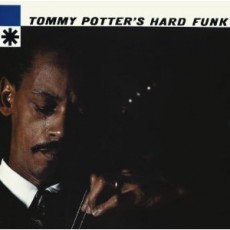
Tommy Potter was born Charles Thomas Potter in Philadelphia, Pennsylvania on September 21, 1918. He began on the bass fairly late, originally playing piano and guitar and not switching to bass until he was already 21 in 1940. He played with John Hardee and Max Roach before joining Charlie Parker’s “classic quintet”, first playing with him in 1944, then John Malachi and Trummy Young before hitting with Billy Eckstine‘s band with Dizzy Gillespie, Lucky Thompson and Art Blakey, and worked with Miles Davis between 1947 and 1950.
In the 1950s he remained in demand though never a major soloist himself on the level of an Oscar Pettiford, Potter was really an advanced swing stylist who was flexible and skilled enough to keep up with Parker’s rapid tempos.
Potter performed and recorded with such notable jazz musicians including Al Cohn, Count Basie, Buck Clayton, Harry “Sweets” Edison, Stan Getz, Tyree Glenn, Eddie Heywood, Earl Hines, Charles Lloyd, Bud Powell, Max Roach, Sonny Rollins, Thelonious Monk, Jimmy Forrest, Gene Ammons, Cecil Payne, Sonny Stitt, Artie Shaw and numerous others.
After playing in a Charlie Parker memorial group in 1965, he gradually dropped out of music, becoming semi-retired and on March 1, 1988 double bassist Tommy Potter passed away.
More Posts: bass
Daily Dose Of Jazz…
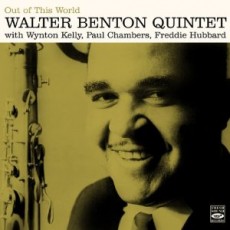
Walter Benton was born September 9, 1930 in Los Angeles, California and first began playing saxophone as in high school. After three years of service in the Army in the early 1950s, he played in 1954 with Kenny Clarke, Max Roach and Clifford Brown.
From 1954 to 1957 he played Afro-Latin jazz with Pérez Prado, touring Asia with the band. Returning to the States, he went on to work with Quincy Jones in 1957 and Victor Feldman in 1958-59. He led his own group from 1959, recording under his own name in 1960 with Freddie Hubbard , Wynton Kelly , Paul Chambers , and Albert “Tootie” Heath.
That same year he worked again with Max Roach and Julian Priester. In 1961 he recorded with Abbey Lincoln, Roach once more, Eric Dolphy and Slide Hampton. By the late 1960s he was working with Gerald Wilson and John Anderson.
As so often happens with great players, in the late 60’s Benton became discouraged with the state of jazz and the overall music business, disappeared from the scene, sank into poverty never re-discovered. He stopped playing and lived the rest of his days in cheap rooming houses and collected a pittance of social assistance.
On August 14, 2000, West Coast tenor saxophonist Walter Benton, who played cool and bluesy, ventured into free and wild before returning to his roots with his beautiful dark and somewhat diffused sound coupled with his own ideas and phrasing, passed away in total obscurity in Los Angeles at the age of 69.
More Posts: saxophone