

Daily Dose Of Jazz…
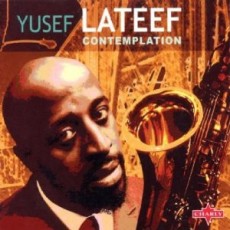
Yusef Lateef was born William Emanuel Huddleston on October 9, 1920 in Chattanooga, Tennessee and by the time he was five his family moved to Detroit. Throughout his early life Lateef came into contact with many Detroit-based jazz musicians who went on to gain prominence, including vibraphonist Milt Jackson, bassist Paul Chambers, drummer Elvin Jones and guitarist Kenny Burrell
Proficient on saxophone by graduation from high school at the age of 18, he launched his professional career and began touring with a number of swing bands. In 1949, he was touring with Dizzy Gillespie and his orchestra. In 1950, Lateef returned to Detroit and began his studies in composition and flute at Wayne State University. It was during this period that he converted to Islam.
Lateef began recording as a leader in 1957 for Savoy Records overlapping with Prestige Records subsidiary label New Jazz, collaborating with Wilbur Harden, Herman Wright, Frank Gant, and Hugh Lawson among others. By 1961, with the recording of Into Something and Eastern Sounds his dominant presence within a group context had emerged and his ‘Eastern’ influences are clearly audible in all of these recordings.
Along with trumpeter Don Cherry, Yusef can lay claim to being among the first exponents of the world music as sub-genres of jazz. He played on numerous albums, was a member of Cannonball Adderley’s Quintet during the early Sixties, was a major influence on John Coltrane, he began to incorporate contemporary soul and gospel phrasing into his music, founded his own label YAL Records and was commissioned by the WDR Radio Orchestra to compose the African American Epic Suite.
Lateef has written and published a number of books including two novellas and Yusef Lateef’s Flute Book of the Blues. He has received the Jazz Master Fellowship Award from the National Endowment for the Arts, and has had aired a special-documentary program for Lateef, titled A Portrait of Saxophonist Yusef Lateef In His Own Words and Music. He has recorded nearly six-dozen records as both a leader and sideman and continued to compose, perform, record and tour until his transition at age 93 on December 23, 2013 in Shutesbury, Massachusetts.
More Posts: bamboo flute,bassoon,koto,oboe,piano,saxophone,shehnai,shofar,vocal
Daily Dose Of Jazz…
Steve Swallow was born on October 4, 1940 in Fair Lawn, New Jersey. As a child he studied piano and trumpet before turning to the double bass at age 14. While attending a prep school, he began trying his hand in jazz improvisation. In 1960 he left Yale, settled in New York City and played with Jimmy Giuffres trio with Paul Bley.
After joining Art Farmer‘s quartet in 1964, Swallow began to write. It is in the 1960s that his long-term association with Gary Burton’s various bands began. The early 1970s saw him switch exclusively to electric bass guitar, preferring the 5-string.
Steve became an educator in 1974 for two years teaching at the Berklee School of Music. In ‘78 he became an essential and constant member of Carla Bley‘s band, toured extensively with John Scofield in the early 1980s, has returned to this collaboration several times over the years.
Bassist Steve Swallow has consistently won the electric bass category in Down Beat magazine’s Critics and Readers yearly polls since the mid-80s. Having grown a catalogue of some five-dozen albums as a leader and sideman, he continues to compose, perform and record.
More Posts: bass
Daily Dose Of Jazz…
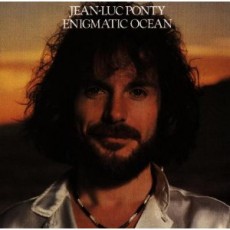
Jean-Luc Ponty was born September 29, 1942 in Avranches, France to parents who taught and played violin, piano and clarinet. At sixteen, he was admitted to the Conservatoire National Supérieur de Musique de Paris, graduating two years later with the institution’s highest award, Premier Prix. He was immediately hired by one of the major symphony orchestras, Concerts Lamoureux, where he played for three years.
While still a member of the orchestra in Paris, Ponty picked up a side gig playing clarinet for a college jazz band that regularly performed at local parties. This life-changing jumping-off point sparked an interest in the jazz sounds of Miles Davis and John Coltrane, compelling him to take up the tenor saxophone. After a night in a local club with his violin it only took four years to be widely accepted as the leading figure in jazz fiddle.
Adopting the electric violin was at first proved to be a handicap as few at the time viewed the instrument as having no legitimate place in the modern jazz vocabulary. With a powerful sound that eschewed vibrato, Jean-Luc distinguished himself with be-bop era phrasings and a punchy style, that by 1964, at age 22, he released his debut solo album for Philips, Jazz Long Playing. He would go on to record with violin greats like Stuff Smith, Stéphane Grappelli, and Svend Asmussen, perform at Monterey in 1967 with John Lewis, snag a recording contract and work with Gerald Wilson Big Band, the George Duke Trio and Niels-Henning Orsted Pederson.
In 1969, Frank Zappa composed the music for Jean-Luc’s solo album King Kong; in 1972 Elton John collaborated with Ponty on Honky Chateau, and within a year emigrated to America, making his home in Los Angeles, California. He worked with John McLaughlin Mahavishnu Orchestra, and in 1975 signed with Atlantic Records. For the next decade, Jean-Luc toured the world repeatedly and recorded 12 consecutive albums which all reached the top 5 on the Billboard Jazz charts.
Over the course of his prolific career, violinist Jena-Luc Ponty has performed with the Pittsburgh New Music Ensemble, Radio City Orchestra, with symphonies around the world, Stanley Clarke and Al Di Meola, a host of American and African musicians, collaborated with his pianist daughter Clara on several project, joined the 4th incarnation of Return To Forever in 2011 and continues perform, tour and record, adding to his more than four dozen album catalogue.
More Posts: violin
Daily Dose Of Jazz…
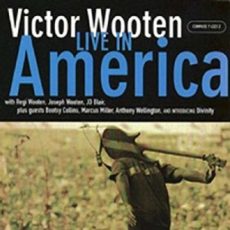
Victor Lemonte Wooten was born on September 11, 1964 in Mountain Home, Idaho and was the youngest of the five Wooten Brothers; Regi, Roy, Rudy and Joseph, all of whom are musicians. Regi began to teach him to play bass when he was two, and by the age of six was performing with his brothers in their family band, The Wooten Brothers Band. As a United States Air Force family, they moved around a lot when he was very young, but the family finally settled in the Warwick Lawns neighborhood of Newport News, Virginia in 1972.
While in high school, he and his brothers played in the country music venue at Busch Gardens theme park in Williamsburg, Virginia, Graduating from Denbigh High School in 1982, by 1987 Victor was traveling to Nashville, Tennessee to visit friends that he made at the theme park, one of whom was a studio engineer who introduced him to Béla Fleck, with whom he still collaborates musically.
As an educator Wooten has created a music program called Bass/Nature camp that has since expanded into the Victor Wooten Center for Music and Nature and now includes all instruments. All of his camps are held at his location called Wooten Woods which is a 147 acre retreat center located in Only, Tennessee, outside of Nashville. He also co-leads the Victor Wooten/Berklee Summer Bass Workshop at Berklee College of Music in Boston, MA. He collaborates with Berklee Bass Dept. chair, Steve Bailey and the two bassists have been teaching together since the early 1990s.
He has been featured on the cover of Making Music Magazine, has won the “Bass Player of the Year” award from Bass Player magazine three times, is the first to win the award more than once, and was named #10 in the “Top 10 Bassists of All Time” by Rolling Stone. As a leader he has recorded ten albums, another seven with various groups and with Béla Fleck , fourteen. He has authored a novel titled “The Music Lesson: A Spiritual Search for Growth Through Music” and has a sequel in the making. Bassist, composer, author, producer, educator, and five-time Grammy Award winner Victor Wooten, who has recorded an album titled SMV with Stanley Clarke and Marcus Miller, continues to compose, perform and record.
More Posts: bass
Daily Dose Of Jazz…
Onaje Allan Gumbs was born Allan Bentley Gumbs on September 3, 1949 in Harlem, New York but grew up in St. Albans, Queens. Starting to play piano at age 7, Henry Manciniwas one of his earliest and greatest influences, hearing Peter Gunn and Mr. Lucky themes on television. He later studied at the Music and Art High School in Manhattan and was mentored by Erskine Tate Alum Leroy Kirkland.
During this time, he was playing in a Latin band, a big band, playing piano duets and listening to records made by Motown and Blue Note, developing an interest in R&B in conjunction with the straight-ahead jazz of Horace Silver, Dizzy Gillespie, Lalo Schifrin, Gil Evans, Miles Davis, McCoy Tyner and John Coltrane. He went on to study classical piano, composition, arranging and graduated with a degree in Education at the State University of New York at Fredonia in upstate New York.
In 1971, Leroy Kirkland introduced Onaje to guitarist Kenny Burrell and a subsequent gig led him to play with Larry Ridley and The Thad Jones/ Mel Lewis Orchestra. He would join jazz ensemble Natural Essence that included Thelonious Monk Jr. In 1972he went to work with Norman Connors as an arranger on the Dark of Light album and contributed keyboards on the albums Love From the Sun, Saturday Night Special, You Are My Starship, Invitation and Mr. C.
Toward the late 1970s, Onaje spent two years working in Woody Shaw‘s band as pianist, arranger, and occasional composer, in which the group won the Down Beat Reader’s Poll for Best Jazz Group and for Best Jazz Album in 1978 for Rosewood. His first solo piano project was simply titled Onaje and was followed by venturing into R&B and subsequently ending up on the smooth jazz charts and rotations for nearly 20 years with his composition “Quiet Passion”.
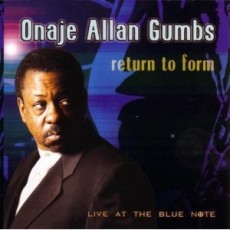
In 2003, Onaje return to straight-ahead with his release of the live album Return to Form, and garnering critical acclaim the next year with a project on his own label, Ejano, titled Remember Their Innocence. These were followed with Grady Tate‘s Sack Full of Dreams before his stroke in 2010 but by year end had recorded and release Just Like Yesterday in Japan, with all signs of a stroke vanished. His sideman work has included stints with Buster Williams, Cecil McBee, and Betty Carter and most recently with Avery Sharpe on the 2012 album Sojourner Truth: Ain’t I A Woman.
He has received the Min-on-Art Award, has his song Dare To Dream chosen by Panasonic as the theme for their 10th anniversary celebration of Kid Witness News, composed, arranged and performed the original score for the Showtime film, Override and was nominated for an NAACP Image Award.
Suffering a stroke in 2010 he was able to return to music two weeks later. In 2015 he was hospitalized again for two weeks but made a full recovery and returned to composing and performance. Pianist, composer, arranger and bandleader Onaje Allen Gumbs passed away at 70 on April 6, 2020.
More Posts: piano