Daily Dose Of Jazz…
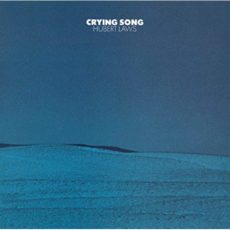
Hubert Laws was born November 10, 1939 in the Studewood section of Houston, Texas, the second of eight children. He grew up across the street from a honky-tonk called Miss Mary’s Place where his grandfather played harmonica and his mother, a pianist, played gospel music. He began playing flute in high school after volunteering to substitute for the school orchestra’s regular flutist. Becoming adept at jazz improvisation he played in the Houston-area jazz group the Swingsters, which eventually evolved into the Modern Jazz Sextet, the Night Hawks, and The Crusaders. At age 15, he was a member of the early Jazz Crusaders while in Texas from 1954–60. Multi-talented, he also played classical music during those years.
A scholarship to Juilliard School of Music in 1960 saw him studying music in the classroom and with master flutist Julius Baker. Laws went on to play with both the New York Metropolitan Opera Orchestra (member) and the New York Philharmonic Orchestra during the years 1969–72. In 971 he recorded renditions of classical compositions by Fauré, Stravinsky, Debussy, and Bach on the CTI album Rite of Spring with strings and enlisted the talents of Airto Moreira, Jack DeJohnette, Bob James, and Ron Carter.
During his years at Juilliard he played flute with Mongo Santamaría and began recording as a bandleader for Atlantic in 1964, releasing the albums The Laws of Jazz, Flute By-Laws, and Laws Cause. He has worked with In the Seventies he can also be heard playing tenor saxophone on some recordings.
The 1980’s saw the minor hit Family on CBS Records getting played on many UK soul radio stations. In the 1990s Hubert resumed his career, recording with opera singers Kathleen Battle and Jessye Norman. His albums on the Music Masters Jazz label—My Time Will Come in 1990 and Storm Then Calm in 1994 show a return to his old form of his early 1970s albums.
Over the course of his career he also recorded with Herbie Hancock, Chick Corea, McCoy Tyner, Nancy Wilson, Quincy Jones, Paul McCartney, Paul Simon, Aretha Franklin, Ella Fitzgerald, Sarah Vaughan, Lena Horne, Leonard Bernstein, Antonio Carlos Jobim, James Moody, Jaco Pastorius, Sérgio Mendes, Steve Barta, Bob James, Carly Simon, Grant Green, George Benson, Freddie Hubbard, Clark Terry, Stevie Wonder, J. J. Johnson, and The Rascals, Morcheeba Ashford & Simpson, Chet Baker, George Benson, and Moondog, his brother Ronnie, Gil Scott-Heron, among others, and was a member of the New York Jazz Quartet.
Laws has been honored with the Lifetime Achievement Awards from the National Flute Association and the National Endowment for the Arts in the field of jazz, as well as a recipient of the NEA Jazz Masters Award and three Grammy nominations. Flautist and tenor saxophonist Hubert Laws who also plays the piccolo, continues to compose, record and perform.
Daily Dose Of Jazz…
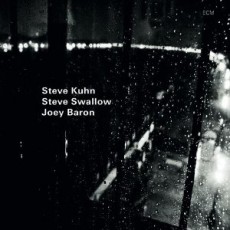
Steve Swallow was born on October 4, 1940 in Fair Lawn, New Jersey. As a child he studied piano and trumpet before turning to the double bass at age 14. While attending a prep school, he began trying his hand in jazz improvisation. In 1960 he left Yale, settled in New York City and played with Jimmy Giuffres trio with Paul Bley.
After joining Art Farmer‘s quartet in 1964, Swallow began to write. It is in the 1960s that his long-term association with Gary Burton’s various bands began. The early 1970s saw him switch exclusively to electric bass guitar, preferring the 5-string.
Steve became an educator in 1974 for two years teaching at the Berklee School of Music. In ‘78 he became an essential and constant member of Carla Bley‘s band, toured extensively with John Scofield in the early 1980s, has returned to this collaboration several times over the years.
Bassist Steve Swallow has consistently won the electric bass category in Down Beat magazine’s Critics and Readers yearly polls since the mid-80s. Having grown a catalogue of some five-dozen albums as a leader and sideman, he continues to compose, perform and record.
More Posts: bass
Daily Dose Of Jazz…
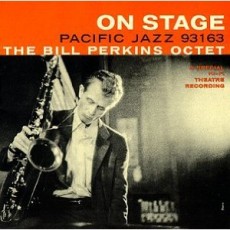
Bill Perkins was born on July 22, 1924 in San Francisco, California, grew up in Chile, moved to Santa Barbara and served in the military during World War II. While living in Santa Barbara after his discharge, he studied music and engineering at Cal-Tech at the University of California and a Westlake College.
Bill started out performing in the big bands of Woody Herman and Jerry Wald. He also worked for the Stan Kenton orchestra, a move that subsequently led to his entry into the cool jazz idiom. He became one of the coolest and a major influence in the cool school on the West Coast jazz scene.
Perk, as he was known, started recording as a leader in 1956 with John Lewis on Grand Encounter and sessions with Art Pepper, Bud Shank and Richie Kamuca, to name just a few. During the 60s he held had a dual career as a studio musician and recording engineer. From 1970-1992 he held a chair in The Tonight Show band and a member of the Bud Shank Sextet.
Though he played baritone, alto, soprano and flute he was best known for his tenor and most remembered for his baritone and tenor work with The Lighthouse All-Stars. Over the course of his career Bill Perkins recorded twenty-three albums as a leader and sideman up until the time of his death on August 9, 2003.
Daily Dose Of Jazz…
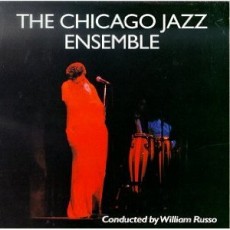
Bill Russo was born William Russo on June 25, 1928 in Chicago, Illinois and studied piano under Lennie Tristano. He would become an arranger and composer and by the 1950s was writing groundbreaking orchestral scores for the Stan Kenton Orchestra. He would compose for Kenton 23 Degrees N 82 Degrees W, Frank Speaking, Portrait of a Count and one of his most famous Halls Of Brass, featuring Buddy Childers, Maynard Ferguson and Milt Bernhart.
By the 60s Russo moved to England, founded the London Jazz Orchestra, and contributed to the Third Stream movement that sought to close the gap between jazz and classical music. Returning to Chicago by mid-decade he founded Columbia College’s music department, became the director of its Center for New Music, the college’s first full-time faculty member and the Director of Orchestral Studies at Scuola Europea d’Orchestra Jazz in Palermo, Italy.
Bill has composed classical symphonies, choral works, operas and several works for the theater. He has received a Koussevitsky award, had his work performed by the New York Philharmonic, the San Francisco and Chicago Symphony Orchestras, and has set music to the poetry of Gertrude Stein as well as scores for dance and film.
Russo has worked with Manny Albam, Teo Macero, Teddy Charles, Donald Byrd, Phil Woods, Bill Evans, Eddie Costa, Bob Brookmeyer, Al Cohn and Art Farmer among others. Starting the Chicago Jazz Ensemble, which is dedicated to preserving and expanding jazz, He was succeeded by Jon Faddis and it is currently under the artistic direction of Dana Hall. Trombonist, composer, arranger, eudcator and author Bill Russo passed away on January 11, 2003 after a bout with cancer. He was 74 years old.
Daily Dose Of Jazz…
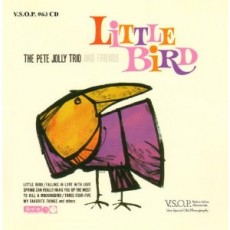
Pete Jolly was born Peter Ceragioli Jr. on June 5, 1932 in New Haven, Connecticut. He began playing the accordion at age three under his father’s tutelage, then took lessons from age seven and appeared on the CBS radio program Hobby Lobby at the age of eight. The emcee called him Jolly and liking it, adopted the name. He would soon add piano to his musical talents.
Moving to Phoenix, Arizona with his family, by high school Pete was playing at the Jazz Mill behind such visitors as Chet Baker and Benny Carter. After graduation he moved to Los Angeles in 1954 and within days was playing behind Shorty Rogers. Over the next ten years he would play with Gerry Mulligan, Mel Torme, Red Norvo, Buddy DeFranco, Terry Gibbs, Art Pepper, Anita O’Day, Ray Conniff and Marty Paich.
He also began his long recording career as a leader in 1955 with the album, Jolly Jumps In for RCA. Over the next forty-five years, Jolly would record over twenty albums, but rarely more than twice with the same label. The highlight of his career came in 1963, when his bossa nova flavored composition, “Little Bird” recorded for Ava Records, earned him a Grammy nomination. He formed the Pete Jolly Trio in 1964, recording as a solo artist and with trio several albums until his final in 2000.
Pete was well known for his performances on television programs such as Get Smart, The Love Boat, I Spy, Mannix, M*A*S*H and Dallas, as well as hundreds of movie soundtracks. He continued performing with his trio until shortly before being hospitalized in August 2004. Jazz pianist and accordionist Pete Jolly passed away on November 6, 2004 in Pasadena, California from complications of multiple myeloma at age 72.