

Daily Dose Of Jazz…
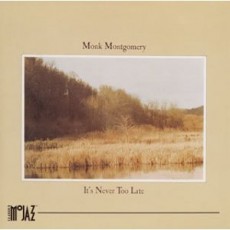
Monk Montgomery was born William Howard Montgomery on October 10, 1921 in Indianapolis, Indiana the older brother of Wes and Buddy. A student of the double bass, his professional career did not start until age 30, after Wes’ career began, and from 1951 to 1953 he worked in Lionel Hampton’s Orchestra.
Following that stint Monk worked with his brothers and Alonzo Johnson in the Montgomery Johnson Quintet. He would go on to record with his brothers as the Montgomery Brothers, releasing a number of albums together. 1955 saw him moving to Seattle, Washington to form The Mastersounds from 1957–1960. From 1966–1970, he freelanced with Cal Tjader, settled in Las Vegas, Nevada and continued to play with the Red Norvo Trio and worked with Kenny Burrell, Hampton Hawes, Jon Hendricks, Art Farmer, Hugh Masekela, The Jazz Crusaders and Eddie Harris among others.
In his final years he founded and was active in the Las Vegas Jazz Society and was planning a world jazz festival. He is perhaps the first electric bassist of significance to jazz, introducing in 1951 the Fender Precision Bass to the genre. Bassist Monk Montgomery died of cancer in Las Vegas on May 20, 1982.
More Posts: electric bass
Daily Dose Of Jazz…
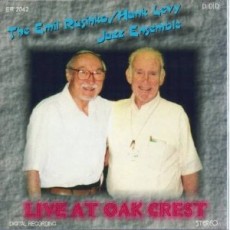
Hank Levy was born Henry Jacob Levy on September 27, 1927 in Baltimore, Maryland. He learned to play the saxophone and matriculated through Catholic University studying composition with George Thaddeus Jones. It was here that he became interested in odd meters through their use by such composers as Paul Hindemith, Maurice Ravel, and Igor Stravinsky. An adept composer of counterpoint, his talent can be heard in such compositions as Passacaglia and Fugue and Quintessence among others for both the Don Ellis Orchestra and Stan Kenton.
Levy was also prolific as an arranger of jazz standards, though few of them were published during his lifetime. He was especially fond of the music of the stage as it came through bebop: Cole Porter, George Gershwin, Jerome Kern. In his last years, he more frequently turned to bebop originals by Charlie Parker, Dizzy Gillespie, Tadd Dameron.
As an educator Hank was a full-time professor at Towson State University in 1967. He founded and directed for nearly a quarter of a century the Jazz Program and created the “Towson State Jazz Ensemble”. By 1970 he had brought the band to national prominence winning the outstanding band honors at the prestigious Notre Dame Jazz Festival, with and additional honor of “Best Lead Trumpet”.
Levy recorded an album in 1975 with the ensemble titled “2 + 2 = 5” comprised of six of his compositions. The “Hank Levy Legacy Band” currently performs his music, they have recorded two live CDs to date, and several of his works are still in print through various distributors. Saxophonist, composer and arranger Hank Levy passed away on September 18, 2001 in Parkville, Maryland.
Daily Dose Of Jazz…
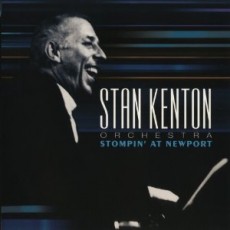
Ray Wetzel was born on September 22, 1924 in Parkersburg, West Virginia. He played lead trumpet for Woody Herman from 1943 to 1945 and for Stan Kenton from 1945 to 1948. He recorded in 1947 with the Metronome All-Stars, Vido Musso, and Neal Hefti before marrying bass player Bonnie Addleman in 1949.
While with the Charlie Barnet Orchestra in 1949, he played trumpet alongside Maynard Ferguson, Doc Severinsen, and Rolf Ericson.. He played with his wife in Tommy Dorsey‘s ensemble in 1950 and with Kenton again in 1951.
Never recording as a leader, he did however compose the Stan Kenton tune “Intermission Riff”. While touring with Dorsey in 1951, trumpeter Ray Wetzel was killed in a car crash at the age of 27 on August 17, 1951 in Sedgwick, Colorado.

Daily Dose Of Jazz…
Helen Ward was born September 19, 1913 in New York City and was taught her piano by her father, appeared on WOR and WNYC radio broadcasts and also worked as a staff musician at the latter. Helen started singing in Benny Goodman ’s first band in 1934 and became one of the first popular swing “girl singers”, as they were then called, and among Goodman’s most popular.
Ward and Benny had a brief romance and he came very close to proposing marriage to her in either 1935 or 1936. However, according to Ward in the documentary, Adventures in the Kingdom of Swing, he called it off at the last minute, citing his career. She married financier Albert Marx the following year and left the band. She moonlighted during her time with Goodman with other bands including the Teddy Wilson orchestra in 1936 and Larry Kent and his Orchestra in November of that same year (under the name “Vera Lane”).
In 1938, Marx arranged for Goodman’s Carnegie Hall concert to be recorded for her as an anniversary present. That recording was later released as a dual LP set by Columbia Records in 1950. During the 1940s, Ward worked with the bands of Matty Malneck and Harry James and became a radio show producer for WMGM in 1946-1947. In 1952, she recorded an album of Dixieland tunes with “Wild” Bill Davison and also made several appearances with Larry Clinton and Peanuts Hucko in 1956.
Following her divorce to Marx, Ward later married the audio engineer William Savory, who was part of the team that invented the 33⅓ rpm long-playing record. She sporadically did studio work, occasionally toured with Goodman, worked briefly with Peanuts Hucko but effectively retired in 1960. A brief return in the late 70s and early 80s saw her singing in New York clubs and released her final album The Helen Ward Song Book Vol. I. Vocalist Helen Ward died April 21, 1998 in Arlington, Virginia.
More Posts: vocal
Daily Dose Of Jazz…
John Fedchock was born on September 18, 1957 in Cleveland, Ohio and earned his degree in music education from Ohio State University. He holds a master’s degree in Jazz Studies and Contemporary Media from the Eastman School of Music.
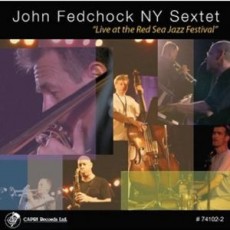
Fedchock began his career as a trombonist in 1980 working for several years in the Woody Herman Orchestra, becoming noted for his arrangements. He has worked and toured with T.S. Monk, Gerry Mulligan, Louie Bellson, Bob Belden, Rosemary Clooney, and Susannah McCorkle among others. He has also been a part of the Manhattan Jazz Orchestra and the Carnegie Hall Jazz Band.
An avid educator, he is in demand as a clinician at colleges and universities, was the trombone chair for the IAJE Resource Team, a board member of the International Trombone Association and is a trombone instructor at Purchase College and Temple University. As a leader John recorded his first album in 1992 with the New York Big Band, which remains active to the present.
Trombonist John Fedchock has followed with eight more recordings, his latest being Justifiably J.J.: A Centennial Tribute (Live at the Jazz Kitchen, Indianapolis) and continues to perform, record and tour.
More Posts: trombone