

Daily Dose Of Jazz…
The Orphan Who Became Malta’s Jazz Star
Some jazz stories follow a straight line from struggle to success. Juice Wilson’s story? It’s a globe-spanning odyssey that most musicians couldn’t dream up if they tried.
A Child Finding His Voice Through Music
Born January 21, 1904, Wilson was orphaned young and raised by his uncle in Chicago from age three. In a city that could be brutally indifferent to a child without parents, music became his lifeline, his identity, his way forward.
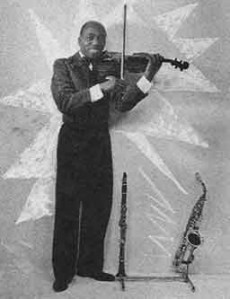
He started on drums with the Chicago Militia Boys Band, then switched to violin at eight—an instrument that would eventually carry him around the world. By twelve, he was already gigging professionally with bandleader Jimmy Wade. At fourteen, he was playing alongside the legendary cornetist Freddie Keppard, one of New Orleans’ pioneering jazz voices.
This wasn’t just prodigious talent—this was a kid who had to grow up fast, and music was both his emotional escape and his economic future.
Building His Reputation, City by City
The 1920s found Wilson working Great Lakes steamboats (those floating conservatories where so many musicians learned their craft), doing residencies with trombonist Jimmy Harrison in Ohio, playing in Erie with pianist Hersal Brassfield, then moving to Buffalo to work with bandleader Eugene Primus and even the Buffalo Junior Symphony Orchestra.
He was building his chops, city by city, gig by gig, learning to navigate both the world of jazz and the world of classical music—a versatility that would serve him well in the years ahead.
New York, Then the World
In 1928, Wilson made the inevitable move to New York City, where he played the legendary Savoy Ballroom with Lloyd Scott’s orchestra—the big time, the room where reputations were made and broken nightly.
But then something remarkable happened: at decade’s end, Wilson toured Europe with Noble Sissle’s celebrated orchestra and made a decision that would define the rest of his life—he decided to stay abroad.
A European Adventure
What followed reads like an adventure novel. Wilson worked in Holland with bandleaders Ed Swayzee and Leon Abbey, performed with the Utica Jubilee Singers, joined the Louis Douglass Revue, played with Little Mike McKendrick’s International Band, and worked with Tom Chase’s ensemble. He traveled to Spain and North Africa, soaking up sounds, languages, and cultures that most American jazz musicians would never experience firsthand.
He was bringing American jazz to audiences who’d only heard it on scratchy recordings, if at all. And he was absorbing Mediterranean and North African musical traditions in return, creating his own unique fusion.
Finding Home in Malta
perhaps Malta discovered him. Wilson became a beloved figure on the sun-drenched Mediterranean island, working throughout the 1940s and 1950s as a multi-instrumentalist and entertainer. He made the island his home base while continuing to tour the region, becoming a bridge between American jazz and European audiences.
Full Circle
Wilson finally returned to the United States in the 1960s, bringing with him decades of stories, experiences, and musical adventures that few of his American contemporaries could match.
A Life Well Traveled
Think about that journey: from an orphaned child in Chicago to a beloved musician on a Mediterranean island halfway around the world, carrying American jazz to corners of the globe that rarely heard it performed live. When Juice Wilson died peacefully on May 22, 1993, he left behind a life that proves jazz was always meant to be a universal language—you just had to be brave enough to speak it anywhere, to anyone who would listen.
Some musicians stay in one city their whole lives, perfecting their craft in familiar surroundings. Juice Wilson chose the harder path—and became living proof that home isn’t where you’re born, but where your music is welcomed and celebrated.
More Posts: violin