


Daily Dose Of Jazz…
Edwin A. Finckel was born on December 23, 1917 in Washington, D.C. to musical parents and was the youngest of six children. Left to his own devices his artistic talents won him a scholarship at the Corcoran School of Art. Finding access to a piano within a year he had taught himself to play, albeit without the ability to read music. He took to jazz although he also showed skill as a tennis player while still a teenager.
Well regarded for his ability to improvise music he went on to arrange others and later composed over 200 of his own melodies. He appeared professionally as a teenager and he went on to introduce string instruments into his arrangement for big bands. His best known song may be Where Is The One, which was recorded by Frank Sinatra..
In the Forties he wrote songs for film, was chosen as a representative of a musical, then went into teaching in the music department at Far Brook School in New Jersey for 39 years. There he gave private lessons, conducted the choir and orchestra, and wrote much of the music that the children sing. He continued to perform jazz and in his forties he also wrote classical music.
Pianist, composer and arranger Edwin Finckel, who ran a summer camp with his wife for 17 years while performing jazz and composing classical music, died on 7 May 7, 2001 at 83 in Madison, Wisconsin.

More Posts: arranger,composer,educator,history,instrumental,jazz,music,piano
Daily Dose Of Jazz…
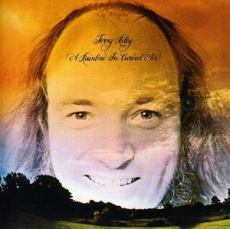
Terrence Mitchell Riley was born in Colfax, California on June 24, 1935 and grew up in Redding, California. In the 1950s, he began performing as a solo pianist and studied composition at San Francisco State University, the San Francisco Conservatory, and the University of California Berkeley, studying with Seymour Shifrin and Robert Erickson.
Befriending minimalist omposer La Monte Young, together they performed Riley’s improvisatory composition Concert for Two Pianists and Tape Recorders in 1959–60. Riley later became involved in the experimental San Francisco Tape Music Center, working with Morton Subotnick, Steve Reich, Pauline Oliveros, and Ramon Sender. Throughout the 1960s, he also traveled frequently in Europe, taking in musical influences and supporting himself by playing in piano bars. He also performed briefly with the Theatre of Eternal Music in New York in 1965-1966.
His most influential teacher was Pandit Pran Nath, a master of Indian classical voice who also taught La Monte Young, Marian Zazeela, and Michael Harrison. Riley made numerous trips to India over the course of their association to study and accompany him on tabla, tambura, and voice. In 1971 he joined the Mills College faculty to teach Indian classical music. Riley also cites John Cage and “the really great chamber music groups of John Coltrane and Miles Davis, Charles Mingus, Bill Evans, and Gil Evans as influences on his work.
His long-lasting association with the Kronos Quartet began around 1980 and throughout his career Terry composed 13 string quartets for the ensemble. in addition
Organist, pianist, saxophonist and tamburist Terry Riley, who teaches both as an Indian raga vocalist and as a solo pianist, continues to perform live.

More Posts: bandleader,history,instrumental,jazz,keyboard,music,organ,piano,saxophone,tambura