


Daily Dose Of Jazz…
William E. Clark was born July 31, 1925 in Jonesboro, Arkansas. He worked professionally starting shortly after World War II, playing drums with Jimmy Jones, Dave Martin, Mundell Lowe, and George Duvivier.
He was principally active in the 1950s, working with Lester Young, Mary Lou Williams, Lena Horne, Hazel Scott, Duke Ellington, Don Byas, Arnold Ross, Bernard Peiffer, George Shearing, Toots Thielemans, Ronnell Bright, Jackie Paris, and Rolf Kuhn. Later in his career Bill worked with Eddie Harris and Les McCann.
Drummer Bill Clark, known for his versatility playing Dixieland, swing, bebop, avant-garde and fusion, passed away on July 30, 1986 in Atlanta, Georgia.Share a dose of a Jonesboro drummer to inspire inquisitive minds to learn about musicians whose legacy lends their genius to the jazz catalog…

More Posts: drums,history,instrumental,jazz,music
Daily Dose Of Jazz…
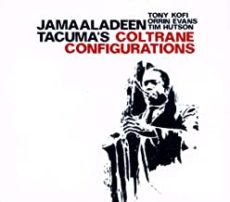
Jamaaladeen Tacuma was born Rudy McDaniel on June 11, 1956 in Hempstead, New York. Raised in Philadelphia, Pennsylvania he showed interest in music at a young age, taking up the electric bass and performing with the organist Charles Earland in his teens.
Through Earland, he came to know the record producer Reggie Lucas, who introduced Jamaaladeen to Ornette Coleman in 1975 at age 19. As the electric bassist for Coleman’s funky harmolodic Prime Time group, he rose to prominence quickly. During the 1980s he was playing a Steinberger bass that helped him create his readily identifiable sound.
His work with Prime Time got him an appearance with the band on Saturday Night Live in 1979. He went on to work with James “Blood” Ulmer, Walt Dickerson, Chuck Hammer, David Murray, and collaborated with The Golden Palominos in 1983. Tacuma recorded his first solo album as a leader, Show Stopper, that same year.
During the 1980s Jamaaladeen started to perform in a relatively straightforward funk/R&B setting with his group Cosmetic. He received the highest number of votes ever for an electric bassist in the “talent deserving wider recognition” category of the Down Beat magazine critics poll.
Though maintaining a low profile since the early 1990s, he has remained active but has maintained a lower profile. He has made numerous solo and collaborative recordings, returning to the jazz spotlight with an appearance on the World Saxophone Quartet’s Political Blues.
In 2007, he joined with Grant Calvin Weston and guitarist Vernon Reidto form the power trio Free Form Funky Freqs. He recorded two albums with Basso Nouveau. He has received numerous awards and fellowships and since 2015 he has presented the annual Outsiders Improvised & Creative Music Festival in Philadelphia. Bassist Jamaaladeen Tacuma continues to tour, produce and record worldwide.
More Posts: bandleader,bass,history,instrumental,jazz,music
Daily Dose Of Jazz…
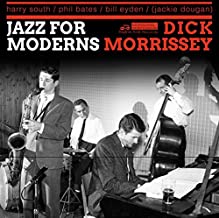
Richard Edwin Morrissey was born on May 9, 1940 in Horley, Surrey, England. Self-taught, he started playing clarinet in his school band, The Delta City Jazzmen, at the age of sixteen with fellow pupils. He then joined the Original Climax Jazz Band before going on to join trumpeter Gus Galbraith’s Septet, where alto saxophonist Peter King introduced him to Charlie Parker’s recordings, Shortly afterward he began specializing on tenor saxophone.
Making his name as a hard bop player, Morrissey appeared regularly at the Marquee Club in 1960, and recorded his first solo album It’s Morrissey, Man! in 1961 at the age of 21 for Fontana Records. Spending most of 1962 in Calcutta, India as part of the Ashley Kozak Quartet, they played three 2-hour sessions seven days a week. Upon returning to the UK he formed his quartet and recorded three LPs, Have You Heard?, Storm Warning!, and Here and Now & Sounding Good!.
He went on to play regular gigs in London and during this time Dick also played extensively in bands led by Ian Hamer and Harry South, including The Six Sounds. He also played briefly in Ted Heath’s Big Band, Johnny Dankworth and his Orchestra, the Harry South Big Band. and Eric Burdon and The Animals’ Big Band.
The mid-1960s, saw Dick played with Brother Jack McDuff, Jimmy Witherspoon, J. J. Jackson and Sonny Stitt together with guitarist Ernest Ranglin recorded with him during the Sixties and early Seventies.
In 1969, Morrissey by thenwas a many-time winner and runner-up of the Melody Maker Jazz Poll, and teaming up with another Melody Maker award-winner, guitarist Terry Smith, with whom he had worked in J. J. Jackson’s Band, to form an early jazz-rock group, If.
When If disbanded in 1975, he toured Germany and the United States, recording with the Average White Band, before meeting up with Glaswegian guitarist, Jim Mullen. With some of the members of AWB, together they formed Morrissey–Mullen, recording their first album, Up in 1976) in New York. On returning to Great Britain, Morrissey–Mullen formed another band which rapidly became Britain’s most highly acclaimed jazz-fusion band of the day. They ultimately recorded seven albums over the 16 years they were together, with Morrissey and Mullen collaborating on each other’s solo albums.
He went on to have numerous collaborations with Tubby Hayes, Bill Le Sage, Roy Budd, Ian Hamer, Ian Carr, Tony Lee, Tony Archer, Michael Garrick, Spike Robinson, Allan Ganley, Peter King, Ray Warleigh, and Hoagy Carmichael among others. Tenor and soprano saxophonist, flautist, and composer Dick Morrissey passed away on November 8, 2000.

More Posts: bandleader,flute,history,instrumental,jazz,music,saxophone
The Quaratined Jazz Voyager
Still not all that anxious to mingle as safeguards are being lifted and society is comfortable in bigger groups. I am staying to my schedule of grocery, doctor visits, home.
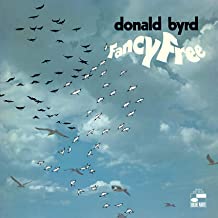
The album I’ve chosen for this week is the 1970 Blue Note album Fancy Free by trumpeter Donald Byrd. It was recorded May 9, and June 6, 1969 at Van Gelder Studio in Englewood Cliffs, New Jersey. The album was produced by Duke Pearson.
This album has Byrd leading a large ensemble that prominently featured Frank Foster on tenor, Lew Tabackin and Jerry Dodgion on flute, along with several percussionists. This date has Duke Pearson playing electric piano and marks the first time Byrd utilized the instrument. On this project the trumpeter concentrated more on grooves and beats, accompanying them on his trumpet rather than being driven by them.
Track Listing | 39:10- Fancy Free (Donald Byrd) ~ 12:06
- I Love the Girl (Donald Byrd) ~ 8:48
- The Uptowner (Mitch Farber) ~ 9:16
- Weasil (Charles Hendricks) ~ 9:00
- Donald Byrd – trumpet
- Julian Priester – trombone
- Frank Foster – tenor and soprano saxophone
- Jerry Dodgion (#1, 3) – flute
- Lew Tabackin (#2, 4) – flute
- Duke Pearson – electric piano
- Jimmy Ponder – guitar
- Roland Wilson – bass guitar
- Joe Chambers (#2, 4), Leo Morris (#1, 3) – drums
- Nat Bettis – percussion
- John H. Robinson Jr. – percussion
More Posts: adventure,album,club,genius,jazz,museum,music,preserving,restaurant,travel,trumpet
Daily Dose Of Jazz…
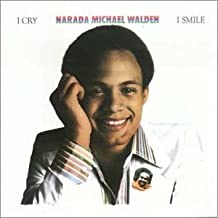
Narada Michael Walden was born on April 23, 1952 in Kalamazoo, Michigan and after graduating from college he was a member of rock bands in Miami, Florida.
Atlantic Records released his first album, Garden of Love Light, in 1977, followed by I Cry I Smile and The Awakening. The latter album charted during the 1980s including a duet with Patti Austin and appeared on the Bright Lights, Big City movie soundtrack.
Fusing jazz with R&B he built his studio in 1985 and produced music for The Temptations, Stacy Lattisaw, Aretha Franklin, Angela Bofill, Lisa Fischer, Sister Sledge, Herbie Hancock, Patti Austin, Whitney Houston, Clarence Clemons, George Benson, Kenny G, Lionel Richie, Al Jarreau, and Mariah Carey.
Walden has been nominated for eight Grammy Awards and won three including Best R&B Song for Freeway of Love; Producer of the Year, Non-Classical; and Album of the Year for The Bodyguard: Original Soundtrack Album.
Drummer, keyboardist and bassist Narada Michael Walden, who got his nickname Narada from Sri Chinmoy, is currently the drummer for Journey.
More Posts: bass,drums,history,instrumental,jazz,keyboards,music