

Daily Dose Of Jazz…
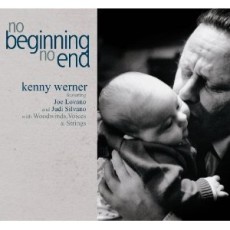
Kenny Werner was born on November 19, 1951 in Brooklyn, New York and by four was a member of a song and dance group. He started piano lessons at seven and by the time he turned 11, he recorded a single with a fifteen-piece orchestra and appeared on television playing stride piano. He attended the Manhattan School of Music as a concert piano major and later transferred to the Berklee School of Music.
Upon graduation he travelled working in Brazil and Bermuda before returning to New York where he formed a trio with drummer Gary Berkowitz and bassist Alex Peglise. In 1977 he recorded first LP that featured of the music of Bix Beiderbecke, Duke Ellington, James P. Johnson and George Gershwin and later that year with Charles Mingus on “Something Like A Bird”.
By the early 80s he toured extensively and recorded with Archie Shepp, recorded his own solo album of original compositions titled “Beyond the Forest of Mirkwood”, followed by a recording of the sounds heard coming from his Brooklyn-based studio – a hotbed of late-night jam sessions, titling the record after his address, 298 Bridge Street. In 1984 he joined the Mel Lewis Orchestra, began performing more in Europe and New York City as a leader and in duos with such notables as Rufus Reid, Ray Drummond, Jaki Byard also doing stints in the groups of Eddie Gomez, Tom Harrell, Joe Lovano and many others.
Since 1989 he has served as pianist, arranger and musical director for the noted film, television and Broadway star, Betty Buckley, has performed and recorded with Toots Thielemans mostly in duo settings but in trio with Oscar Castro-Neves and quartet with Airto Moreira. He has been nominated for a Grammy, has received performance grants from the NEA, a Guggenheim Fellowship Award for the 2010 release “No Beginning No End”, was commissioned to compose and conduct a memorial piece for Duke Ellington, and has been honored with the distinguished Composer award.
Kenny has a catalogue of twenty albums and another six as a sideman composer chops have had him writing compositions for the Mel Lewis Orchestra, the Vanguard Jazz Orchestra, Cologne Radio Jazz Orchestra, the Danish Radio Jazz Orchestra, the Metropole Orchestra and the Umo Jazz Orchestra and most recently has joined Quincy Jones. He is a published author of “Effortless Mastery” that features the physical, technical, psychological and spiritual aspects of being an artist and this publication has garnered him requests as a teacher and clinician from universities around the world, while maintaining an Artist-in-Residence at New York University.
Daily Dose Of Jazz…
Joe Turner was born Joseph H. Turner on November 3, 1907 in Baltimore, Maryland. He was a stride and jazz pianist, not to be confused with blues singer Big Joe Turner. He started to learn the piano from his mother at age five and began to make a name for himself in Harlem as a teenager shortly after his move to New York in 1925.
Joe got his first big break in 1928 when Benny Carter hired him as part of his orchestra. He followed this with playing in Louis Armstrong’s group. He was an accompanist to Adelaide Hall with whom he toured Europe in 1931 where he remained through 1939 when war broke out.
Tuner returned to the States and worked as a singer, played with Sy Oliver’s band, then Rex Stewart until after the war. He went back to Europe passing through Hungary and Switzerland before settling in Paris and occasionally returning to the U.S. to perform.
He was the last major stride pianists to survive the era following in the footsteps of James P. Johnson and Fats Waller. He had a superb technique and fine sense of swing, recording a handful of albums. Joe Turner passed away of a heart attack on July 21, 1990 in Paris, France at age 82.

More Posts: piano
Daily Dose Of Jazz…
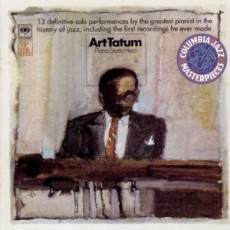
Arthur Tatum, Jr. was born in Toledo, Ohio on October 13, 1909. His father was a guitarist and his mother played piano. A prodigy with perfect pitch, Tatum learned to play by ear, picking out church hymns by the age of three, learning tunes from the radio and copying piano-roll recordings his mother owned. As a child he was also very sensitive to the piano’s intonation and insisted it be tuned often. He developed an incredibly fast playing style, without losing accuracy.
Suffering from infancy with cataracts that left him blind in one eye and only very limited vision in the other, Art had a number of surgical procedures to improve his eye condition but lost some of the benefits when he was assaulted in 1930. He enrolled in the Columbus School for the Blind and studied music, piano and learned Braille. Drawing inspiration from pianists James P. Weldon and Fats Waller, who exemplified the stride piano style, he also identified with the more modern style of Earl Hines.
By the age of 19, he was playing with singer Jon Hendricks at the Waiter’s and Bellmen’s Club. As word of Tatum spread, national performers including Duke Ellington, Louis Armstrong, Joe Turner and Fletcher Henderson when passing through Toledo would make it a point to drop in to hear the piano phenomenon. However, the major event that propelled his meteoric rise to success was his appearance at a 1933 cutting contest at Morgan’s Bar in New York City that included Waller, Johnson and Willie “The Lion” Smith. Standard contest pieces included Johnson’s “Harlem Strut” and “Carolina Shout” and Fats Waller’s “Handful of Keys.” Tatum triumphed with his arrangements of “Tea For Two” and “Tiger Rag”, in a performance that was considered to be the last word in stride piano. Tatum’s debut was historic because he outplayed the elite competition and heralded the demise of the stride era.
Tatum went on to have a prolific performing and recording career being widely acknowledged as one of the greatest jazz pianists of all time. The virtuoso, while piano was his most obvious skill, he also had an encyclopedic memory for Major League Baseball statistics. Art Tatum passed away at age 47 from kidney failure on November 5, 1956 in Los Angeles, California.
More Posts: piano
Daily Dose Of Jazz…
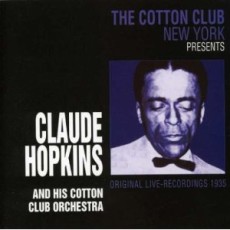
Claude Driskett Hopkins was born on August 24, 1903 in Alexandria, Virginia to Howard University faculty parents. A highly talented stride piano player and arranger, he left home at 21 as a sideman with the Wilbur Sweatman Orchestra but stayed less than a year. In 1925, he left for Europe as the musical director of The Revue Negre that starred Josephine Baker with Sidney Bechet in the band.
Returning to the USA in 1927, Hopkins based himself in Washington, toured the TOBA circuit with The Ginger Snaps Revue before heading once again to NYC where he took over the band of Charlie Skeets. Between 1932-36 he led a fairly successful Harlem band employing many jazz musicians who were later to become famous in their own right such as Edmond Hall, Jabbo Smith and Vic Dickerson. This was his most successful period with long residencies at the Savoy and Rosewood ballrooms, and at the Cotton Club. In 1937 he took his band on the road with a great deal of success but by 1940 dissolved the band.
Using his arranging talents, Claude began working for several non-jazz bandleaders and for CBS. In 1948/9 he led a “novelty” band briefly but took a jazz band into The Cafe Society in 1950. From 1951 up until his death, he remained in NYC working mostly as a sideman with Dixieland bands playing at festivals and various New York clubs and recording. Often under-rated in later years, he was one of jazz’s most important bandleaders and has yet to be given full recognition for his achievements. Claude Hopkins passed away on February 19, 1984 a disillusioned and dispirited man.
More Posts: piano

Daily Dose Of Jazz…
Johnny Guarnieri, born March 23, 1917 in New York City was a virtuoso jazz and stride pianist best known for his stints with the big bands of Benny Goodman and Artie Shaw in the 1940s. Guarnieri is also noted for his embellishment and juxtaposition of jazz with classical piano, such as Scarlatti and Beethoven.
Throughout the 1940s Guarnieri was a busy sideman, recording with artists such as Charlie Christian, Cozy Cole, Ike Quebec, Charlie Kennedy, Hank D’Amico and Ben Webster. He also led his own group called the “Johnny Guarnieri Swing Men” and recorded with them on the Savoy label, a group that included Lester Young, Hank D’Amico, Billy Butterfield and Cozy Cole. He also led a trio in the 1940s composed of himself, Slam Stewart and Sammy Weiss.
In 1949 Guarnieri recorded an album with June Christy and recorded with numerous other artists over his career. In his later years he shifted more toward jazz education. In commemoration of his reputation as a teacher, Guarnieri’s students financed a label for him called “Taz Jazz Records” and in the ‘70s he recorded numerous albums on his new label, and until 1982 worked the “Tail of the Cock” nightclub in Studio City, California.
Pianist Johnny Guarnieri died doing what he loved to do, play jazz, onstage during a performance with Dick Sudhalter on January 7, 1985.

More Posts: piano