

Daily Dose Of Jazz…
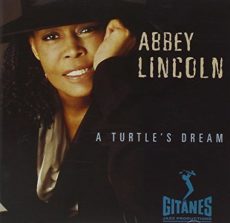
Abbey Lincoln was born Anna Marie Wooldridge on August 6, 1930 in Chicago, Illinois and raised in Calvin Center, Cass County, Michigan. One of many singers influenced by Billie Holiday, her 1956 album debut, Abbey Lincoln’s Affair – A Story of a Girl in Love, was followed by a series of albums for Riverside Records.
1956 saw lincoln’s first foray into acting in which she appeared in The Girl Can’t Help It, interpreting the theme song and working with Benny Carter. She would go on to be featured in movies and television shows like Gentlemen Prefer Blondes, Nothing But a Man, The Name of the Game, Mission: Impossible, Short Walk to Daylight, Marcus Welby, M.D., All in the Family, Mo’ Better Blues and For Love of Ivy, in which she received a Golden Globe nomination. Her song For All We Know is featured in the 1989 film Drugstore Cowboy.
Never straying far from music or the struggle for equality, in 1960 she sang on Max Roach’s landmark civil rights-themed recording, We Insist! Her lyrics often reflected the ideals of the civil rights movement and helped in generating passion for the cause in the minds of her listeners. She explored more philosophical themes during the later years of her songwriting career and remained professionally active until well into her seventies.
During the 1980s, Abbey’s catalogue of creative output was smaller and she released only a few albums. During the 1990s and until her death, however, she fulfilled a 10-album contract with Verve Records. These albums are highly regarded and represent a crowning achievement in Lincoln’s career. Devil’s Got Your Tongue (1992) featured Rodney Kendrick, Grady Tate, J. J. Johnson, Stanley Turrentine, Babatunde Olatunji and The Staple Singers, among others.
Vocalist, activist, songwriter, composer and actress Abbey Lincoln passed away eight days after her 80th birthday on August 14, 2010 in a Manhattan nursing home after suffering deteriorating health ever since undergoing open-heart surgery in 2007. She left a small but vital catalogue to the jazz canon.

More Posts: vocal

Daily Dose Of Jazz…
Nancie Banks was born Nancie Manzuk on July 29, 1951 in Morgantown, West Virginia and as a child sang in a church choir with her father. She learned piano from her mother beginning at age four. For a while she lived in Pittsburgh, then relocated to New York City in the Eighties where she studied with Edward Boatner, Barry Harris, and Alberto Socarras.
Performing with both small ensembles and big bands, during the late 1980s she joined Charlie Byrd’s band, met and married bandmate and trombonist Clarence Banks. Among the musicians she worked with were Lionel Hampton, Dexter Gordon, Walter Davis Jr., Bob Cunningham, Duke Jordan, Diane Schuur, George Benson, Woody Shaw, Jon Hendricks, Walter Booker, Bross Townsend, Charlie Persip, Walter Bishop, Jr., and Sadik Hakim.
In 1989 she founded her own big band and recorded four albums between 1992 and 2001. She also worked on film soundtracks, including Mo’ Better Blues and Housesitter, and in Broadway musicals such as Swingin’ On a Star. During the 1990s, she taught jazz at the City University of New York.
Vocalist, bandleader and educator Nancie Banks passed away in New York City in November 2002. Her body was discovered in her home and the precise day she died is unknown.
Sponsored By

Voices From The Community

#preserving genius
More Posts: vocal
Daily Dose Of Jazz…
Kate Paradise was born in Fort Worth, Texas on June 23, 1981 but spent a majority of her childhood in southern New Hampshire, about an hour outside of Boston. Her interest in music began at an early age, singing with her mom in church and taking piano lessons from her pastor. Excelling in small but supportive music programs, taking on leadership roles in the choirs and singing in the high school big band, she auditioned and participated in numerous New Hampshire Music Education Association All-State and Jazz All-State choirs.
The summer of 1998 saw Kate attending the Berklee College of Music Summer Performance Program in Boston, Massachusetts and receiving her first formal voice training. Encouraged to further pursue her interest in jazz, a year later she enrolled at the University of Miami School of Music and spent six years earning her Bachelor of Music and Master of Music in Studio Music and Jazz Vocal Performance.
Paradise has received Downbeat Magazine’s student award for Outstanding Solo Jazz Vocal Performance and Jazz Vocal I, University of Miami’s top jazz choir. She has taught singing as a graduate assistant and began an active performing career as a jazz singer, appearing with Kurt Elling, Kevin Mahogany, Eliane Elias, Carmen Lundy, Claudia Acuna and Will Lee.
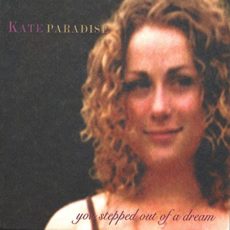
In 2005 she moved to Vermont accepting the position of jazz vocal educator at the Flynn Center for the Performing Arts, Johnson State College and Saint Michael’s College. Continuing her performance career she quickly became a local favorite and in 2006 Kate released her debut CD, You Stepped Out of a Dream, on Sonic Mirage label. She is accompanied by pianist Joseph Davidian, bassist John Rivers, Geza Carr on drums, guitarist Nicholas Cassarino and John McKenna playing tenor saxophone.
In 2007, the track Mean To Me from You Stepped Out of a Dream was selected for Putumayo’s international release Women of Jazz. Currently resides in Nashville, Tennessee, vocalist and educator Kate Paradise continues to perform, pursue her DMA, hold down a full time instructor of commercial voice position and is the director of the Downbeat award winning jazz vocal group, Jazzmin, at Belmont University.
Sponsored By

#preserving genius
More Posts: vocal
Daily Dose Of Jazz…
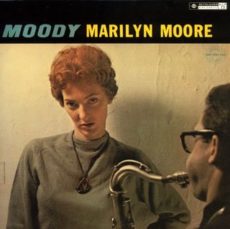
Marilyn Moore was born on June 16, 1930 in Chicago, Illinois. She began her singing career during the 1950s and recorded only one solo album as a leader on the Bethlehem label titled Moody Marilyn Moore in 1957.
Her vocal style was similar to Billie Holiday’s, and according to jazz critic Will Friedwald, the two were friends. When Marilyn was an aspiring teenager vocalist in California she wrote her for advice. They wrote some thirty letters to one another during the 1940s. Holiday encouraged her and advised her to look up producer John Hammond when she arrived in New York City.
Vocalist Marilyn Moore, the first wife of saxophonist Al Cohn, who played on her album and the mother of guitarist Joe Cohn, passed away on March 19, 1992 in Ft. Lauderdale, Florida.
Sponsored By
#preserving genius
More Posts: vocal

Daily Dose Of Jazz…
Denise Donatelli was born May 26, 1950 in Allentown, Pennsylvania and began playing piano at the age of three and studied classical piano for 15 years, winning first place awards in the National Federation of Music Clubs’ piano competitions three consecutive years. After college she set her musical career aside for marriage and family and did not begin singing professionally until her sons were in their teens.
While living in Atlanta, Georgia she was encouraged to return to music after attending a jam session that attracted the region’s top players, including guitarist Russell Malone. she sang several songs with Russell, and began getting calls for performances. When veteran blues singer Francine Reed joined Lyle Lovett’s band, Donatelli joined the three-nights-a-week engagement at the Ritz-Carlton.
A career at Turner Broadcasting Network gave her contact with Los Angeles-based associates and an introduction to arranger Neal Hefti. One thing led to another and Denise was soon recording studio spots for episodes of The Simpsons and television promos for Frasier, Card Sharks and Turner Classic Movies as well as national and international commercials for CNN, Hyundai, Lexus, Mercedes-Benz and others, as well as performing You Only Live Twice as a parody theme song on The Simpsons, Season 25, Episode 4 YOLO.
Donatelli has also been heard performing and recording with Bill Cunliffe, Bill Mays, Roger Kellaway, Tamir Hendelmen, Larry Koonse, Julian Lage, Peter Sprague, Bob Sheppard, Joe LaBarbara, Marvin “Smitty” Smith, Christian Jacob’s Big Band Theory, Alf Clausen and his Jazz Orchestra, and the Stan Kenton Alumni Band.
She has been nominated four times for Grammy awards for her 2010 release When Lights Are Low for Best Jazz Vocal Album and another for Best Arrangement Accompanying a Vocalist, her 2012 release Soul Shadows for Best Jazz Vocal Album and in 2015 with Find A Heart for Best Jazz Vocal Album.Denise has been honored by the Los Angeles Jazz Society with Jazz Vocalist of the Year Award, and Downbeat Magazine named her in the top ten of the 61st Annual DownBeat Critics Poll in the Rising Star Female Jazz Vocalist category.
Vocalist Denise Donatelli continues to tour extensively gracing the stages of jazz festivals, jazz clubs, performing art centers, and with university jazz bands where she conducts master clinics.
Sponsored By
#preserving genius
More Posts: vocal