

Daily Dose Of Jazz…
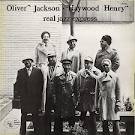
Haywood Henry: The Baritone Voice Behind a Thousand Hits
Born Frank Haywood Henry on January 10, 1913, in Birmingham, Alabama, this future jazz great started his musical journey on clarinet before discovering his true calling in the rich, resonant tones of the baritone saxophone. Though the baritone became his signature voice, Henry never abandoned the clarinet entirely, keeping both instruments close throughout his remarkable six-decade career.
From College Band to the Big Time
In 1930, Henry joined the Bama State Collegians, getting his first taste of professional music-making. When he returned to the group in 1934, now led by the dynamic Erskine Hawkins, it marked the beginning of a musical partnership that would last into the 1950s. Hawkins’ orchestra became Henry’s proving ground, where his big-toned baritone work became an essential part of the band’s sound.
A Journeyman’s Journey
After his years with Hawkins, Henry became one of those invaluable musicians who could fit into any setting. He worked with guitarist Tiny Grimes, saxophonist Julian Dash, and the Fletcher Henderson Reunion Band. Perhaps most notably, he occasionally substituted for the legendary Harry Carney in Duke Ellington’s Orchestra—a testament to his skill, given that Carney was widely considered the greatest baritone saxophonist in jazz history.
The 1960s found Henry in equally distinguished company: Wilbur DeParis, Max Kaminsky, Snub Mosley, Louis Metcalf, Earl Hines, Sy Oliver, and the New York Jazz Repertory Company all benefited from his steady presence and warm sound.
The Secret Session King
Here’s where Henry’s story takes a fascinating turn: during the 1950s and ’60s, he became one of the anonymous giants of the recording industry, playing on over 1,000 rock and roll records. While teenagers danced to the latest hits, few knew that a Birmingham-born jazz baritone saxophonist was helping create the sound they loved. In the 1970s, he brought that same professionalism to Broadway pit orchestras, proving once again his remarkable versatility.
Coming Full Circle
In 1971, Henry joyfully participated in an Erskine Hawkins reunion ensemble—a chance to reconnect with old friends and relive the glory days. He continued performing well into the 1980s, his passion for music undiminished by age.
A Leader at Last
Though Henry spent most of his career supporting others, he did step forward as a leader on three occasions: recording for Davis Records in 1957, Strand in the early 1960s, and finally Uptown in 1983. These albums offer rare glimpses of Henry unchained—his baritone taking center stage rather than anchoring the ensemble.
A Well-Earned Honor
In 1978, Alabama recognized one of its own when Haywood Henry was inducted into the Alabama Jazz Hall of Fame. When he passed away on September 15, 1994, the jazz world lost one of its most reliable, versatile, and underappreciated voices—a master musician who made everyone around him sound better, whether on a jazz bandstand, a rock and roll session, or in a Broadway pit.
Haywood Henry may not be a household name, but his baritone saxophone spoke to millions, often without them ever knowing it. That’s the mark of a true professional.
More Posts: clarinet,history,instrumental,jazz,music,saxophone