

Daily Dose Of Jazz…
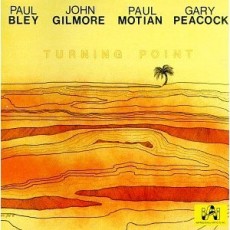
John Gilmore was born on September 28, 1931 and grew up in Chicago, Illinois but didn’t start playing the clarinet until age 14. While in the Air Force in the late Forties he took up the saxophone, then pursued a musical career, playing briefly with pianist Earl Hines before encountering Sun Ra in 1953.
For the next four decades, Gilmore recorded and performed almost exclusively with Sun Ra. Thought to have the makings of stardom like John Coltrane or Sonny Rollins, the latter taking informal lessons from Gilmore in the late 50s and partially inspired by his sound on “Chasin’ The Trane”.
By 1957 he was co-leading a Blue Note date with Clifford Jordan titled Blowing In From Chicago, that is regarded as a hard bop classic with Horace Silver, Curly Russell, and Art Blakey. In the mid-1960s John toured with the Jazz Messengers, participated in recording sessions with Paul Bley, Andrew Hill, Pete La Roca, McCoy Tyner, Melba Liston, and a handful of others. In 1970 he co-led a recording with Jamaican trumpeter Dizzy Reece, however his main focus throughout remained with the Sun Ra Arkestra.
Gilmore was devoted to Sun Ra’s use of harmony, which he considered both unique and a logical extension of bebop. He was the Arkestra’s leading sideman and soloist, performing with fluency and tone on straight-ahead post bop sessions and abstractly capable of long passages based exclusively on high-register squeals. Though his fame was shrouded in the relative anonymity as a member of Sun Ra’s Arkestra, he led the band after Ra’s death up until his own passing of emphysema in 1995.
Daily Dose Of Jazz…
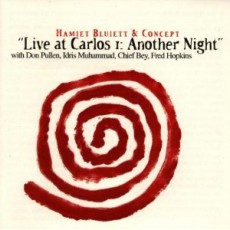
Hamiet Bluiett was born on September 16, 1940 in Brooklyn a.k.a. Lovejoy, Illinois, that was founded as a free black refuge community in the 1830s. As a child, he studied piano, trumpet, and clarinet, but was attracted most strongly to the baritone saxophone from the age of ten. He began his musical career by playing the clarinet for barrelhouse dances in Brooklyn, Illinois, before joining the Navy band in 1961. He attended Southern Illinois University Carbondale.
Following his time in the Navy, he returned to the St. Louis area in the mid-1960s. In the late 1960s Bluiett co-founded the Black Artists’ Group (BAG) in St. Louis, Missouri, comprised of a collective dedicated to fostering creative work in theater, visual arts, dance, poetry, film, and music. He led the BAG big band during 1968 and 1969.
Bluiett moved to New York City in 1969 and joined the Charles Mingus Quintet and the Sam Rivers large ensemble. In 1976 he co-founded the World Saxophone Quartet with two other BAG members, Julius Hemphill and Oliver Lake and David Murray. The group would quickly become jazz music’s most renowned saxophone quartet. He has remained a champion of the somewhat unwieldy baritone saxophone, organizing large groups of baritone saxophones.
In the 1980s, he also founded The Clarinet Family, a group of eight clarinetists playing clarinets of various sizes ranging from E-flat soprano to contrabass. Since the 1990s he has led a virtuosic quartet, the Bluiett Baritone Nation, made up entirely of baritone saxophones, with drum set accompaniment. His return to his hometown in 2002 affords him the opportunity to gig, perform with students from Neighborhood Music School in New Haven, Connecticut under the name of “Hamiet Bluiett and the Improvisational Youth Orchestra”.
Baritone saxophonist Hamiet Bluiett recorded over three-dozen albums and continued to perform, record and tour until his passing on October 4, 2018 at the age of 78 in St. Louis, Missouri.
Daily Dose Of Jazz…
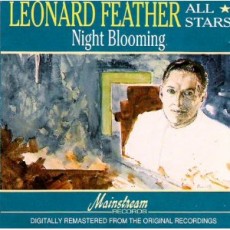
Leonard Geoffrey Feather was born on September 13, 1914 in London, England and learned to play the piano and clarinet without formal training and started writing about jazz and film by his late teens. At age of twenty-one, Feather made his first visit to the United States and after working in the U.K. and the U.S. as a record producer finally settled in New York City in 1939, where he lived until moving to Los Angeles, California in 1960.
His compositions have been widely recorded, including “Evil Gal Blues” and “Blowtop Blues” by Dinah Washington, and what is possibly his biggest hit, “How Blue Can You Get?” by blues artists Louis Jordan and B. B. King, and some of his own recordings as a bandleader are still available. But it was as a journalist, critic, historian, and campaigner that he made his biggest mark as one of the most widely read and most influential writer on jazz, and having written the liner notes for hundreds of jazz albums.
Leonard wrote the lyrics to the Benny Golson jazz composition “Whisper Not” which was then recorded by Ella Fitzgerald on her 1966 Verve release of the same name. He was co-editor of the Metronome Magazine and served as the chief jazz critic for the Los Angeles Times until his death on September 22, 1994 in Sherman Oaks, California at age eighty.
He leaves a legacy of a talented daughter, vocalist Lorraine Feather, a couple of dozen albums and several books such as The Encyclopedia Yearbook of Jazz in the Sixties, Inside Jazz and From Satchmo to Miles among others.
Daily Dose Of Jazz…
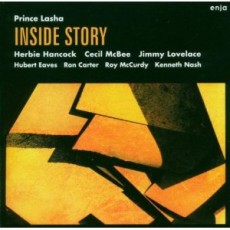
Prince Lasha (pronounced “La-shay“) was born William B. Lawsha on September 10, 1929 in Fort Worth, Texas. He came of age studying and performing alongside fellow I.M. Terrell High School students John Carter, Ornette Coleman, King Curtis, Charles Moffett and Dewey Redman.
Lasha moved to California during the 1950s. In the 1960s, Prince Lasha was active in the burgeoning free jazz movement, of which his Fort Worth cohort Ornette Coleman was a pioneer. Lasha worked closely with saxophonist Sonny Simmons , with whom he recorded two albums, The Cry and Firebirds no the Contemporary label, the latter receiving five stars and an AMG Albumpick at Allmusic. Later, he played with Harold Land.
Living to Europe for twenty years beginning in 1965, Lasha worked as a sideman appearing on recordings with Eric Dolphy, Elvin Jones/Jimmy Garrison Sextet featuring McCoy Tyner, and with Michael White. He also played with Steve Lacy , Paul Bley , Attila Zoller , Gary Peacock , and Barry Altschul. In the 1970s, Lasha and Simmons made additional recordings under the name Firebirds. In 2005, Lasha recorded the album The Mystery of Prince Lasha with the Odean Pope Trio.
From 1965, Lasha lived in Europe for two years, where In the 1970s, he recorded with the sextet of
Saxophonist, flautist and clarinetist Prince Lasha died on December 12, 2008, in Oakland, California. He left a small legacy of six recordings as a leader marking his place in jazz history.
Daily Dose Of Jazz…
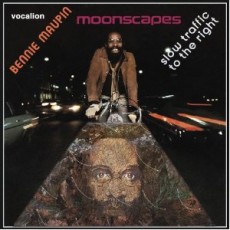
Bennie Maupin was born on August 29, 1940 in Detroit, Michigan and undertook extensive instrumental studies, both privately and at the Detroit Institute of Musical Art from age 14 until 1962. During this period his influences were Yusef Lateef, Wayne Shorter, John Coltrane and Sonny Rollins. By 1966 he was working with Roy Haynes followed by a two-year tenure with Horace Silver in ’68.
Maupin joined Herbie Hancock’s Mwandishi sextet and his Headhunters band, and then joined Miles Davis for the recording of Bitches Brew. He has also performed on several Meat Beat Manifesto albums.
Bennie is noted for having a harmonically advanced, “out” improvisation style, and as a composer, he has the ability to create brief melodies and song forms that create vast landscapes for improvisation.
Multireedist Bennie Maupin was also a member of the group “Almanac” with Cecil McBee, has recorded a half dozen albums as a leader and another two-dozen as a sideman. He has worked with the likes of Lee Morgan, Eddie Henderson, Marion Brown, John Beasley, Mike Clark, Jack DeJohnette, Darek Oles, Lonnie Smith, McCoy Tyner and Lenny White. He appears in the 2016 biopic I Called Him Morgan about trumpeter Lee Morgan and continues to pursue his career in music from jazz to rock to abstraction.
In January 2025 he lost his home, instruments, and other belongings in the Eaton Wild Fire in Los Angeles, California. Flutist, clarinetist and saxophonist Bennie Maupin continues to perform and record.