

Daily Dose Of Jazz…
Tiny Winters: The Bassist Who Fooled Fans Into Thinking He Was Ella Fitzgerald
Frederick Gittens was born on January 24, 1909, in London, England, but the jazz world would come to know him by a name that became legendary in British jazz circles: Tiny Winters.
From Violin to the Bass That Swings
He learned violin as a child—a common enough beginning—but something about the double bass called to him. He made the switch and developed a pizzicato style directly inspired by the great New Orleans bassist Pops Foster, whose propulsive walking lines and rhythmic drive had helped define early jazz. Winters was absorbing American jazz from across the Atlantic and making it his own.
Rising Through Britain’s Jazz Scene
By the 1920s, he was already working with the Roy Fox Band, one of Britain’s premier dance orchestras. The 1930s brought collaboration with pianist and arranger Lew Stone, whose sophisticated arrangements were pushing British jazz toward new heights.
But here’s where Winters’ story gets delightfully unusual: he possessed an unusually high vocal range that he put to remarkable use covering Ella Fitzgerald hits. His falsetto was so convincing that he regularly received fan mail addressed to “Miss Tiny Winters.” Imagine the surprise of fans who showed up expecting a female vocalist and discovered a bassist with a four-octave range!
Becoming a Bandleader and Session Ace
Winters went on to play with the elegant Ray Noble, recorded with the great American tenor saxophonist Coleman Hawkins when he visited London, and began leading his own groups by 1936. With his reputation firmly established, he became a regular fixture at the fashionable Hatchett Club while freelancing as a sought-after session player in theatrical orchestras for major productions like Annie Get Your Gun and West Side Story.
Comedy, Television, and New Ventures
Later in his career, Winters played with cornetist Digby Fairweather in the Kettner’s Five, recorded with veteran saxophonist Benny Waters, and became both the bassist and featured comedian with trombonist George Chisholm in The Black and White Minstrel Show—a television variety program that showcased his versatility as an entertainer, not just a musician.
The Final Chapters
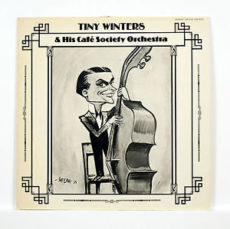
During the late 1980s, Winters led the Café Society Orchestra and his own Palm Court Trio, proving that age hadn’t diminished his passion for leading ensembles. He also found time to write his autobiography, cheekily titled It Took a Lot of Pluck—a perfect pun for a bassist whose fingers had plucked millions of notes over seven decades.
When he retired in the 1990s, he did so with honor: Winters was awarded the Freedom of the City of London, a historic recognition that acknowledged not just his musical contributions but his status as a beloved cultural figure.
A Life Well Lived
Bassist, vocalist, comedian, and bandleader Tiny Winters passed away on February 7, 1996, leaving behind a legacy that reminds us jazz wasn’t just an American export—it was reimagined, reinterpreted, and reinvigorated by musicians around the world who made it their own.
From fooling fans with his Ella Fitzgerald impersonations to holding down the bass in London’s finest orchestras for seventy years, Tiny Winters proved that sometimes the most interesting careers are the ones that refuse to fit into neat categories.
More Posts: bass