

Daily Dose Of Jazz…
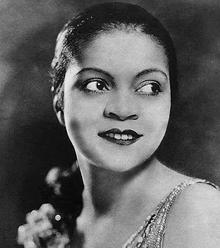
Florence Mills: The “Queen of Happiness” Who Lit Up the Stage Too Briefly
Florence Winfrey was born on January 25, 1895, in Washington, D.C., and from the moment she could carry a tune, it was clear something special was happening. By age six, she was already performing duets with her two older sisters, and soon the trio formed a polished vaudeville act they called “The Mills Sisters.” The act did well enough to draw audiences, but eventually her sisters chose different paths, leaving the stage behind.
Refusing to Give Up the Dream
Florence, however, was determined to pursue a career in show business—quitting simply wasn’t in her vocabulary. She joined forces with Ada Smith, Cora Green, and Carolyn Williams to form a group called the “Panama Four,” which achieved moderate success on the vaudeville circuit. But Mills was destined for something bigger.
The Show That Changed Everything
Her breakthrough came in 1921 when she landed a role in the groundbreaking Broadway musical Shuffle Along. This wasn’t just another show—it’s widely credited with igniting the Harlem Renaissance, proving that Black artists could create commercially successful, artistically excellent work that appealed to integrated audiences. Mills’ performance captivated theatergoers and critics alike.
From there, her star ascended rapidly. She played the legendary Palace Theatre—the ultimate goal for any vaudevillian—and became an international sensation with the hit show Lew Leslie’s Blackbirds, where her signature song “I’m a Little Blackbird Looking for a Bluebird” became an anthem of hope and aspiration that resonated far beyond the footlights.
“The Queen of Happiness”
Mills became known as the “Queen of Happiness” for her effervescent stage presence, delicate yet expressive voice, and winsome, wide-eyed beauty that seemed to radiate joy. She graced the pages of Vogue and Vanity Fair—extraordinary recognition for a Black performer in the 1920s, when such visibility was rare and hard-won.
She wasn’t just entertaining audiences; she was breaking barriers and changing perceptions about what Black artists could achieve on the world stage.
A Tragic, Premature End
But success came at a devastating cost. By 1926, after more than 250 grueling performances of Blackbirds in London, Mills’ health began to fail. Exhausted and weakened, she developed tuberculosis—a disease that was particularly deadly in that era. Then, in a cruel twist of fate, she contracted an infection following an appendicitis operation.
On November 1, 1927, Florence Mills died at just 32 years old, her brilliant light extinguished far too soon.
A Legacy That Endures
Her death sent shockwaves through the entertainment world and the Harlem community. Duke Ellington memorialized her in his haunting composition “Black Beauty,” while Fats Waller paid tribute with “Bye Bye Florence”—both testament to the profound impact she had on her fellow artists.
The residential building at 267 Edgecombe Avenue in Harlem’s prestigious Sugar Hill neighborhood bears her name, ensuring that residents and visitors alike remember the woman who helped put Harlem on the cultural map. And in 2012, author Alan Schroeder introduced a new generation to her story with the children’s book Baby Flo: Florence Mills Lights Up the Stage, published by Lee & Low.
What Might Have Been
It’s impossible not to wonder what Florence Mills might have achieved had she lived longer. At 32, most performers are just hitting their stride. Instead, we’re left with recordings that only hint at her magic, reviews that describe her incandescent presence, and the knowledge that for a brief, shining moment, she was the brightest star in the sky.
The “Queen of Happiness” brought joy to millions but didn’t live long enough to fully enjoy the kingdom she helped create. Her story is both inspiring and heartbreaking—a reminder that talent and determination can change the world, even if the world doesn’t get to keep you as long as it should.
More Posts: vocal