

Jazz In Film
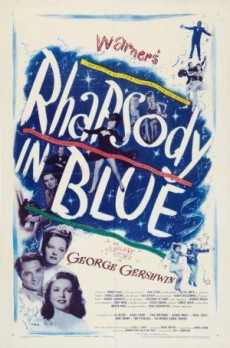
Rhapsody in Blue (1945): Hollywood’s Glamorous Portrait of Gershwin
Directed by Irving Rapper and starring Robert Alda, Joan Leslie, and Alexis Smith, Rhapsody in Blue is Hollywood’s lavish 1945 attempt to capture the life and genius of George Gershwin—one of America’s most beloved composers, who died tragically young at just 38 years old in 1937.
The Hollywood Treatment
As with most biopics of the era, the film takes considerable liberties with historical fact. The story centers on Gershwin as a driven, ambitious composer whose relentless need to succeed comes at a steep personal cost—destroying his relationships with a fictional singer named Julie Adams (Joan Leslie) and an equally fictional socialite Christine Gilbert (Alexis Smith).
These romantic subplots are pure Hollywood invention, designed to give audiences the kind of emotional drama they expected from a major studio production. The real George Gershwin’s personal life was more complex and less cinematically tidy, but Warner Bros. wasn’t particularly interested in documentary accuracy, they wanted a story of artistic genius struggling between ambition and love.
The Music Is the Real Star
What the film does deliver magnificently is Gershwin’s extraordinary music. The soundtrack features selections from his remarkable catalog: the jazz-inflected concert works like the titular “Rhapsody in Blue” and “An American in Paris,” beloved songs from his Broadway shows and Hollywood films, and glimpses of his ambitious opera Porgy and Bess.
Hearing these works performed in a 1945 film, still relatively close to when they were composed, gives the movie a period authenticity that transcends the fictionalized biography. This is what audiences in the 1940s heard when they thought of Gershwin, presented with the full resources of a major Hollywood studio’s orchestra.
Notable Appearances
The film includes memorable appearances by bandleader Paul Whiteman and His Orchestra—significant because Whiteman commissioned and premiered “Rhapsody in Blue” in 1924, making him an actual part of Gershwin’s story rather than Hollywood invention.
Also featured is the remarkable pianist and singer Hazel Scott, one of the few Black performers given significant screen time in a major Hollywood production of that era. Scott was a genuine virtuoso and a pioneering artist who fought against racial stereotyping in Hollywood—her presence adds both musical credibility and historical significance to the film.
Worth Watching Despite the Liberties
Rhapsody in Blue won’t teach you accurate biographical facts about George Gershwin—for that, you’ll need to read a proper biography. But as a celebration of his music and a snapshot of how Hollywood mythologized its cultural heroes in the 1940s, it remains an entertaining, gorgeously photographed production.
Robert Alda, Alan’s dad, brings charm and intensity to his portrayal of Gershwin, even if the script gives him more romantic angst than the real composer likely experienced. And ultimately, any film that introduces audiences to Gershwin’s genius—however fictionalized the surrounding story, serves a valuable purpose.
For anyone who loves Gershwin’s music or classic Hollywood biopics, Rhapsody in Blue delivers the glamour, the drama, and most importantly, the unforgettable melodies that made George Gershwin an American icon.
Just don’t expect historical accuracy—expect beautiful music wrapped in beautiful Hollywood fantasy.
More Posts: film
Jazz In Film
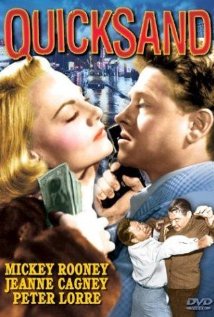
Quicksand (1950): When Twenty Bucks Becomes a Nightmare
Ever made one small, stupid mistake and watched it snowball completely out of control? That’s the premise of Quicksand, a taut 1950 film noir directed by Irving Pichel that proves sometimes the smallest misstep can pull you under.
The Setup
Mickey Rooney stars as an ordinary auto mechanic who makes what seems like a harmless decision: borrowing just $20 from his employer’s cash register, fully intending to pay it back. But this being film noir, nothing stays simple for long. That single impulsive act plunges him into a series of increasingly disastrous circumstances that rapidly spiral beyond his control—each desperate attempt to fix the problem only digging him deeper.
Jeanne Cagney (sister of the legendary James Cagney) and Barbara Bates round out the cast, adding romantic complications and moral dilemmas to an already tense situation.
A Soundtrack Bonus
Jazz fans have an extra reason to seek out Quicksand: it features appearances by the great cornetist Red Nichols and his band, providing an authentic period soundtrack that captures the sound of late-1940s American nightlife.
Why It Still Resonates
What makes Quicksand compelling isn’t just the escalating tension—it’s how believable the descent feels. This isn’t a story about a criminal mastermind or a hardened gangster. It’s about an average guy who makes one bad choice, then compounds it with another, and another, until he’s trapped in quicksand of his own making.
For anyone who loves classic film noir or wants to see Mickey Rooney in a grittier role than his usual fare, Quicksand delivers tight storytelling and a cautionary tale that feels surprisingly modern: sometimes the cover-up is worse than the crime.
And hey, you get some excellent Red Nichols jazz along the way.
More Posts: film
Jazz In Film
Raintree County: When Love Meets the Storm of History
Sometimes love stories aren’t just about two people—they’re about the forces of history that threaten to tear them apart.
Raintree County (1957), directed by Edward Dmytryk, brings together a powerhouse cast: Montgomery Clift, Elizabeth Taylor, and Eva Marie Saint in a sweeping drama set against America’s most tumultuous era.
The setup is deceptively simple: a poet and teacher, fresh from graduation, falls head over heels for a captivating Southern woman. But this is where things get complicated—because the Civil War is brewing, and she’s carrying secrets from her past that could destroy everything they’re building together.
What elevates this film beyond typical period romance is John Green’s evocative musical score, anchored by “The Song of Raintree County” with lyrics by Paul Francis Webster. On the soundtrack, you’ll hear the unmistakable velvet voice of Nat King Cole bringing the song to life, while George Fields‘ harmonica solos add an earthy, haunting layer to the storytelling.
This is epic filmmaking from Hollywood’s golden age—where personal drama and national tragedy collide, where love has to survive not just misunderstandings but the literal breaking apart of a nation.
More Posts: film
Jazz In Film
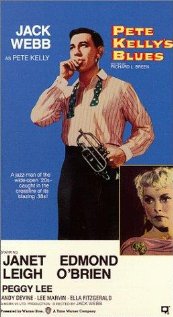
Kansas City, 1927. The jazz is hot, the liquor’s illegal, and cornetist Pete Kelly just wants to play music with his band at the local speakeasy. Simple enough plan, right? Not when the mob comes calling.
Jack Webb directs and stars in Pete Kelly’s Blues (1955), a gritty tale of what happens when organized crime muscles in on the music scene. When a local gangster decides he wants a piece of Pete’s action, things get dangerous fast. After their drummer is killed, Pete caves to the pressure—agreeing not only to the gangster’s “partnership” but also accepting his alcoholic girlfriend as the band’s new singer.
It’s a devil’s bargain, and Pete knows it. As the situation spirals, he realizes he’s sold out everything that mattered. The only bright spot? A wealthy woman named Ivy who represents the one decent connection left in his increasingly compromised life.
What elevates this noir-tinged drama into something special is the authentic jazz running through its veins. The cast includes actual legends: Peggy Lee as Rose Hopkins, Ella Fitzgerald as Maggie Jackson, and guitarist Herb Ellis as Bedido. Backing them up are pianist Don Abney, bassist Joe Mondragon, and drummer Larry Bunker.
The band itself is stacked with talent—Teddy Buckner on cornet, Matty Matlock handling both clarinet and jazz arrangements, Eddie Miller on tenor sax, and a brass section that includes Dick Cathcart (who dubbed Webb’s cornet playing). The musical lineup features classic numbers including the title track, plus standouts like Peggy Lee’s emotionally charged performance and other jazz standards of the era.
Webb brought the same attention to detail here that made Dragnet a phenomenon—only this time, the crime is what happens when art meets corruption, and the blues tell the whole story.
More Posts: film
Jazz In Film
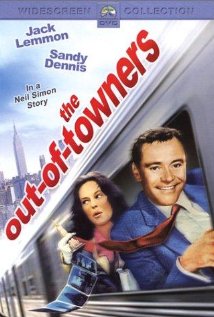
Ever have one of those trips where everything goes wrong? Well, buckle up, because George and Gwen Kellerman’s adventure in The Out-Of-Towners (1969) takes “bad travel day” to comedic extremes.
Here’s the setup: George is up for a big promotion, and the company’s flying him and his wife Gwen to New York City—all expenses paid—for an interview with the higher-ups. Sweet deal, right? They’ve got it all planned out: arrive the night before, catch dinner and a Broadway show, wake up refreshed and ready to impress. What could possibly go wrong?
Everything!
Their plane gets diverted to Boston. Okay, minor hiccup. But then comes a train ride from hell, a mugging, getting caught up in a police chase, and—just for good measure—George breaks a tooth. It’s like the universe conspired to turn their dream trip into an absolute disaster.
Director Arthur Hiller orchestrates this chaos beautifully, with Jack Lemmon and Sandy Dennis playing the increasingly frazzled couple to perfection. And keeping the whole madcap adventure moving? A fantastic score by none other than Quincy Jones.
Sometimes the journey to success is… well, let’s just say it’s memorable.
More Posts: film