

Daily Dose Of Jazz…
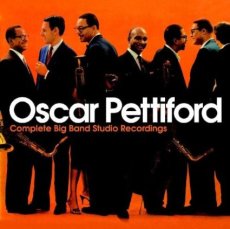
Oscar Pettiford was born September 30, 1922 in Okmulgee, Oklahoma to a Choctaw mother and Cherokee/African American father. Growing up playing in the family band in which he sang and danced, he switched to piano at the age of 12 then to double bass when he was at the age of 14. Despite being admired by the likes of Milt Hinton, he stopped playing in 1941, feeling he couldn’t make a living. Five months later, he once again met Milt, who persuaded him to return to music.
In 1942 he joined the Charlie Barnet band and 1943 saw him gaining wider public attention after recording with Coleman Hawkins on his “The Man I Love.” He also recorded with Earl Hines, Ben Webster, led a group with Dizzy Gillespie and went to California with Hawkins to play in the film The Crimson Canary and on the soundtrack.
Following this he joined Duke Ellington, then Woody Herman but by the 50s mainly became a leader. It was in this role he inadvertently discovered Cannonball Adderley after one of his musicians tricked him into letting Adderley, an unknown music teacher, onto the stand, he had Adderley solo on a demanding piece, on which Adderley performed impressively.
Pettiford is considered the pioneer of the cello as a solo instrument in jazz music, first played the cello as a practical joke on Woody Herman. However, in 1949, after breaking his arm and finding it impossible to play his bass, he started playing the cello allowing him to perform during his rehabilitation. He made his first recordings with the instrument in 1950. The cello thus became his secondary instrument, and he continued to perform and record with it throughout the remainder of his career.
He recorded extensively during the 1950s for the Debut, Bethlehem and ABC Paramount labels among others, and for European companies after his move to Copenhagen, Denmark in 1958. Oscar Pettiford passed away from a virus associated with polio on September 8, 1960 in Copenhagen and along with his contemporary, Charles Mingus, he stands out as one of the most-recorded bassist and bandleader/composers in jazz

Dose A Day – Blues Away
Daily Dose Of Jazz…
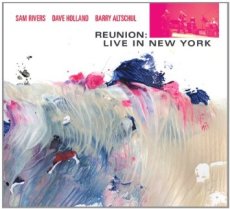
Samuel Carthorne Rivers was born September 25, 1923 in Enid, Oklahoma, the son of a gospel musician who sung with the Fisk Jubilee Singers and the Silverstone Quartet which exposed a young Sam to music at an early age. By 1947 he was in Boston studying Alan Hovhaness at the Boston Conservatory.
Active in jazz since the early 1950s, by the end of the decade he was performing with then 13 year-old drummer Tony Williams. In the mid Sixties he held a short-lived tenure with Miles Davis, producing the album Miles In Tokyo. He went on to sign with Blue Note leading four dates, his first being Fuschia Swing Song and contributing many more as a sideman.
A multi-instrumentalist, Rivers who plays soprano and tenor saxophones, bass clarinet, flute, harmonica and piano, is also a composer. Rooted in bebop and equally adept at free jazz he has performed and recorded with the likes of Quincy Jones, Herb Pomeroy, Tadd Dameron, Jaki Byard, Freddie Hubbard, Herbie Hancock, Andrew Hill, Larry Young and many others.
The 70s saw the rise of the loft era and Rivers ran RivBea in New York’s NoHo district where numerous performance lofts emerged. He continued to perform and record for a variety of labels including several albums for Impulse Records, two big band albums for RCA Victor, and joined Dizzy Gillespie’s band near the end of the trumpeter’s life.
With a thorough command of music theory, orchestration and composition, Rivers has been an influential and prominent artist in jazz music. He performs regularly with his RivBea Orchestra and Trio and is currently recording new works. Sam Rivers, who played soprano and tenor saxophones, bass clarinet, flute, harmonica and piano in the avant-garde and free jazz arenas, passed away on December 26, 2011 in Orlando, Florida at age 88.
Put A Dose In Your Pocket
Daily Dose Of Jazz…
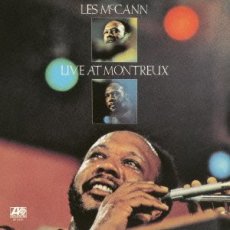
Les McCann was born on September 23, 1935 in Lexington, Kentucky. He first gained notoriety in the early Sixties with his trio while recording for Pacific Jazz Records and working with Ben Webster, Richard “Groove Holmes, Blue Mitchell, Stanley Turrentine, Joe Pass, the Jazz Crusaders, and the Gerald Wilson Orchestra.
In 1969, Atlantic Records released Swiss Movement recorded with saxophonist Eddie Harris at the Montreux Jazz Festival. The album featured trumpeter Benny Bailey and contained the tune “Compared To What” which took the album and the single to the top of the Billboard charts, bringing worldwide recognition to the musician even though it contained political criticism of the Vietnam War.
After the success of Swiss Movement the pianist began to emphasize his rough-hewn vocals more becoming an innovator in the soul jazz style, merging jazz with funk, soul and world rhythms; much of his early 1970s music prefigures the great Stevie Wonder albums of the decade. He was among the first jazz musicians to include electric piano, clavinet, and synthesizer in his music.
Les discovered Roberta Flack, obtained an audition that resulted in a recording contract with Atlantic Records and the 1969 release of her album First Take. In 1971, he and Harris were part of a group of soul, R&B, and rock performers that included Wilson Pickett, The Staple Singers, Santana and Ike & Tina Turner who flew to Accra, Ghana for a historic 14-hour concert before more than 100,000 Ghanaians.
He continued a long and moderately successful career for the next two decades until a stroke in the mid 1990s sidelined McCann for a while but in 2002 he released a new album Pump it Up. The soul jazz piano player and vocalist found success both in the jazz arena and as a crossover artist into R&B and soul. Pianist and vocalist Les McCann died from pneumonia in a Los Angeles hospital on December 29, 2023, at age 88.
Take A Dose On The Road
Daily Dose Of Jazz…
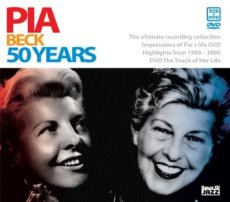
Pia Beck was born Pieternella Beck on September 18, 1925 in Den Haag, Netherlands. She was a natural on the piano without significant musical training. In 1945 she joined the Miller Sextet taking the piano chair and vocalist slot touring Belgium, Germany, Sweden and the Dutch East Indies.
By 1949 she started her own combo and her first composition, Pia’s Boogie, became an instant hit, though she never learned to read sheet music. 1952 saw her first visit the United States, toured the jazz club circuit – an annual event until 1964, was nicknamed “The Flying Dutchess” by Time Magazine who also gave her the cover, and was bestowed honorary citizenship of New Orleans and Atlanta.
In 1965 Beck emigrated to Costa de Sol with her life partner and three children, opened a piano bar and when it went bankrupt she opened a real estate firm and wrote travel guides. By 1975 she was on the comeback trail in Scheveningen, Netherlands and once again enjoyed a successful career, albeit, openly exposing her homosexuality during her U.S. tours by resisting against the anti-gay activist Anita Bryant during the late Seventies.
Pia Beck said goodbye to the general public in 2003. The pianist who Oscar Peterson called the best jazz pianist in the world, died at age 84 of heart failure on November 26, 2009 in Malaga, Spain.
Daily Dose Of Jazz…
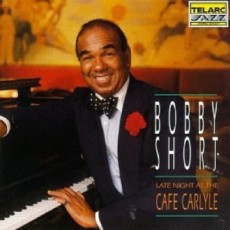
Bobby Short was born Robert Waltrip Short on September 15, 1924 in Danville, Illinois. With his mother’s permission he left home for Chicago and began performing as a busker at the age of eleven.
He started working in clubs in the 1940s and in 1968 he was offered a two-week stint at the Café Carlyle in New York City’s Carlyle Hotel, a relationship that lasted until 2004. His seemingly effortless elegance and vocal phrasing were perfected at the feet of Mabel Mercer and Ethel Waters. Bobby’s presentation of unknown songs worth knowing and his infectious good cheer made him tremendously popular and earned him great respect.
He became best known for his interpretations of songs composed by Rodgers and Hart, Cole Porter, Jerome Kern, Harold Arlen, Vernon Duke, Noel Coward and the Gershwin brothers but was equally adept at championing the works of Duke Ellington, Billy Strayhorn, Eubie Blake, James P. Johnson, Andy Razaf, Fats Waller and Bessie Smith.
Bobby Short, the pianist and cabaret singer, recorded 22 albums from 1955 to 2001, appeared in ten movies and 3 television shows and who was instrumental in spearheading the construction of the Ellington Memorial in his beloved New York City, passed away on March 21, 2005.
Dose A Day – Blues Away