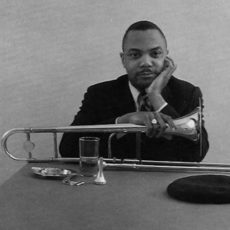
Three Wishes
J. J. Johnson had only one wish to Nica’s query and that was:
- “To be able to play exactly what I have in my mind.”
*Excerpt from Three Wishes: An Intimate Look at Jazz Greats – Complied and Photographed by Pannonica de Koenigswarter

More Posts: baroness,history,instrumental,jazz,musician,pannonica,three,trombone,wishes

Daily Dose Of Jazz…
Peter Herbolzheimer was born on December 31, 1935 in Bucharest, Romania and migrated from communist Romania to West Germany in 1951.Two years later he moved to the United States, settling in Michigan and enrolled in Highland Park High School in the graduating class of 1954. There, he was a staple in the musical choral groups and orchestra, and accompanied several groups on guitar who often performed for various organisations and corporate functions around the Detroit area.
Returning to Germany in 1957 he took up the valve trombone, playing in numerous jazz cellar open mic groups. Peter attempted to return to Michigan, but his visa was denied, so for one year he studied at the Nuremberg Conservatory. In the Sixties he played with the Nuremberg radio dance orchestra and with Bert Kämpfert’s orchestra. He went on to play in the pit orchestra of Hamburg theater, then formed his Rhythm Combination and Brass for which he wrote most of the arrangements.
This big band had an international lineup of eight brass with saxophonist Herb Geller, Allan Botschinsky, Art Farmer, Dusko Goykovich, Palle Mikkelborg, Ack van Rooyen and Jiggs Whigham. The rhythm section had Dieter Reith, Philip Catherine, Niels-Henning Ørsted Pedersen, Bo Stief, Alex Riel, Grady Tate, and Nippy Noya. In the late 1970s the band toured successfully with a “jazz gala” program featuring guest stars such as Esther Phillips, Stan Getz, Nat Adderley, Gerry Mulligan, Toots Thielemans, Clark Terry, Albert Mangelsdorff, Dianne Reeves and Chaka Khan.
The Seventies and Eighties had Herbolzheimer writing music for the opening of the 1972 Olympic Games in Munich, won the International Jazz Composers Competition 1974 in Monaco and was the arranger and conductor and led his orchestra for virtually every major German television network and accompanied visiting American musicians such as Ella Fitzgerald, Benny Goodman, Sammy Davis, Jr., Dizzy Gillespie and Al Jarreau.
Between 1987 and 2006 he was the musical director of Germany’s national youth jazz orchestra, the Bundes Jazz Orchester, conducted regular workshops and clinics for big band jazz and was chosen as the music director, arranger and conductor of the European Jazz Band, which toured throughout Europe until 2009. Trombonist and bandleader Peter Herbolzheimer passed away at age 74 in Cologne, Germany on March 27, 2010.

More Posts: trombone
Daily Dose Of Jazz…
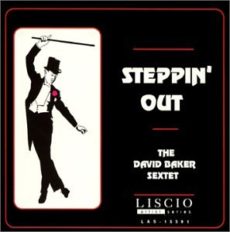
David Nathaniel Baker Jr. was born on December 21, 1931 in Indianapolis, Indiana and took up the trombone attending Crispus Attucks High School. He went on to matriculate through Indiana University, earning his Bachelor and Master degrees in Music, having studied with J. J. Johnson, János Starker, and George Russell.
His first teaching position was at Lincoln University in Jefferson, Missouri in 1955, a historic black institution, but Baker had to resign his position under threats of violence after he had eloped to Chicago, Illinois to marry white opera singer Eugenia (“Jeanne”) Marie Jones. Thriving in the Indianapolis jazz scene of the time, he was as a mentor of sorts to Indianapolis-born trumpeter Freddie Hubbard. Forced to abandon the trombone due to a jaw injury that left him unable to play, he subsequently learned to play cello.
The shift to cello largely ended his performing career but began his life as a composer and pedagogue. Among the first and most important people to begin to codify the then largely aural tradition of jazz he wrote several seminal books on jazz, including Jazz Improvisation in 1988. Baker taught in the Jazz Studies Department at Indiana University and made the school a highly regarded destination for students of jazz. His students included Michael Brecker, Randy Brecker, Peter Erskine, Jim Beard, Chris Botti, Jeff Hamilton, and Jamey Aebersold.
Baker’s compositions range from Third Stream to traditional to symphonic works. He composed some 2000 compositions, has been commissioned by over 500 individuals and ensembles, nominated for a Pulitzer and a Grammy award, honored three times by Down Beat magazine, and was the third inductee to their jazz Education Hall of Fame, as well as several other jazz awards.
Trombonist, cellist, composer and pedagogue David Baker, who performed with his second wife Lida, a flautist, since the Nineties and has more than 65 recordings, 70 books, and 400 articles to his credit, passed away on March 26, 2016, at age 84 at his Bloomington, Indiana home.

Daily Dose Of Jazz…
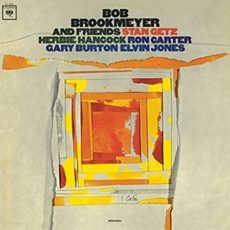
Robert Edward Brookmeyer was born an only child on December 19, 1929 in Kansas City, Missouri and began playing professionally in his teens. Attending though not graduating from the Kansas City Conservatory of Music, he played piano in big bands led by Tex Beneke and Ray McKinley, but concentrated on valve trombone from when he moved to the Claude Thornhill orchestra in the early 1950s.
He was part of small groups led by Stan Getz, Jimmy Giuffre, and Gerry Mulligan in the 1950s and during the Fifties and Sixties he played New York City clubs, television house band, studio recordings, and arranged for Ray Charles and others. In the early 1960s Brookmeyer joined flugelhorn player Clark Terry in a band and they appeared together on BBC2’s Jazz 625.
A move to Los Angeles, California in 1968 saw Bob becoming a full-time studio musician, spending 10 years on the West Coast, and sinking into a serious alcohol problem. After overcoming this debilitation he returned to New York and became musical director for the Thad Jones/Mel Lewis Orchestra in 1979. Writing for and performed with jazz groups in Europe from the early 1980s, he went on to establish and run a music school in the Netherlands, taught at the New England Conservatory of Music in Boston, Massachusetts, as well as other institutions.
Eight time Grammy nominated trombonist, composer, arranger, bandleader and educator Bob Brookmeyer, who played n the mainstream, cool, post bop and West Coast jazz genres, passed away on December 15, 2011 in New London, New Hampshire.

More Posts: trombone
Daily Dose Of Jazz…
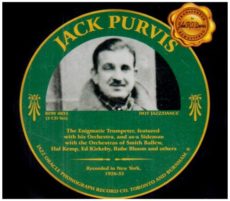
Jack Purvis was born John Purvis on December 11, 1906 in Kokomo, Indiana to Sanford B. Purvis, a real estate agent and Nettie Purvis. His behavior became uncontrollable after his mother’s death in 1912 and as a result of many acts of petty larceny, he was sent to a reform school. While there, he discovered that he had an uncanny musical ability, and soon became proficient enough to play both the trombone and trumpet professionally. This also enabled him to leave the reformatory and continue his high school education, while he was playing paying gigs on the side.
After high school he worked in his home state for a time then went to Lexington, Kentucky where he played with the Original Kentucky Night Hawks. In 1926 he was with Bud Rice touring New England, then with Whitey Kaufman’s Original Pennsylvanians. For a short time he played trumpet with Arnold Johnson’s orchestra, and by July 1928 he traveled to France with George Carhart’s band. In 1929 he joined Hal Kemp’s band and recorded with Kemp, Smith Ballew, Ted Wallace, Rube Bloom, the California Ramblers, and Roy Wilson’s Georgia Crackers. In 1929 Purvis led his own recording groups using Hal Kemp’s rhythm section to produce Copyin’ Louis, and Mental Strain at Dawn.
By 1930, Purvis leading a couple of racially mixed recording sessions including the likes of J.C. Higginbotham, and Adrian Rollini. One of these sessions was organized by Adrian Rollini and OKeh A & R man, Bob Stephens. He went on to work with the Dorsey Brothers and played fourth trumpet with Fletcher Henderson in a rehearsal capacity.
The early Thirties saw him played with a few radio orchestras and worked with Fred Waring, toured the South with Charlie Barnet, worked with the New Orleans Symphony Orchestra, moved to Los Angeles, California and was successful with radio broadcasting work. He worked for the George Stoll Orchestra, Warner Bros. Studios arranging, and composed Legends of Haiti for a one hundred and ten piece orchestra.
Living a checkered life he was in and out of jail, worked outside the musical environment working as a chef, a busker, an aviator in Florida, a carpenter, a radio repairman, a smuggler and a mercenary in South America. Trumpeter and trombonist Jack Purvis gassed himself to death in San Francisco, California on March 30, 1962.