

Daily Dose Of Jazz…
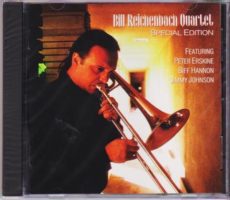
William Frank Reichenbach Jr. was born November 30, 1949 in Takoma Park, Maryland, the son of Bill Reichenbach, who was Charlie Byrd’s drummer from 1962 to 1973.
He began playing in high school in bands around the Washington, D. C. area. He also sat in with his father’s group, playing with Milt Jackson, Zoot Sims, and others. Reichenbach went on to study at the Eastman School of Music and after graduating joined the Buddy Rich Band. He also worked in the Toshiko Akiyoshi – Lew Tabackin Big Band in Los Angeles, California in the mid/late 1970s.
Bill Jr. is best known as a session musician for television, films, cartoons, and commercials and compose for the Cartoon All-Stars to the Rescue. He recorded a solo album, Special Edition, where he is featured on tenor as well as bass trombone. He played trombone on The Wiz and with the Seawind Horns including Jerry Hey on the Michael Jackson albums Off the Wall, Thriller and HIStory.
Trombonist and composer Bill Reichenbach continues to compose, perform and record.

Take A Dose On The Road

More Posts: trombone
Daily Dose Of Jazz…
Mel Wanzo was born Melvin F. Wanzo, November 22, 1930 in Cleveland, Ohio. At the age of twenty-two he served in the 36th Army Band with the Adderley Brothers and Junior Mance during the Korean conflict from 1952-54. After his discharge he returned home and joined Joe Cooper’s All-Stars at the Ebony Lounge, that hosted most of the national acts coming through the city.
By 1956 he was gaining experience playing with Choker Campbell’s band who baked such R&B-oriented singers as Joe Turner and Ruth Brown in the Fifties, after which he worked mainly with big bands. Leaving Campbell, he studied at Cleveland Institute of Music and then joined the studio band at WEWS TV.
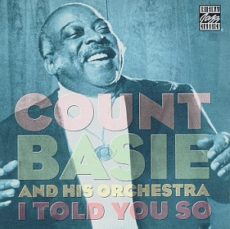
The latter-day big band trombonist played with the Glenn Miller Orchestra under the direction of Ray McKinley from 1966-1968. Woody Herman in the ’60s before joining Count Basie, with whom he worked from 1969-1980. He also recorded with the Capp-Pierce Juggernaut in 1981.
Wanzo rejoined the Basie band after its leader’s death in 1984. He continued with the group during the ’80s and ’90s under leaders Thad Jones, Frank Foster, and Grover Mitchell.
As an educator he was a mentor to the Wayne State University Trombone Ensemble from 1997 to 2002, and the Jazz Lab I Band beginning 2000. For the over forty years he has spent on the road he has performed with Duke Ellington, Ella Fitzgerald, Frank Sinatra and Sarah Vaughan among other jazz luminaries.
Trombonist Mel Wanzo, who has had command performances for the Queen of England, King of Thailand, the President of Finland and has performed at six Grammy Awards retired from the Basie band, moved to Detroit and remained active until his passing away on September 9, 2005.
Sponsored By

Voices From The Community
More Posts: trombone
Daily Dose Of Jazz…
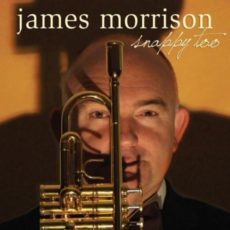
James Lloyd Morrison was born on November 11, 1962 in Boorowa, New South Wales, Australia. Though his father was a Methodist minister, he comes from a musical family with his mother playing alto saxophone, piano and organ, his sister is a trumpeter, and his older brother a jazz drummer. Due to his father’s ministry the family relocated to various locales in New South Wales before settling in Pittwater.
From the age of seven Morrison practiced on his brother’s cornet, attended Mona Vale Primary School and Pittwater High School, then he enrolled at Sydney Conservatorium of Music where he completed a jazz course. While there he met Don Burrows, who became his mentor.
In 1983 Morrison joined his brother John’s 13-piece group, Morrison Brothers Big Bad Band and a year later he was playing trumpet, trombone and piano, his brother on drums, Warwick Alder on trumpet, Paul Andrews on alto saxophone, Tom Baker on alto and baritone saxophones, Peter Cross on trumpet, Glenn Henrich on vibraphone, Jason Morphett on tenor saxophone, and Craig Scott on bass. The group released their debut album, A Night in Tunisia, in 1984 on the ABC Records label.
Morrison has performed with Dizzy Gillespie, Don Burrows, Ray Charles, B. B. King, Ray Brown, Wynton Marsalis, Graeme Lyall, Frank Sinatra, Cab Calloway, Jon Faddis, Woody Shaw, Whitney Houston, Arturo Sandoval, Phil Stack, George Benson, Mark Nightingale, Herbie Hancock, Quincy Jones, Gina Jeffreys and Red Rodney, just to name a few. His long association with composer and pianist Lalo Schifrin has led James to record a number of CDs for Schifrin’s Jazz Meets the Symphony series, with the London and the Czech National symphony orchestras.
Morrison sponsors yearly scholarships for young musicians, and is actively involved with several youth bands. He discovered his regular vocalist, Emma Pask, at a school concert when she was 16 and has since gone on to become an internationally renowned jazz singer. He is the chairman of Generations in Jazz, one of the largest youth jazz events in the world. He has been the hosts of the in-flight jazz radio station for Qantas Airways.
Morrison designed trumpets and trombones, built his own recording studio, recorded top Australian jazz musicians including Dan Clohesy, Jake Barden, Don Burrows, Liam Burrows, John Morrison, The Swing City Big Band, The Generations In Jazz Academy Big Band, Graeme Lyall and more. He was appointed a Member of the Order of Australia, was nominated for Best Jazz Album, in 1992 for Manner Dangerous, 1993 for Two the Max, a collaboration with Ray Brown, and was inducted into the Graeme Bell Hall of Fame.
He has received an honorary Doctor of Music from the Edith Cowan University and from the University by Griffith University, Morrison is also an Adjunct Professor of the University of South Australia and a Vice Chancellor’s Professorial Fellow. He continues to perform, record and tour.

Daily Dose Of Jazz…
Bill Tole was born on September 23, 1937 and raised in Pittsburgh, Pennsylvania. His father was a high school band director, trombonist and pianist, his mother a music teacher, played piano and performed as a vocalist. Graduating from Duquesne University School of Music, he auditioned for the Tommy Dorsey Orchestra, went on tour and then joined the Air Force dance band, The Airmen of Note. He was solo trombonist and assistant leader for four years.
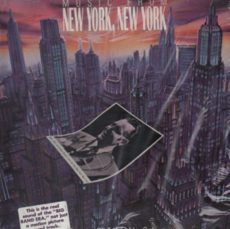
Moving to New York City in the 1960s he played with Broadway shows, headliners artists, club dates and recording during the studio’s prime years. Afterwards, he moved to Los Angeles in 1967 and recorded albums, commercials, television and movies. His career took a turn when a producer put out a casting call for a trombonist to portray Tommy Dorsey in a film starring Liza Minelli and Robert Deniro. They realized their luck with Tole who understood the era of music, professionally played trombone and had his own big band for the movie. He played as sweet as Dorsey, looked the part of the character and his band recorded their version of the soundtrack of New York, New York after the film was completed.
Bill has worked with Ray Anthony, Tex Beneke, Louis Bellson, Les Brown, Bob Crosby, Harry James, Quincy Jones, Nelson Riddle and Si Zentner as well as vocalists Frank Sinatra, Tom Jones, Ella Fitzgerald, Pearl Bailey and Tony Martin, to name a few.
Trombonist Bill Tole, very much in demand, continues to perform, record and tour as a soloist, teacher and clinician across the globe.
Take A Dose On The Road
#preserving genius
More Posts: trombone
Daily Dose Of Jazz…
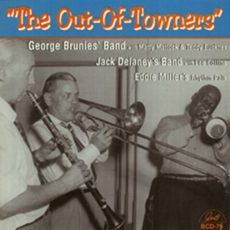
Jack Delaney was born on August 27, 1930 in New Orleans, Louisiana. He studied at Southeastern Louisiana College and worked the late 1940s and early 1950s in New Orleans with Johnny Reininger, Sharkey Bonano and Tony Almerico.
Recordings were mainly mid-1950s with Almericos Parisian Room band with singer Lizzie Miles. Around this time he put together a group with Ken Colyer and Pete Fountain. From 1958 he worked at the Roosevelt Hotel in New Orleans with Leon Kellner, later with Pete Fountain. His jazz career primarily spanned from 1950-1977 and he recorded 52 sessions.
Dixieland trombonist Jack Delaney, who also played the trumpet and sang, passed away on September 22, 1975.
Put A Dose In Your Pocket
More Posts: trombone