

Daily Dose Of Jazz…
Ira Gitler was born December 18, 1928 in Brooklyn, New York and grew up listening to swing bands in the late 1930s and 1940s, before discovering the new music of Charlie Parker and Dizzy Gillespie. In the early 1950s, he worked as a producer for many recording sessions of Prestige Records and is credited with coining the term “sheets of sound” in the late 1950s, to describe the playing of John Coltrane.
Ira was the New York editor of Down Beat magazine during the 1960s and has written for Metronome Magazine, Jazz Times, Jazz Improv, Modern Drummer, the New York Times, the San Francisco Chronicle, the Village Voice, Playboy, World Monitor and New York Magazine along with international publications Swing Journal in Japan, Music Jazz – Italy, Jazz Magazine, France.
Gitler was awarded a Guggenheim Fellowship in 1974, received a Lifetime Achievement Awards by the New Jersey Jazz Society in 2001, and by the Jazz Journalists Association in 2002.
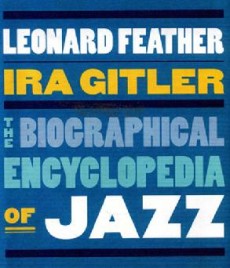
He is a jazz historian and journalist best known for “The Biographical Encyclopedia of Jazz, co-authored with Leonard Feather. He has written hundreds of liner notes for jazz recordings since the early 1950s and is the author of dozens of books about his two passions, jazz and ice hockey.
Daily Dose Of Jazz…
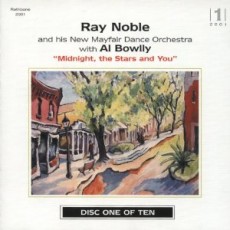
Raymond Stanley Noble was born on December 17, 1903 in Brighton, England and studied music at the Royal Academy. He became the leader of the HMV Records studio band, known as the New Mayfair Dance Orchestra that featured popular vocalist Al Bowlly and many musicians of the top hotel bands.
The Bowlly/Noble recordings achieved popularity in the United States, however, union bans prevented Noble from bringing British musicians to America so he arranged for Glenn Miller to recruit American musicians. Bowlly returned to England but Noble continued to lead bands in America, moving into an acting career portraying a stereotypical upper-class English idiot in films like Top Hat and Slumming On Park Avenue. He also played the “dense” character in love with Gracie Allen, or with his orchestra in an Edgar Bergen vehicle. Noble also provided music for many radio shows of the times like The Charlie McCarthy Show. His last major success as a bandleader came with Buddy Clark in the late 1940s.
Ray Noble arranged hits in the 1930s such as “Easy to Love”, “Mad About the Boy”, “Paris in the Spring”, wrote both lyrics and music for now jazz standards “Love Is The Sweetest Thing”, “Cherokee”, “The Touch of Your Lips”, “I Hadn’t Anyone Till You” and “The Very Thought Of You” and co-wrote “Goodnight, Sweetheart” and “You’re So Desirable”, recorded by Billie Holiday, Teddy Wilson and in 1990 by Robert Palmer.
Ray Noble, bandleader, composer, arranger, pianist, singer and actor passed away on April 3, 1978 at the age of 74.
More Posts: arranger,bandleader,composer
Daily Dose Of Jazz…
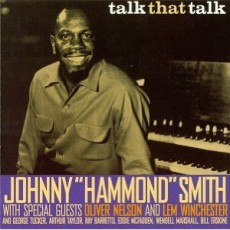
Johnny “Hammond” Smith was born John Robert Smith on December 16, 1933 in Louisville, Kentucky and earned the nickname “Hammond” for his renowned playing on the B3. In the early years of his career he played with Paul Williams and Chris Columbo before forming his own group. His bands featured singers Etta Jones, Byrdie Green, saxophonists Houston Person, Earl Edwards, guitarists Eddie McFadden, Floyd Smith, James Clark and vibist Freddie McCoy. However, his career took off as he was serving as accompanist to singer Nancy Wilson.
After a string of albums over a 10-year period at Prestige Records during the 60s, Johnny signed with CTI’s Kudu label, launching it with his soul/R&B project “Break Out” that featured Grover Washington Jr. as a sideman prior to the launch of his career as a solo recording artist. Three further albums followed and he became “Johnny Hammond”, dropping “Smith” from his name.
Adapting to the changing sound of the music Johnny’s style had become increasingly funky. This culminated in two popular albums with the Mizell Brothers, “Gambler’s Life” (1974) for the CTI offshoot, Salvation and then in 1975, “Gears” after switching to another jazz label, Milestone Records, incorporating electric and acoustic pianos as well.
As an educator he taught at Cal Poly Pomona music department for several years, penned “Quiet Fire” for Nancy Wilson’s 1989 “Nancy Now” album and remained a hard bop and soul jazz organist until his passing on June 10, 2004.
More Posts: organ
Daily Dose Of Jazz…
Curtis DuBois Fuller was born in Detroit, Michigan on December 15, 1934 to Jamaican parents who died when he was very young and raised in an orphanage. He took up the trombone while in Detroit and became friends with schoolmates Paul Chambers and Donald Byrd and also knew Tommy Flanagan, Thad Jones and Milt Jackson.
After two years of army service ending in 1955, where he played in a band with Chambers and the Adderley brothers, Fuller joined the quintet of another Detroit musician, Yusef Lateef. By 1957 the quintet moved to New York and Curtis recorded his first sessions as a leader for Prestige Records.
Alfred Lion of Blue Note Records heard him playing with Miles Davis in the late Fifties and featured him as a sideman on record dates led by Sonny Clark and John Coltrane. His work on Trane’s “Blue Train” album is probably his best-known recorded performance. This was followed with four Fuller led dates for Blue Note.
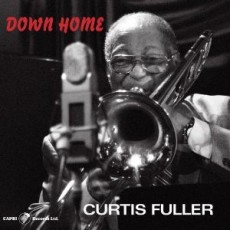
Over his career Curtis has worked with Slide Hampton, Bud Powell, Jimmy Smith, Wayne Shorter, Abbey Lincoln, Lee Morgan, Hank Mobley, Blue Mitchell and Joe Henderson, and that’s the very short list. He performed with Dizzy Gillespie’s band, toured with Count Basie, was the sixth Jazz Messenger with Art Blakey in 1961, was the first trombonist to hold membership in the Art Farmer-Benny Golson Jazztet, and has recorded for Savoy, Epic, Impulse, Status, Challenge, Timeless and Capri among others and his latest album, “Down Home” on Capri.
In addition to continuing to perform and record, he was a faculty member of the New York State Summer School of the Arts – School of Jazz Studies. Trombonist Curtis Fuller passed away on May 8, 2021.

More Posts: trombone
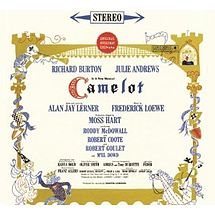
From Broadway To 52nd Street
Camelot opened at the Majestic theatre on December 3, 1960 and ran for 873 performances that starred Richard Burton, Julie Andrews, Robert Goulet and Roddy McDowell. Alan Jay Lerner and Frederick Loewe composed the music that gave the world the jazz standard If Ever I Would Leave You.
The Story: The legend of King Arthur has been retold several times and it follows the exploits of his rise to power and his bringing his country under one monarch, falling in love with Guinevere and making her his queen, the illicit affair with Lancelot and the plot of Arthur’s destruction by his bastard son, to the fall of Camelot is set to music in this enjoyable portrayal of royal English life.
Jazz History: In the 1960s Afro-Cuban jazz grew as an extension of the movement that began in the 50s after bebop musicians such as Dizzy Gillespie and Billy Taylor started bands influenced Xavier Cugat, Tito Puente and Arturo Sandoval. The natural progression to Latin jazz combined the rhythms from Africa and Latin American countries that incorporated various instruments as conga, timbale, guiro and claves with jazz and classical harmonies. Though Afro-Cuban was after the bebop period, Brazilian jazz became extremely popular in the Sixties pioneered by Joao Gilberto, and Antonio Carlos Jobim. The rhythms of bossa nova, which were derived from samba, were first adapted to jazz by Charlie Byrd and Stan Getz.
Sponsored By

www.whatissuitetabu.com