

Daily Dose Of Jazz…
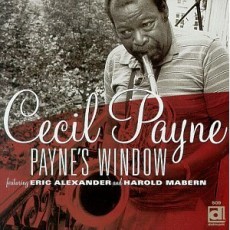
Cecil Payne was born December 14, 1922 in Brooklyn, New York. He received his first saxophone at age 13, asking his father for one after hearing Count Basie’s version of Honeysuckle Rose performed by Lester Young and took lessons from Pete Brown, a local alto sax player.
Payne began his professional recording career with J. J. Johnson on the Savoy label in 1946. During that year he played with Roy Eldridge, through whom he met Dizzy Gillespie. His earlier recordings would largely fall under the “swing” category, until Gillespie hired him, a relationship that lasted until 1949.
By the early 50s, Cecil found himself working with Tadd Dameron, Illinois Jacquet, James Moody, Machito, Woody Herman, Count Basie and freelancing around New York, frequently performing with Randy Weston. Throughout his fifty plus year career baritone saxophonist he recorded as a leader and a sideman for Decca, Savoy, the Charlie Parker label, Muse, Spotlite and Strata East, and regularly for Delmark Records in the nineties, when he was in his seventies, and on into the new millennium.
Cecil Payne, baritone and alto saxophonist and flautist, passed away on November 27, 2007. Although largely unknown to the public he was one of the pioneers in adapting the baritone saxophone to bebop and post-bop.
Daily Dose Of Jazz…
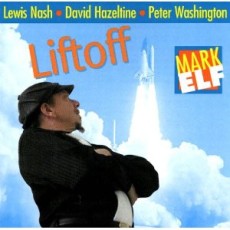
Mark Elf was born in Queens, New York on December 13, 1949 and started playing guitar at the age of 11. He attended Berklee College of Music from 1969-71 when his first professional jazz gig came as a sideman with Gloria Coleman and Etta Jones at the Club Barron in Harlem, New York that was double billed with the George Benson Quintet.
During the 1970’s he toured with Lou Donaldson, Jimmy McGriff, Richard “Groove” Holmes and Charles Earland and recorded a number of albums with them, his first with McGriff and Holmes in 1973 on the Giants of the Organ Come Together. In the late 1970’s Mark worked and recorded with Junior Cook and Bill Hardman. By the 80’s he was touring Europe with Dizzy Gillespie, Clark Terry and other jazz luminaries. In 1986 he recorded his first album as a called the Mark Elf Trio Volume 1.
He continued to record as a leader over the next two decades with Hank Jones, Jimmy Heath, Ray Drummond and Ben Riley, Jon Hendricks, Wynton Marsalis, Benny Golson, Al Grey and Red Holloway. He also inked his first overseas record deal. In 1995 Mark established Jen Bay Records and stunned the record industry with hit recordings. From 1996 to 2004 all 10 of his recordings had finished in the top ten on national jazz radio with eight of them going to #1 consecutively from 1997 to 2004.
From 1970 to the present, guitarist, clinician and educator Mark Elf has taught guitar and theory at independent studios, colleges and universities across the United States and abroad, and his clinics are recognized as some of the finest in the world. He is sought after for his lectures on “How To Succeed As An Indie”. He owns his own successful record label and publishing company. He continues touring with his trio at festivals, colleges and clubs.
More Posts: guitar
Daily Dose Of Jazz…
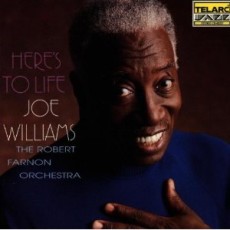
Joe Williams was born Joseph Goreed on December 12, 1918 in Cordele, Georgia but was raised in Chicago from the age of four by his mother, grandmother and aunt. As a child he was greatly influenced by the rebellious sound of jazz from Louis Armstrong, Duke Ellington, Ethel Waters, Cab Calloway, Big Joe Turner and many others of the 1920’s he would hear on the radio. By his early teens, he had already taught himself to play piano and had formed his own gospel vocal quartet, known as “The Jubilee Boys”, that sang at church functions.
During his mid-teens Williams began performing as a vocalist, singing solo at formal events with local bands. The most that he ever took home was five dollars a night, but that was enough to convince his family that he could make a living with his voice. So, at 16, he dropped out of school, created his stage name to “Williams” and began earnestly marketing himself to Chicago clubs and bands. His first job was singing with the band at Kitty Davis’s club during the evening for tips that would sometimes amount to $20.
Williams first real break came in 1938 when clarinetist Jimmy Noone invited him to sing with his band. Less than a year later, the young singer was earning a reputation at Chicago dance halls and on a national radio station that broadcast his voice across the nation. Soon he was touring the Midwest by 1939 and accompanying Louis Armstrong and Fats Waller, a year later toured with Coleman Hawkins. In 1942 Lionel Hampton hired Joe to fill-in for the regular vocalist for the orchestra, the Tic Toc Club in Boston and cross-country tours. By the time the relationship ended Williams was in great demand. Through the 40s he toured and made his first recording with Andy Kirk, which led to working with Red Saunders and recording for Okeh and Blue Lake Records.
He went on to sing with the Count Basie Orchestra from ’54 to 61 with his first recording “Count Basie Swings, Joe Williams Sings” that hit #2 on the charts and sparked another LP, he won Down Beat magazine’s New Star Award and international critic’s Best New Male Singer and reader’s poll Best Male Band Singer. Through the end of the 50s the band was consistently touring Europe.
By the Sixties he was working a solo career with top-flight jazz musicians like Harry “Sweets” Edison, Clark Terry, George Shearing and Cannonball Adderley. He did all the variety shows from The Tonight Show to Joey Bishop, Merv Griffin, Steve Allen and Mike Douglas. He gained further notoriety as the father-in-law on The Cosby Show.
Baritone Joe Williams continued to perform regularly at jazz festivals in the U.S. and aboard, as well as on the nightclub circuit. He received a star on the Hollywood Walk Of Fame in 1983 next to Count Basie, sang Ellington’s Come Sunday at Basie’s funeral, performed the title track All of Me in the Steve Martin/Lily Tomlin vehicle, won two Grammy Awards and enjoyed a successful career, working regularly until his death of natural causes at age 80. He collapsed on the street a few blocks from his home on March 29, 1999 in Las Vegas, Nevada.
More Posts: vocal
Daily Dose Of Jazz…
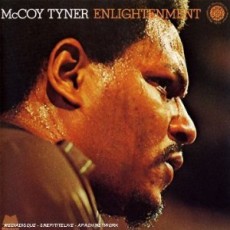
McCoy Tyner was born Alfred McCoy Tyner on December 11, 1938 in Philadelphia, Pennsylvania, the oldest of three children. He was encouraged to study piano by his mother. He began studying the piano at age 13 and within two years, music had become the focal point in his life. His early influences included Bud Powell, a Philadelphia neighbor.
Tyner’s first main exposure came with Benny Golson in 1960, being the first pianist in the Golson/Art Farmer legendary Jazztet. After departing the Jazztet, Tyner replaced Steve Kuhn in John Coltrane’s group the same year during its extended run at the Jazz Gallery. Coltrane had featured one of the McCoy’s compositions, “The Believer”, as early as 1958. He appeared on the saxophonist’s popular recording of “My Favorite Things” for Atlantic Records followed by Live at the Village Vanguard, Ballads, Live at Birdland, Crescent, A Love Supreme and The John Coltrane Quartet Plays on Impulse.
As a leader, Tyner recorded a number of highly influential albums in his own right during and post Coltrane tenure and as a sideman for many of the projects of Impulse and Blue Note. But by 1966, Tyner was rehearsing with a new trio and would now fully embark on his career as a leader. At Blue Note a string of albums were released such as The Real McCoy, Tender Moments, Sahara, Fly With The Wind and Time For Tyner, incorporating different configurations and instruments were utilized like flute, koto, string orchestra, percussion, and harpsichord along with African and Asian elements.
He currently records and has enlisted the talents of Avery Sharpe, Charnett Moffett, Eric Harland, Gerald Cannon, Gary Bartz, Eric Kamau Gravatt. Tyner still records and tours regularly though his schedule has been pared down due to his age.
More Posts: piano
Daily Dose Of Jazz…
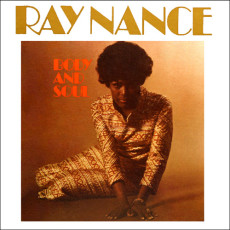
Ray Willis Nance was born on December 10, 1913 in Chicago, Illinois and as a child he studied piano, took violin lessons and was self-taught on trumpet. He led small groups from 1932-1937, then spent periods with the orchestras of Earl Hines and Horace Henderson through to 1940, however, he is best known for his long association with Duke Ellington through most of the 1940s and 1950s, after he was hired to replace Cootie Williams.
Shortly after joining the band, Nance was given the trumpet solo on the first recorded version of “Take The “A” Train” which became the Ellington theme, a major hit and jazz standard. Nance’s “A Train” solo is one of the most copied and admired trumpet solos in jazz history that even Williams upon his return to the some twenty years later would play Nance’s solo almost exactly as the original.
Ray was often featured on violin and was the only violin soloist ever featured in Ellington’s orchestra. He is also one of the well-known vocalists from the Ellington orchestra, having sung arguably the definitive version of “It Don’t Mean A Thing (If It Ain’t Got That Swing). It was Nance’s contribution to take the previously instrumental horn riff into the lead vocal, which constitute the now infamous, “Doo wha, doo wha, doo wha, doo wha, yeah!” The multi-talented trumpeter, violinist, vocalist and dancer earned him the nickname “Floorshow”.
He left the Ellington band in 1963 after having switched to and playing cornet alongside his predecessor Cootie Williams for a year. Over the course of his career he recorded a few albums as a leader and with Earl Hines, Rosemary Clooney and others. Ray Nance passed away on January 28, 1976 in New York City.