

Daily Dose Of Jazz…
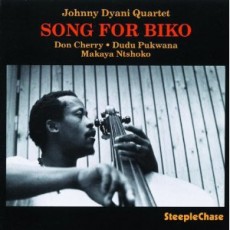
Johnny Mbizo Dyani was born on November 30, 1945 in Duncan Village, a township of the South African city of East London. He started playing the piano and singing in a traditional choir at an early age. At 13, he switched to bass, but would use both voice and piano later on.
In the early 1960s, Dyani was a member of South Africa’s first integrated jazz band, “The Blue Notes”; however, in 1964 the band fled South Africa to seek musical and political freedom, rebelling against the apartheid regime that inhibited whites and blacks playing together.
In 1966, Dyani toured Argentina with Steve Lacy’s quartet and recorded. The Forest and the Zoo. He would later move to Denmark and Sweden, recording many albums under his own name. He recorded with Dollar Brand a.k.a. Abdullah Ibrahim, Don Cherry, Steve Lacy, David Murray, Mal Waldron, Don Moye and Brotherhood of Breath among many others.
In the 70s he formed the group “Earthquake Power” and then became very active on the European scene. His Witchdoctor’s Son band recorded for Steeplechase Records and he also recorded with Swedish and Brazilian musicians. Dyani’s main focus of playing entered around African jazz, avant-garde jazz and world fusion.
Double bassist and pianist Johnny Dyani passed away suddenly after a concert in Berlin on October 24, 1986 at age 40. After his death, the remaining members of The Blue Notes reunited to record a moving tribute album, titled Blue Notes For Johnny.

Daily Dose Of Jazz…
Don Cherry was born Donald Eugene Cherry on November 18, 1936 in Oklahoma City, Oklahoma. His father, trumpeter and club owner moved the family to Watts in Los Angeles, California when he was four. He would skip high school at Fremont to play with the swing band at Jefferson High, resulting in his transfer to reform school at Jacob Riis, where he first met drummer Billy Higgins.
By the early 50s Cherry was playing with jazz musicians in Los Angeles, sometimes acting as pianist in Art Farmer’s group. While trumpeter Clifford Brown was in L. A. he would informally mentor him. He became well known in 1958 when he performed and recorded with Ornette Coleman quintet. He co-led The Avant-Garde session with John Coltrane replacing Coleman, toured with Sonny Rollins, joined the New York Contemporary Five and recorded with Albert Ayler and George Russell.
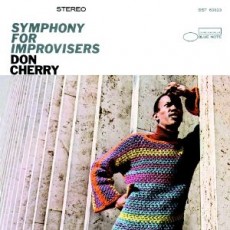
Don’s first recording as a leader was Complete Communion for Blue Note in 1965 with Ed Blackwell and Gato Barbieri. He would begin leaning toward funk/fusion and play sparse jazz during his Scandinavia years. He would go on to play with Dewey Redman, Charlie Haden, Carla Bley, Lou Reed, and Sun Ra, and then ventured into developing world fusion music incorporating Middle Eastern, African and Indian into his playing.
Cherry appeared on the Red Hot Organization’s compilation CD, Stolen Moments: Red Hot + Cool, was inducted into the Oklahoma Jazz Hall of Fame, played piano, pocket trumpet, cornet, flugelhorn and bugle. He recorded some two-dozen albums as a leader and some 48 as a sideman. Don Cherry died on October 19, 1995 at age 58 from liver cancer in Málaga, Spain.

Daily Dose Of Jazz…
Tim Berne was born on October 16, 1954 in Syracuse, New York. Though a music fan, he had no interest in playing until his matriculation through college, when he bought an alto saxophone. Even then he was more interested in rhythm and blues following Stax Records releases and those of Aretha Franklin until he happened upon Julius Hemphill’s album “Dogon A.D. recorded in 1972.
Berne moved to New York City in 1974 and took lessons from Hemphill who was integrating soul and funk with free jazz, and then later recorded with him. In 1979, he founded Empire Records, released his own recordings, then recorded Fulton Street Maul and Sanctified Dreams for Columbia Records, generating discussion and controversy by straying away from the neo-traditionalist hard-boppers of the 80s into the avant-garde.
By the late Nineties Tim founded Screwgun Records, released his own recordings, as well as others musicians. He has played in the sideman seat with guitarists Bill Frisell and David Torn, composer/saxophonist John Zorn, violinist Mat Maneri, and cellist Hank Roberts, trumpeter Herb Robertson, the ARTE Quartet and has been a member of the group Miniature.
Wearing his composer hat, Berne creates complex, multi-section compositions are often quite lengthy, often twenty to thirty minutes. However, utilizing brilliantly creative and experienced musicians who don’t get lost or make their audiences never grow tired. He has been a part of nine different groups and has recorded forty-one albums. Alto saxophonist and bandleader Tim Berne continues to compose and perform prolifically.
More Posts: saxophone