

Daily Dose Of Jazz…
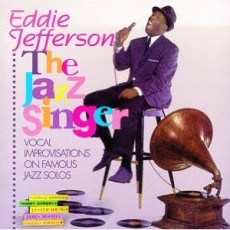
Eddie Jefferson was born on August 3, 1918 in Pittsburgh, Pennsylvania and started his career in show business as a tap dancer. By the late Forties, he was singing and writing lyrics to tunes like “Parker’s Mood” and “I Cover The Waterfront”. He is credited with pioneering vocalese, a musical style in which lyrics are set to an instrumental composition or solo. Perhaps his best-known song is “Moody’s Mood for Love”, though first recorded by King Pleasure, who cited Jefferson as an influence.
One of Jefferson’s most notable recordings “So What” combined the lyrics of artist Christopher Acemandese Hall with the music of Miles Davis to create a masterwork that highlighted his prolific skills, and ability to majestically turn a phrase, into his jazz vocalese.
Jefferson’s last recorded performance was at the Joe Segal’s Jazz Showcase in Chicago and released on video by Rhapsody Films. He shared the stand with fellow bandleader and alto saxophonist Richie Cole. The performance was part of a tour that Jefferson and Cole led together that took them to their opening night in Detroit at the legendary Baker’s Keyboard Lounge, a jazz club built in the 1930’s whose stage graced musicians from the genre as diverse as Dexter Gordon and Sonny Stitt.
Vocalist Eddie Jefferson was shot and killed while leaving Baker’s on May 8, 1979 by a suspected disgruntled dancer who had been fired by Jefferson. She was later acquitted of the murder charge. He was 60. A previously unreleased 1976 live album, Eddie Jefferson at Ali’s Alley, with drummer Rashied Ali, was finally posthumously released in 2009.
More Posts: vocal
Daily Dose Of Jazz…
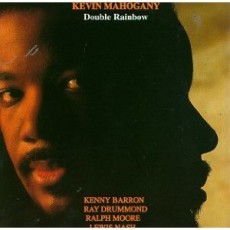
Kevin Mahogany was born July 30, 1958, in Kansas City, Missouri and began his childhood study of music with piano, later learning to play the clarinet and baritone saxophone. He performed with jazz bands and teaching music while still in high school and later attended Baker University, performing with both instrumental and vocal ensembles. He formed a vocal jazz group, matriculating with a BFA in Music and English Drama.
After graduation, he returned to Kansas City where he attracted a local following in the 80’s performing with his groups, “The Apollos” and “Mahogany”. 1991 saw the vocalist featured on a Frank Mantooth CD and lists his influences as Lambert, Hendricks & Ross, Al Jarreau and Eddie Jefferson.
His first CD release as a solo artist was Double Rainbow in 1993 followed by his self-titled album Kevin Mahogany, which won him his first critical acclaim in the media, prompting Newsweek to call him “the standout jazz vocalist of his generation.”
He appeared in Robert Altman’s 1996 film Kansas City playing a character that’s said to be based on Kansas City singer Big Joe Turner. As a jazz educator, he has taught at the Berklee College of Music and the University of Miami. Known for his scat singing and with a dozen albums to his credit, vocalist Kevin Mahogany continued to perform, record, tour and educate until he passed away in his home on December 17, 2017 at the age of 59.
More Posts: vocal
Daily Dose Of Jazz…
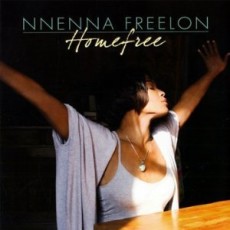
Nnenna Freelon, born Chinyere Nnenna Pierce on July 28, 1954 was raised in Cambridge, Massachusetts and sang in Union Baptist Church and St. Paul AME choirs as a young woman. She graduated from Boston’s Simmons College with a health care administration degree, worked at the Durham County Hospital in North Carolina and by 1990 had been singing for about seven years under her married name.
Attending the Southern Arts Federation conference presented her the opportunity to meet Ellis Marsalis, who became mentor and teacher. He passed her “package” on to George Butler of Columbia Records and in 1992 she was signed and dropped her debut. By 1994 Columbia ended their association and two-years later Concord picked her up.
The singer, composer, arranger, producer has been nominated for a five Grammy Awards, has performed and toured with the likes of Aretha Franklin, Ellis Marsalis, Al Jarreau, Clark Terry, Dianne Reeves, Terence Blanchard and Herbie Hancock, just to name a few. Nnenna has performed at venues such as Carnegie Hall, Montreux, Monterey and Ellington Jazz Festivals, the Kennedy Center, the Apollo Theatre and many more worldwide.
Aside from her many jazz and singing responsibilities, Freelon is the national spokesperson for the National Association of Partners in Education, an arts education organization with over 400,000 school/community partnership programs across the U.S; and her Babysong workshops teaches young mothers and healthcare providers the importance of the human voice for healing, nurturing and brain development in young children. She continues to perform, record and tour.
More Posts: vocal
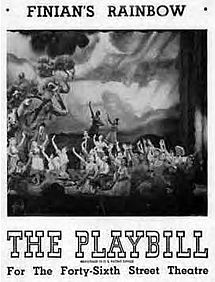
From Broadway To 52nd Street
Finian’s Rainbow opened on January 10, 1947 at the 46th Street Theater starring Albert Sharpe, Ella Logan and David Wayne. Burton Lane and E.Y. Harburg composed the score for this stage production that ran 725 performances. The musical would be made into a movie some twenty-one years later to star Fred Astaire and Petula Clark. From this musical came the encores with the jazz classics Old Devil Moon, Look To The Rainbow and How Are Things In Glocca Morra.
The Story: An Irishman named Finian seeking his fortune steals a pot of leprechaun gold and arrives in America to plant it at Fort Knox and watch it grow. However, the leprechaun who follows him is threatened to become human if it is not returned. When they stop in Rainbow Valley, Finian’s daughter falls in love with a local. During his brief stay, Og the leprechaun, convinces racist Senator Rankin to turn over a new leaf by magically turning him black. The Senator recants and Finian gives back the gold and continues his wanderings.
Jazz History: Jazz was created in 1947 as an artist’s book of some one hundred prints based on paper cutouts by Henri Matisse, who was in his seventies and in poor health when he began this project. No longer able to draw or paint easily with a pencil or brush, he used scissors to cut out simple forms from brightly colored paper painted to his specifications with gouache. He then arranged them on another sheet of gouache-painted paper.
The original intention was for Matisse to illustrate poems written by a French author. As Matisse began, he used a large fluid brush to write notes to himself on construction paper about his thoughts as he created the images. The simple visual appearance of the words pleased Matisse, and he suggested using his roughly painted words in juxtaposition with the images, rather than the original poems. The publisher agreed.
None of the original copies were bound, and many of the purchasers arranged with prominent artists like Cocteau or famous graphic designers to create binders for the pages. Each of the pages is about 24 inches by 12 inches and folded in the center. The original edition of September 30, 1947 consisted of 250 sets of prints and sold for $120 each.
Sponsored By

www.whatissuitetabu.com
Daily Dose Of Jazz…
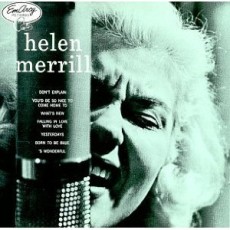
Helen Merrill was born Jelena Ana Milcetic on July 21, 1930 in New York City to Croatian immigrants. The internationally renowned jazz vocalist began singing in jazz clubs in the Bronx at the age of fourteen. By the time she was sixteen, she had taken up music full time and in 1952 made her recording debut when asked to sing “A Cigarette For Company” with the Earl Hines Band that was released on their Xanadu album.
As a result of this exposure she received two subsequent singles recorded for Roost Records and was then signed by Mercury for their new Emarcy label. In 1954, she recorded her first and one of her most acclaimed LP simply titled “Helen Merrill” featuring legendary jazz trumpeter Clifford Brown and bassist/cellist Oscar Pettiford, among others. The album was produced and arranged by Quincy Jones, who was then just twenty-one years old. The success of the album got her signed to an additional four-album contract with Mercury.
Her follow-up 1956 album Dream of You arranged by Gil Evans was the precursor to the musical foundations for his Miles Davis years. By the 60s she was in Europe touring and enjoying greater commercial success than in the States. Developing a following in Japan that remains strong to this day, she not only recorded in Japan, Merrill became involved in producing albums for Trio Records and hosting a show on a Tokyo radio station.
Helen returned to the U.S. in 1972 and has continued recording and regular touring since then. Her later career has seen her experiment in different music genres, recording a bossa nova album, a Christmas album a Rodgers and Hammerstein album, as well as resurrecting “Dream of You” in 1987 with fresh arrangements titled “Collaboration” and co-producing “Billy Eckstine Sings With Benny Carter” and singing on duet on two ballads. By 1995 she recorded “Brownie: Homage to Clifford Brown in tribute to the late trumpeter.
Helen Merrill’s career has spanned six decades with no fade in her popularity and has recorded and performed with some of the most notable figures in the American jazz scene such as Chet Baker, San Getz and Romano Mussolini, among many, many others.
More Posts: vocal