

Daily Dose of Jazz…
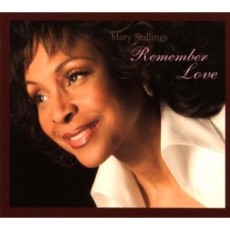
Mary Stallings was born August 16, 1939 in San Francisco, California, one of the eldest of 11 children growing up in the Laurel Heights district, where she still lives, starting as a gospel singer at the First AME Church. Her professional singing career began before she graduated from Lowell High School. Encouraged by her uncle, saxophonist Orlando Stallings, she listened closely to the great jazz singers.
As a teenager, Stallings was appearing in Bay Area nightclubs performing with Ben Webster, Cal Tjader, Earl Hines, Red Mitchell, Teddy Edwards and the Montgomery brothers. Before graduation from high school she joined R&B pioneer Louis Jordan’s Tympani Five. One night in the early Sixties at San Francisco’s Black Hawk nightclub, Dizzy Gillespie invited Ms. Stallings out of the audience and onto his bandstand to sing. By the time she was 26, Mary was playing the legendary Monterey Jazz Festival together with Gillespie in 1965.
The vocalist is perhaps best known for her 1961 collaboration with vibraphonist Cal Tjader on Cal Tjader Plays, Mary Stallings Sings on Fantasy, however, she went on to tour Asia, South America and perform stateside sharing billing with Billy Eckstine, Joe Williams, Tony Bennett and Ella Fitzgerald. From 1969 – ’72 she held a three-year residency as the Count Basie Orchestra girl singer.
After a short semi-retirement Stallings returned to full-time singing at the end of the eighties and finally came to the attention of the national jazz audience with her 1994 release of the aptly titled “I Waited for You” with the Gene Harris Quartet. She followed with Fine and Mellow, Spectrum, Manhattan Moods, Live at the Village Vanguard and Remember Love.
Over the years Mary has worked with jazz luminaries Monty Alexander, Paul Humphries, Ron Eschete, Hendrik Meurkens, Dick Oatts, Geri Allen, Ben Wolfe and Andy Simpkins. She has performed at major festivals being backed by the likes of Marcus Shelby’s Jazz Orchestra, Eric Reed Trio and Wycliffe Gordon and is the recipient of San Francisco’s SF Jazz Beacon Award. She continues to perform, tour and record.
More Posts: vocal
Daily Dose Of Jazz…
Lorez Alexandria was born Dolorez Alexandria Turner on August 14, 1929 in Chicago, Illinois and began as a singer in churches in her teens, spending 11 years as part of an “a cappela” choir. Turning to jazz, she worked the local Chicago club scene before moving to Los Angeles in 1962 to further her career.
Although Alexandria never made the anticipated breakthrough to a wider audience, but she was highly regarded as a jazz singer by those who knew her work, whether as critics, musicians or fans. Over the course of her career Lorez recorded with such musicians as King Fleming, Ramsey Lewis, Howard McGhee and Gildo Mahones.
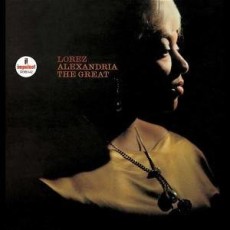
Lorez had an attractive voice, a good feel for jazz phrasing, and a cleanly enunciated delivery that was always highly sensitive to the import of the lyric she was singing. She remains best known for her album Alexandria the Great released in 1964 that featured her in a variety of contexts ranging from big bands to small groups, including several tracks with the Wynton Kelly Trio.
She recorded several albums, including This is Lorez Alexandria with the King Fleming Quartet 1957; Deep Roots 1960; A Woman Knows 1978 and Harlem Butterfly 1984.
Retiring from performing in 1996, she suffered a stroke shortly afterwards, remaining in failing health. Vocalist Lorez Alexandria succumbed to complications from kidney failure on May 22, 2001 in Los Angeles, California.
More Posts: vocal
From Broadway To 52nd Street
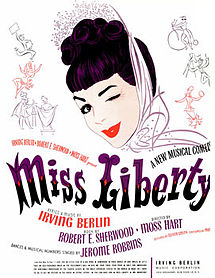
Miss Liberty brought to the stage its star Eddie Albert at the Imperial Theatre on July 15, 1949. The show ran for three hundred and eight performances with music composed by Irving Berlin. The song “You Can Have Him” became a jazz standard.
The Story: In 1885, New York Herald publisher James Gordon Bennett assigns novice reporter Horace Miller to find the woman who served as Frédéric Auguste Bartholdi’s model for the Statue of Liberty. In the artist’s Paris studio, Miller sees a photograph of Monique DuPont and mistakenly believes she was the one. Bennett arranges for her and her grandmother to accompany Horace back to New York City, where she becomes a media darling. When rival publisher Joseph Pulitzer discovers it was Bartholdi’s mother who actually posed for him, he exposes Monique as a fraud in his New York World. She faces deportation until a sympathetic Pulitzer comes to her rescue, paving the way for her to plan a future with Horace, who jilts his American girlfriend Maisie Doll in favor of the French beauty.
Jazz History: As the widely performed bebop or hot jazz began to wane in some sectors of the country, cool jazz began to emerge by the early 1950s. “Cool” was used to describe a kind of toned-down jazz. Later the term became associated with a number of white musicians who relocated to California where they could get day gigs at movie studios, unlike black musicians, while playing jazz at night. In this form it was called West Coast jazz. For white players to represent a kind of cool jazz is ironic since the idea of coolness has its roots in Black culture. Cool jazz contrasts with hot jazz in that it has limited vibrato, restrained timbre, stable dynamics, melodic calm, sophisticated harmonies that tempered the blues idiom.
Sponsored By

www.whatissuitetabu.com
Daily Dose Of Jazz…
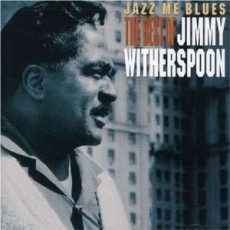
Jimmy Witherspoon was born on August 8, 1920 in Gurdon, Arkansas. He first attracted attention singing with Teddy Weatherford’s band in Calcutta, India, which made regular radio broadcasts over the U. S. Armed Forces Radio Service during World War II. Witherspoon made his first recordings with Jay McShann’s band in 1945.
By 1949 Jimmy was recording under his own name with the McShann band and had his first hit and signature tune with “Ain’t Nobody’s Business”. In 1950 he had several more with “No Rollin’ Blues” and “Big Fine Girl”, as well as “Failing By Degrees” and “New Orleans Woman” recorded with the Gene Gilbeaux Orchestra. These Gilbeaux recordings are from a live performance on May 10, 1949 at a “Just Jazz” concert in Pasadena, CA sponsored by Gene Norman.
Witherspoon’s style of the “blues shouter” became unfashionable in the mid-1950s, but he returned to popularity with his 1959 album, “Jimmy Witherspoon at the Monterey Jazz Festival” featuring Roy Eldridge, Woody Herman, Ben Webster, Coleman Hawkins, Earl Hines and Mel Lewis among others.
The early 60s saw Witherspoon touring Europe with Buck Clayton, recording in the UK, the 70s recording with Brother Jack McDuff in London, with Eric Burdon, toured with his own band with a host of players such as Joe Sample, Cornell Dupree, Thad Jones and others. He continued to record and perform well into the Nineties with Gerry Mulligan, Leroy Vinnegar, Teddy Wilson, Pepper Adams, Junior Mance and the list jazz luminaries goes on and on.
Vocalist Jimmy Witherspoon died of throat cancer in Los Angeles, California on September 18, 1997.
More Posts: vocal
From Broadway To 52nd Street
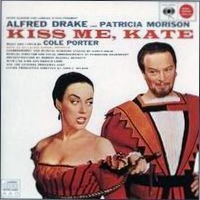
Kiss Me Kate opened its doors at the New Century Theatre on December 30, 1948 and was the second musical to be lauded as a blockbuster with a run of 1077 performances. Alfred Drake, Patricia Morrison, Lisa Kirk and Harold Lang were the stars of the show, who sung the music composed by Cole Porter, So In Love and From This Moment On, which became jazz standards. The musical won the very first Tony Award for Best Musical presented in 1949.
The Story: While cast members of a revival of Shakespeare’s Taming of the Shrew celebrate another opening, another show, the show’s stars, Fred & Lilli, celebrate their first anniversary of their divorce. They reminisce about better times. Fred sends Lilli a bouquet, leading her to believe he is still in love with her. Misunderstanding leads to argument between the two. Meanwhile, one of the cast members signs Fred’s name to his gambling debt. Goons arrive to collect and Fred convinces them to make Lilli perform. Debt is voided on a technicality. Fred & Lilli make up over the course of the evening and recognize they do still love each other)
Broadway History: In 1880, a stretch of Broadway between Union Square and Madison Square was illuminated by Brush arc lamps, making it among the first electrically lighted streets in the United States. By the 1890s, the portion of Broadway from 23rd Street to 34th Street was so brightly illuminated by electrical advertising signs, that people began calling it “The Great White Way.” When the theater district moved uptown, the name was transferred to the Times Square area.
Sponsored By
www.whatissuitetabu.com