From Broadway To 52nd Street
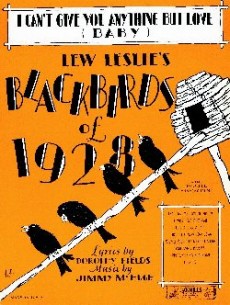
It’s now May 9, 1928 and the crowd is anxiously awaiting the rise of the curtain in the Liberty Theatre to witness The Blackbirds of 1928 – the first of four American editions incorporating a series of revues with Black casts produced by Lew Leslie in London and New York. This revue starred Bill “Bojangles” Robinson, Adelaide Hall and Aida Ward with music composed by Jimmy McHugh and Dorothy Fields. This first offering ran for 518 performances and gave the world the classic standard “I Can’t Give You Anything But Love”
The Story: The shows, relatively simple in mounting, emphasized song and dance and the small amount of comedy present represented the stereotypical black humor of the era.
Jazz History: One may wonder where the name “speakeasy” originated. Well it is said that the term comes from a patron’s manner of ordering alcohol without raising suspicion – a bartender would tell a patron to be quiet and “speak easy”. Though an integral part of Prohibition, the term predates the era by some thirty years. Samuel Hudson, a newspaperman, said he heard the word used for the same purpose in Pittsburgh in the 1880’s by an old Irish woman who sold liquor without a license.
Sponsored By

www.whatissuitetabu.com
More Posts: broadway
Daily Dose Of Jazz…
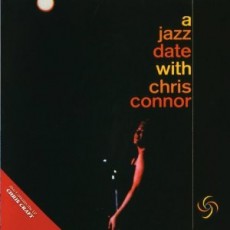
Chris Connor was born Mary Loutsenhizeron November 8, 1927 in Kansas City, Missouri. Her mother died when she was thirteen and her older sister finished raising her. She studied 8 years through junior and high school and became proficient clarinetist. She first sang publicly in 1945, performing “Amor” at the Jefferson City Junior College’s graduation.
Having been well received Chris decided to pursue a singing career full-time, initially working around Kansas City. Her first professional job was with the University of Missouri college band. Moving between local bands from 1946–47; in 1948 she moved to New York City, struggled to acquire work, finally becoming a member of the Claude Thornhill’s vocal group “The Snowflakes”. During her time with the Snowflakes, Connor recorded “There’s A Small Hotel” and “I Don’t Know Why”. She joined Jerry Wald’s big band and recorded more prolifically with songs like “Cherokee” and “Pennies From Heaven”.
Nearing one of her sporadic engagement departures June Christy recommended Connor to Stan Kenton and subsequent recording of Jeepers Creepers, If I Should Lose You, I Get A Kick Out Of You and All About Ronnie, which would become her signature song. Tired of touring by 1953 she left Kenton, she returned to New York, found a manager who got her work at Birdland that eventually landed her a recording contract at Bethlehem Records. Her solo career took flight and a succession of successful albums followed. She moved to much bigger Atlantic label, becoming the first white female signed. She worked with such jazz musicians like Kenny Burrell, Herbie Mann, Lucky Thompson, Hank Jones, Doc Severinsen, Oscar Pettiford and others.
Chris had a long and prolific career through the Sixties and Seventies recording for FM, ABC, Paramount, JVC, Stanyan, Sony Japan, Progressive and Japanese Lobster Record labels. She made her final two recordings in the early 2000s for HighNote Records. Vocalist Chris Connor died on August 29, 2009, from cancer at age 81.

More Posts: vocal

From Broadway To 52nd Street
Two days after Christmas in 1927 Showboat opened at the Ziegfeld and ran for five hundred and seventy-two performances. The music was composed by Jerome Kern and Oscar Hammerstein and rendered just jazz classics as Can’t Help Lovin’ Dat Man and Ol’ Man River. The show starred Jules Bledsoe, Aunt Jemima, Helen Morgan, Charles Winninger, Howard Marsh, Sammy White, and Norma Terris.
The Story: Showboat is a tale set on a Mississippi River gambling boat run by Cap’n Andy Hawks and his irritable wife Parthy and their ingenuous daughter Magnolia. The prominent roles of black servants are in the characters Queenie and Joe and the leading actress in the show, Julie, is discovered to be of mixed heritage. Intrigue enters through marriage, gambling, abandonment, alcoholism sets the characters on a spiral downward but one triumphs in the end.
Broadway History: Broadway was originally the Wickquasgeck Trail, carved into the brush destination of Manhattan by its Native American inhabitants. This trail originally snaked through swamps and rocks along the length of Manhattan Island. Upon the arrival of the Dutch, the trail soon became the main road through the island from Nieuw Amsterdam at the southern tip. The Dutch explorer and entrepreneur David de Vries gives the first mention of it in his journal for the year 1642 – “the Wickquasgeck Road over which the Indians passed daily”.
The Dutch named the road “Heerestraat“. In the mid-eighteenth century, part of Broadway in what is now lower Manhattan was known as Great George Street. In the 18th century, Broadway ended at the town commons north of Wall Street, where traffic continued up the East Side of the island via Eastern Post Road and the West Side via Bloomingdale Road. The western Bloomingdale Road would be widened and paved during the 19th century, and called “The Boulevard” north of Columbus Circle. On February 14, 1899 the name “Broadway” was extended to the entire Broadway/Bloomingdale/Boulevard Roads.
Sponsored By
www.whatissuitetabu.com
More Posts: broadway

Daily Dose Of Jazz…
Jane Monheit was born November 3, 1977 in Oakdale, New York on Long Island. As a child, Jane spent her summers as a student at the Usdan Center For the Creative and Performing Arts, and is a recipient of their distinguished alumna award.
She began singing professionally while attending Connetquot High School in Bohemia, N.Y. from which she graduated in 1995. As a student at the Manhattan School of Music she studied voice under Peter Eldridge, graduated with honors. Monheit was the first runner up to Teri Thornton in the 1998 Thelonious Monk Jazz Institute’s vocal competition.
An international artist, Jane has performed at most of the major concert halls, cabarets and jazz venues around the globe. She has released seven albums and two DVDs, and has appeared as a guest artist on many others, as well as soundtracks for the movie “Sky Captain and the World of Tomorrow” singing Over The Rainbow.
Monheit has appeared on numerous television shows and also been a featured performer in the nationally televised Christmas at the White House, the Capitol Fourth of July Celebration, and The National Memorial Day Celebration.
Vocalist Jane Monheit has collaborated with artists such as Michael Bublé, Ivan Lins, Terence Blanchard and Tom Harrell and has been nominated twice for her recordings. She spends most of the year on tour with her band but also performs with the major symphonic orchestras throughout the country.
More Posts: vocal
Daily Dose Of Jazz…
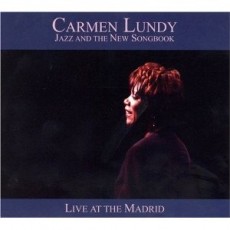
Carmen Lundy was born November 1, 1954 in Miami, Florida and at the age of six began to study the piano. After joining her church junior choir, she decided to become a singer when she was 12 years old. While an opera major at the University of Miami she sang with a jazz band and her decision to sing vocal jazz was cemented.
Moving to New York in 1978 Carmen was hired by the Mel Lewis/Thad Jones Big Band and performed her first engagement at the Village Vanguard in Greenwich Village. Two years later she formed her own trio, performing with pianists John Hicks and Onaje Allan Gumbs. She has also performed with Walter Bishop Jr., Don Pullen, Mulgrew Miller, Terri Lyne Carrington, Courtney Pine, Bill O’Connell, Steve Berrios, Marian McPartland, Kenny Kirkland and numerous others.
Lundy recorded her first album of original compositions Good Morning Kiss in 1985 followed by her sophomore project Night and Day the next year featuring musicians Kenny Kirkland, Alex Blake, her brother Curtis Lundy, Victor Lewis, Rodney Jones and Ricky Ford.
Carmen played the lead role in the European tour of Duke Ellington’s Broadway musical, Sophisticated Ladies. Off-Broadway she portrayed Billie Holiday in Lawrence Holder’s They Were All Gardenias. She made her television debut in 1990 as the star of the CBS pilot-special Shangri-La Plaza in the role of Geneva.
A composer, arranger, producer, actress, painter, and sophisticated vocalist well known for her progressive bop and post-bop styling’s, Lundy has composed and published forty songs with favorites such as Quiet Times, Forgive Me, The Out Crowd, and Never Gonna Let You Go that have been recorded by Kenny Barron, Ernie Watts and Straight Ahead. With thirteen albums to her credit Carmen Lundy continues to focus on original material as she moves her three-decade career forward.