Daily Dose Of Jazz…
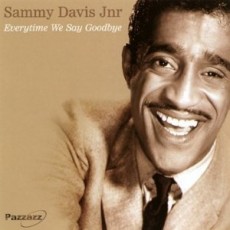
Sammy Davis Jr. was born Samuel George Davis, Jr. on December 8, 1925 to Cuban American parents in New York City. Starting as a child vaudevillian at age three, he toured for years nationally with the Will Masten Trio, and after military service, returned to the trio. He became an overnight sensation following a nightclub performance at Ciro’s in 1951 and with a trio became a recording artist.
As his father and uncle aged, Davis broke out to achieve success on his own and he released several albums that led to being hired to sing the title track for the Universal Pictures film “Six Bridges to Cross” in 1954. He amassed a catalogue of several dozen recordings for Decca, Reprise, Verve, Motown, MGM and 20th Century, consistently kept alive the Great American Songbook from Broadway accompanied by orchestras and big bands and had two #1 hits – “I Gotta Be Me” and The Candy Man.
Sammy starred in four Broadway musicals from 1956 to 1978 in Mr. Wonderful, Golden Boy, Sammy and Stop The World I Want To Get Off. His film career spanned nearly six decades with important roles and appearances in A Man Called Adam, Porgy & Bess, Anna Lucasta, Sweet Charity, Cannonball Run, Moon Over Parador and Tap. As a charter member of the Rat Pack he did several movies with them beginning with Oceans 11.
Not to let television escape his grasp in 1966 had his own variety show, The Sammy Davis Jr. Show, would appear on Archie Bunker, I Dream of Jeannie, The Rifleman, Charlie’s Angels, One Life To Live, General Hospital and the Cosby Show to name a few.
With his career slowing in the late sixties, by 1972 he was a star in Las Vegas earning him the nickname Mister Show Business. In 1987 Sammy toured internationally with Frank Sinatra, Dean Martin and Liza Minelli. He was awarded NAACP’s Spingarn Medal, won a Golden Globe and an Emmy, two-time recipient of the Kennedy Center Honors, has a star on the Hollywood Walk of Fame, was inducted into the Grammy Hall of Fame and posthumously awarded the Grammy Lifetime Achievement Awards.
Singer, tap dancer, impersonator and musician Sammy Davis Jr. passed away in Beverly Hills, California on May 16, 1990, of complications from throat cancer. On May 18, 1990, two days after Davis’ death, the neon lights of the Las Vegas Strip were darkened for ten minutes, as a tribute to him.

More Posts: vocal
From Broadway To 52nd Street
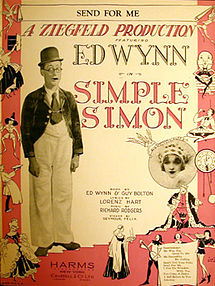
As the decade of despair opens, Broadway opens another musical to lift the spirits of a theatre going society on February 18, 1930 the Ziegfeld Theatre unveils Simple Simon, starring Ed Wynn as a waif who dreams in fairy tales. Wynn played Ziegfeld Follies until butting heads with W.C. Fields who let the back end of a pool cue down on Wynn’s head with a mighty thwack. He went on to sprout into his repertoire inane inventions like a pair of eyeglasses with a windshield to protect you when you ate grapefruit. But from the play Simple Simon, which ran for 135 performances, came the song Dancing on the Ceiling and He Was Too Good For Me composed by Richard Rodgers and Lorenz Hart. The two songs, however, were dropped from the show before the New York opening but get their perpetual encores as jazz standards.
Jazz History: Before the Onyx Club came to life on 52nd Street, Joe Helbock, who may justly claim to be the grandfather of The Street, was bootlegging there in 1927 and ’28 and sold to notables such as Teddy Roosevelt, Babe Ruth, Will Rogers, Marilyn Miller and Jimmy Walker. He hung out with Jimmy Dorsey, Paul “Pops” Whiteman and Roy Bargy at a “speak” called Plunkett’s where all the musicians hung out. In 1927 he opened the Onyx on the parlor floor in the rear of the brownstone at 35 W. 52nd with his partner Fred Hoetter, giving the club its name because of the black marble bar. They started with Art Tatum, Maxine Sullivan, Louis Prima and Stuff Smith. It wasn’t until 1933 that The Onyx put a steady pianist on payroll for the cocktail hour however Willie “The Lion” Smith disputes this claim. As the story goes, one day in 1930, Joe approached Willie saying “Lion, why don’t you stop by every day around five and I’ll give you a little salary for your trouble?” That deal, the Lion emphasizes, established an engagement of the cocktail hour that launched 52nd Street as the Cradle Of Swing.
Sponsored By

www.whatissuitetabu.com
More Posts: broadway
Daily Dose Of Jazz…
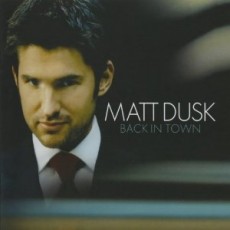
Matt Dusk was born Matthew-Aaron Dusk on November 19, 1978 in Toronto, Ontario, Canada and from an early age wanted to become a performer. At seven, he was accepted into St. Michael’s Choir School and for the next eleven years performed opera and classical music. It wasn’t until hearing Tony Bennett and Sarah Vaughan records at age 17 that he began to change his musical style and direction.
In 1998 Matt won the top spot in the Canadian National Exhibition Rising Star Competition, entered York University for economics but a year later change to music studying jazz theory and jazz vocal, graduating with honors in 2002.
Dusk recorded four independent CDs before his major record deal, making his mark on the MP3 web circuit. This was followed by a 2003 record deal with Decca Records, the next year played Las Vegas at the Golden Nugget, and became the house entertainer for the reality TV show Casino.
Matt has recorded with Capitol Records, worked with a 58-piece orchestra, is the first jazz artist in Japanese history to reach #1 on the pop radio charts, recorded the soundtrack for the TV series Call Me Fitz, and has shot a live DVD concert special with a 17-piece band and has six albums to his credit alongside his independent project. He currently performs, tours and records.
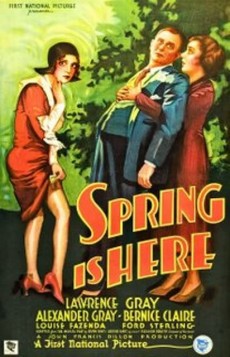
From Broadway To 52nd Street
The music composed by Richard Rodgers and Lorenz Hart seven months earlier for a new two act musical called Spring Is Here opened at the Alvin theatre on March 11, 1929 and ran for 104 performances. It starred Dick Keene, Inez Courtney and John Hundley. Adapted from the play Shotgun Wedding, from this production came two songs destined to become a classic in the jazz world, With A Song In My Heart and Spring Is Here.
The Story: Terry loves Betty, Betty falls for Stacy and attempt to elope but are stopped by her father. Terry flirts with other girls to make Betty jealous. It works and she returns to his arms for the happy ending.
Broadway History: The “Great White Way” is a nickname for a section of Broadway in the midtown section of the borough of Manhattan, specifically the portion that encompasses the Theatre District, between 42nd and 53rd Streets, and encompassing Times Square. However, this was not always the location of the theatre district. In 1880, a stretch of Broadway between Union Square and Madison Square was illuminated by Brush arc lamps, making it among the first electrically lighted streets in the United States.
By the 1890s, the portion from 23rd to 34th Street was so brightly illuminated by electrical advertising signs, that people began calling it The Great White Way. When the theatre district moved uptown, the name was transferred to the Times Square area. The phrase Great White Way has been attributed to Shep Friedman, columnist for the New York Morning Telegraph in 1901, who lifted the term from the title of a book about the Arctic by Albert Paine. The headline “Found on the Great White Way” appeared in the February 3, 1902, edition of the New York Evening Telegram.
Sponsored By
www.whatissuitetabu.com
More Posts: broadway
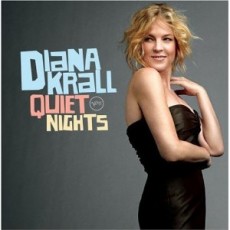
Daily Dose Of Jazz…
Diana Jean Krall was born on November 16, 1964 in Nanaimo, British Columbia, Canada. At age four she was playing piano and playing jazz in a local restaurant at 15. She went to the Berklee College of Music on scholarship before heading out to Los Angeles, California.
In 1993, Krall released her debut album, Stepping Out, with John Clayton and Jeff Hamilton. Her sophomore project hit the stands two years later followed by a third, a dedication to Nat King Cole in 1996. She teamed up with guitarist Russell Malone and bassist Christian McBride on her next release Love Scenes that quickly became a hit recording in 1997.
Diana has been on tour with Tony Bennett, teamed up with Claus Ogerman, incorporated orchestral arrangements by Johnny Mandel, performed closing credit music for the DeNiro film The Score, joined Ray Charles on his Genius Loves Company, featured in a Lexus ad campaign, produced Barbra Streisand’s Love Is The Answer album.
She has been awarded the Order of British Columbia, an honorary doctorate from the University of Victoria, inducted into the Canadian Walk of Fame, has had a plaza named after her, has won two Grammy and eight Juno awards. Pianist and contralto vocalist Diana Krall continues to perform, record and tour.