

Daily Dose Of Jazz…
Ethel Waters was born in Chester, Pennsylvania on October 31, 1896 as a result of the rape of her teenaged mother, Louise Anderson by pianist and family acquaintance John Waters. Raised in poverty and never living in the same place for more than 15 months she had a difficult childhood.
Waters grew tall, standing 5’9½” in her teens, married at the age of 13, but soon left her abusive husband and became a maid in a Philadelphia hotel working for $4.75 per week. On her 17th birthday, she attended a costume party at a nightclub on Juniper Street and persuaded to sing two songs, she impressed the audience so much that she was offered professional work at the Lincoln Theatre in Baltimore, Maryland.
After Baltimore, Ethel toured on the black vaudeville circuit but success fell on hard times and she joined a carnival. Leaving that life in Chicago she headed to Atlanta, working the same clubs with Bessie Smith, singing ballads and popular songs instead of blues. But fame found her after her move to Harlem and its renaissance in the 1920s. She landed her first club gig in Harlem at Edmond’s Cellar, became an actress in the blackface comedy “Hello 1919”, and in 1921 became the fifth black woman to make a record, on the tiny Cardinal Records label. She later joined the Black Swan Record label where Fletcher Henderson was her accompanist.
She recorded for numerous labels over her career, played untold clubs and tours throughout the U.S. introducing standards like Dinah, Sweet Georgia Brown, Am I Blue and Black and Blue and worked with Duke Ellington. Film wooed her in 1933 with Rufus Jones for President featuring child star Sammy Davis Jr. in the title role. She went on to star at the Cotton Club singing Stormy Weather, had a featured role in the wildly successful Irving Berlin Broadway musical revue As Thousands Cheer in 1933, where she was the first black woman in an otherwise white show introducing Heat Wave and Supper Time to the world and was the highest paid performer on Broadway. In 1942 she starred in the Vincent Minnelli directed success Cabin In The Sky, reprising her 1940 stage role as Petunia.
She has three songs in the Grammy Hall of Fame, her version of Stormy Weather is on the Library of Congress’ National Recording Registry, was nominated for an Emmy for her performance in Route 66, was the second Black woman to be nominated for an Oscar for her role in Pinky, has a star approved but not funded on the Hollywood Walk of Fame, has written two autobiographies – His Eye is on the Sparrow and To Me, It’s Wonderful.
Ethel Waters, the blues, jazz and gospel vocalist and actress, passed away on September 1, 1977, aged 80, from uterine cancer, kidney failure, and other ailments in Chatsworth, California.
More Posts: vocal

Daily Dose Of Jazz…
Cleo Laine was born Clementina Dinah Campbell on October 28, 1927 in Southall, Middlesex, England of mixed heritage to a black Jamaican father and white English mother. She began taking singing and dancing lessons at an early age and attended the Featherstone Primary School. Prior to her singing career she worked as an apprentice hairdresser, librarian and for a pawnbroker, married a roof tiler and had a son, all before 1957.
Laine took up singing professionally in her mid-twenties, auditioning successfully for John Dankworth’s band, with which she performed until 1958, when she married Dankworth in secret. She began her career as a singer and actress, playing the lead in a new play at London’s Royal Court Theatre in the 50s. This propelled her into consistent theatre applause and acclaim over the next two decades.
During this period she had two major recording successes, You’ll Answer to Me, reaching the British Top 10 and Shakespeare and All that Jazz with Dankworth received widespread critical acclaim. Cleo’s international recognition started in 1972 with her first tour of Australia followed by performances in the U.S. at Lincoln Center and Carnegie Hall, and then heading to Canada with coast-to-coast tours of both countries. Television saw her on The Muppet Show, duet albums with Ray Charles (Porgy and Bess) as well as Arnold Schoenberg‘s Pierrot Lunaire, for which she was nominated for a Grammy Award. She also had a succession of record releases; several nominations and a Grammy win for her live Carnegie Hall 1983 concert.
In 1979 Laine was made an Officer of the Order of the British Empire (OBE) for services to music and in the 1997 New Year’s Honours list, her membership of the order was elevated to Dame Commander, and she was appointed Dame Cleo Laine DBE, the equivalent of a knighthood for women.
She is the only female performer to have received Grammy nominations in the jazz, popular and classical music categories. She has published a self-titled autobiography Cleo in 1994 followed up with You Can Sing If You Want To in 1997. She has recorded over a hundred albums, received several honorary doctorates, fellowships and awards, has had a street named after her and at 85 years of age the longevity of her voice has been almost unchanged from decades earlier.
Contralto singer and actress Cleo Laine, who had a three-octave range passed away at her home in Wavendon, Buckinghamshire, England on July 24, 2025 at the age of 97.
More Posts: vocal
Daily Dose Of Jazz…
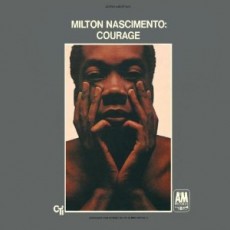
Milton Nascimento was born October 26, 1942 in Rio de Janiero, Brazil and as a baby was adopted by his mother’s former employers after her death when he was just 18 months. Growing up in Três Pontas, Minas Gerais he would soon become an occasional deejay on a radio station that his father once ran.
In the early stages of his career, Nascimento played in two samba groups: Evolussamba and Sambacana. By 1963, he moved to Belo Horizonte, struck a friendship with Lô Borgesled to the Clube de Esquina (“corner club”) movement that included Beto Guedes, Toninho Horta, Wagner Tiso, and Flávio Venturini, with whom he shared compositions and melodies. One composition was “Canção do Sal”, which was first interpreted by Elis Regina in 1966 and led to a television appearance with Nascimento. A subsequent collective released Clube da Esquina in 1972 with several hit singles.
Famous for his falsetto and tonal range, Nascimento is regarded for his highly acclaimed songs such as “Maria, Maria”, “Canção da América” (“Song from America”/”Unencounter”), “Travessia”, “Bailes da Vida” and “Coração de Estudante” (“Student’s Heart”). The lyrics often social and political in nature have become hymns for both campaigns and funerals.
Milton’s international breakthrough came with his appearance on jazz saxophonist Wayne Shorter‘s 1974 album “Native Dancer” that led to widespread acclaim. Collaborations with stars such as Paul Simon, Sarah Vaughan, Mercedes Sosa, Carlos Santana, Pablo Milanés, Cat Stevens, George Duke, Quincy Jones and Earth, Wind And Fire would follow. Angelus, released in 1994 features appearances by Pat Metheny, Ron Carter, Herbie Hancock, Jack DeJohnette, Nana Vasconcelos, Jon Anderson, James Taylor, Peter Gabriel and Duran Duran.
Nascimento contributed the song “Dancing” to the AIDS-Benefit Album “Red Hot + Rio”, worked with the Brazilian Heavy Metal band Angra, and collaborated with Jason Mraz on the latter’s album. The singer/songwriter and guitarist has recorded over two-dozen albums and continues to record, perform and tour.

Daily Dose Of Jazz…
Joe Bourne was born on October 20, 1942 in Cambridge, Massachusetts and music became a part of his life at an early age. He began singing in a church choir and on the street corner with various singing groups.
Greatly inspired by such greats as Nat King Cole and Lou Rawls, his US career grew from lead singer for a Top 40 rhythm and blues/jazz band to international status, recording and releasing albums with hit singles. During this period he made several radio and TV commercials for Delta Airlines, Coca Cola and the American Telephone Company.
A move to Europe saw Bourne performing for the American and Dutch military and supporting acts in concert, such as The Stylistics, Natalie Cole, The Manhattans, The Pointer Sisters, Dionne Warwick and Ray Charles while they were on their European tour. He has performed in Scandinavia, Australia, Aruba, Indonesia, Great Britain, Spain, Germany, Italy and Switzerland.
Apart from his solo performances and his engagements with 25 to 100 voice choirs, Joe teams up with female colleagues for duet performances complemented by various orchestra backings from combo to Big Band or symphony orchestras.
He has been awarded for his rendition of Gershwin’s Summertime, the Silver Orpheus in Bulgaria and the Jimmy Kennedy Award in Ireland. He was also awarded the Kunsteler des Jahres and the Diamantes des Jahres for top class entertainment in Germany. Vocalist Joe Bourne continues to perform and record.
More Posts: vocal
Daily Dose Of Jazz…
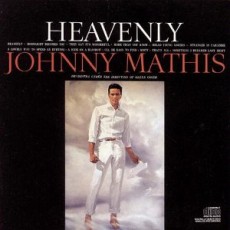
Johnny Mathis was born John Royce Mathis in Gilmer, Texas on September 30, 1935. The family moved to San Francisco, California, where he grew up on 32nd Avenue in the Richmond District. His father a vaudevillian, saw his son’s talent, bought a piano and encouraged him by teaching him songs and routines that he performed at home, school and church functions.
At thirteen, Johnny began study with voice teacher Connie Cox, and for six years he learned vocal scales and exercises, voice production, classical and operatic skills. A star athlete in high school he earned four athletic letters, and then enrolled at San Francisco State University on scholarship to become a teacher. However, spotted by Helen Noga, co-owner of The Black Hawk Club at a jam session, she became his manager, got jazz producer George Avakian to hear him and he subsequently sent a telegram to Columbia Records noting: Have found phenomenal 19-year-old boy who could go all the way. Send blank contracts.
The rest, as they say is history. His first album Johnny Mathis: A New Sound In Popular Song was a slow-selling jazz album. Staying in New York to play the clubs, his second album, produced by Mitch Miller,, defined his sound – soft, romantic ballads. Miller paired him with arranger/conductor Ray Conniff, then with Ray Ellis, Glenn Osser, and Robert Mersey By 1956 Johnny recorded two of his most popular songs – “Wonderful, Wonderful” and “It’s Not For Me To Say”. He would appear in films by MGM and 20th Century Fox, the Ed Sullivan Show and The Pat Boone Chevy Showroom.
After splitting from Noga, Mathis established Jon Mat Records to produce his recordings, Rojon Productions to handle all of his concert, theater, showroom and television appearances, and all promotional and charitable activities, hired a new manager and business partner, signed with Mercury, then Columbia Records, the latter being his permanent label. His recordings have been used in Close Encounters of the Third Kind, The X-Files and Mad Men; and his discography crosses all genres including jazz, pop, Brazilian, Spanish, Soul, R&B, rock, Broadway, Tin Pan Alley and disco.
He has the distinction of having the longest stay of any recording artist on the Columbia Record label, having been with the label from 1956 to 1963 and from 1968 to the present and makes him the third biggest selling recording artist of the 20th century, only after Elvis Presley and Frank Sinatra.
Johnny Mathis has received three Grammy awards including a Lifetime Achievement Award, has been inducted into the Grammy Hall of Fame, nominated for an Oscar, has taped twelve of his own television specials, made over 300 television guest appearances with 33 of them being on The Tonight Show and his songs have been heard in 100 plus television shows and films around the globe. He continues to perform but from 2000 onwards has limited his concert engagements to fifty to sixty appearances per year.
More Posts: vocal