

Hollywood On 52nd Street
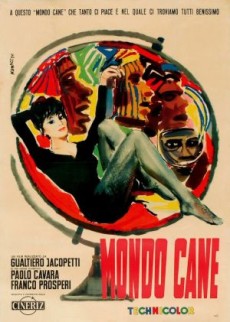
Riz Ortolani and Nino Oliviero composed the theme song More that found its place in the pantheon of jazz classics. It was a part of the score for the 1962 film Mondo Cane. The film title translates to Dog’s World, or as the soundtrack album states, “a world gone to the dogs”.
Some melodies are used repeatedly, in different styles, each named for the part of the movie where the music is used. Of the 15 music tracks on the soundtrack album, one melody is presented 6 times, another melody 2 times. The melody which became known as “More” is presented 4 times, named “Life Savers Girls”, “The Last Fight/L’Ultimo Volo”, “Models In Blue/Modelle in Blu”, “Repabhan Street/Repabhan Strasse”, in styles ranging from lush to march and 3/4 waltz.
Originally composed as an instrumental and titled “Ti guarderò nel cuore”, lyrics were later provided by Marcello Ciorciolini, which were adapted into English by Norman Newell. At that point, “Theme from Mondo Cane” became “More” (not to be confused with an earlier pop song of the same name).
The Story: The movie Mondo Cane is filmed as a documentary and uses a variety of music to accompany various segments. The film uses a series of stories that take place in different cities around the world, i.e. dog pound, Rudolph Valentino statue, bikini-clad girls wooing sailors, pigs being slaughtered, and a manhunt among various others.
More Posts: comedy,dance,drama,hollywood,instrumental,jazz,musical,suite ta bu,vocal
Daily Dose Of Jazz…
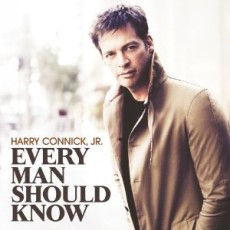
Harry Connick, Jr. was born Joseph Harry Fowler Connick, Jr. on September 11, 1967 and raised in New Orleans, Louisiana. His musical talents soon came to the fore when he started learning the keyboards at the age of three, played publicly at age five and recorded with a local jazz band at ten.
When Harry was nine years old, he performed with the New Orleans Symphony Orchestra and later played a duet of “I’m Just Wild About Harry” with Eubie Blake at the Royal Orleans Esplanade Lounge in New Orleans. His musical talents were developed at the New Orleans Center for Creative Arts and under the tutelage of Ellis Marsalis and James Booker.
Moving to New York, Connick studied at Hunter College and the Manhattan School of Music. It was here that Columbia Records A&R exec Dr. George Butler persuaded him to sign with the label releasing first a self-titled album and then “20” as his sophomore project. He soon acquired a reputation in jazz because of extended stays at high-profile New York venues.
Over the course of his career Harry has sung on film soundtracks, ventured into acting on Broadway and the big and small screens, has sold over 25 million albums worldwide, has seven top-20 US albums, and ten number-one US jazz albums, earning more number-one albums than any other artist in the U.S. jazz chart history. Harry Connick Jr., singer, big-band leader, conductor, pianist, actor, and composer, continues to perform, record and tour.

Put A Dose In Your Pocket
Hollywood On 52nd Street
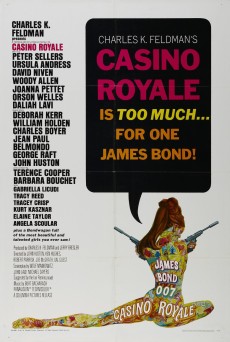
The Look Of Loveis another jazz standard from the iconic pop library composed by Burt Bacharach and Hal David. The tune was sung by English pop singer Dusty Springfield in the 1967 James Bond film spoof, Casino Royale. It also received a Best Song nomination at the 1968 Academy Awards and in 2008 the song was inducted into the Grammy Hall of Fame.
David Niven starred in Casino Royale as the original 007, Sir James Bond. It is loosely based on Ian Fleming’s first novel. Forced out of retirement to investigate the deaths and disappearances of international spies, he soon battles the mysterious Dr. Noah and SMERSH.
More Posts: comedy,dance,drama,hollywood,instrumental,jazz,musical,suite ta bu,vocal
Daily Dose Of Jazz…
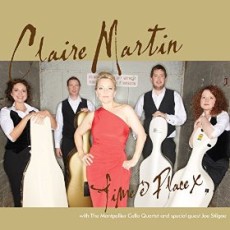
Claire Martin was born on September 6, 1967 in Wimbledon, South London, England. She grew up in a house full of music, claiming to have learned all of Judy Garland’s songs by the time she was 12. She also cites Ella Fitzgerald’s Song Books as being the life changing influence that inspired her to attend Stage School and later to study singing in both New York and London.
Her professional career started with her first engagement, aboard the QE2, where she sang in the Theater Bar for two years. In 1991, at the age of 21, Martin formed her own jazz quartet, and was signed by the Scottish jazz label Linn Records. Her debut album, “The Waiting Game” was extremely well reviewed and was selected by The Times as one of their “Albums of the Year”.
Claire has opened for Tony Bennett at the Glasgow International Jazz Festival, won the British Jazz Awards and BBC Jazz Awards for Best Vocalist, has co-presented for the Jazz Line Up on BBC Radio 3, collaborated with composer and performer Sir Richard Rodney Bennett and has recorded a total of 17 albums.
Vocalist Claire was appointed Officer of the Order of the British Empire (OBE) in the 2011 Birthday Honours for services to music. She continues to perform, tour and record.
Give A Gift Of Jazz – Share
More Posts: vocal
Daily Dose Of Jazz…
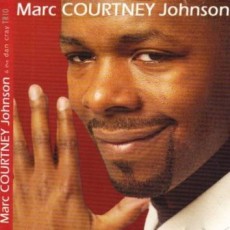
Marc Courtney Johnson was born on September 5, 1967 and began singing in church youth choirs off and on from age 5 through 13. In junior high he was introduced to the clarinet and developed a love for classical music, playing in both symphony and marching bands in high school.
Matriculating at Northern Illinois University where he briefly pursued a vocal performance degree, studying for a semester with Basso Cantante Myron Myers, singing with the NIU Chorus and touring with the NIU Black Choir. However, he transferred to the University of Illinois at Chicago and getting a business degree Johnson returned to his roots in church primarily as a solo vocalist.
In the summer of 2003 Marc began his serious pursuit as a jazz vocalist. He has worked with Chicago’s icons of jazz, Kimberly Gordon and the Alan Gresik Swing Shift Orchestra; works regularly at the Green Mill Cocktail Lounge and Green Dolphin Street, fronts the Ken Arlen band Front of House and performs with the Dan Cray Trio.
In 2004 Marc produced and released his debut self-titled CD “Marc Courtney Johnson” with the dynamic Dan Cray Trio followed with his sophomore project “Dream of Sunny Days” in 2009. He continues to perform and compose.
Jazz Is Global – Share
More Posts: vocal