

Daily Dose Of Jazz…
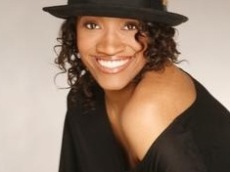
Nefertari Bey was born on September 29, 1980 in Oakland, California, but had the privileged of growing up in places such as Detroit, Chicago, South Carolina & North Carolina. Having such strong musical influence at home she naturally gravitated toward music and began singing at the age of 5. By 16, Nefertari was embarking on her first European tour.
With a Bachelor of Arts in Vocal Performance/Music Engineering Technology from Hampton University, and a Masters in Music from Georgia State University, Nefertari has used her musical education and talent to master the powerful art of musical storytelling and become a profound advocate of music education for all ages.
Bey, who is also a pianist, composer and arranger draws her musical style from influences such as Dinah Washington, Aretha Franklin, Nina Simone, John Coltrane and Liz Macomb. She has lent her rhythmic skill, style and sound to performances with notable artist such as Kenny Barron, Curtis Lundy and Louis Hayes.
Nefertari Bey unparalleled talent and sultry voice continues to perform.

Inspire A Young Mind
More Posts: vocal
Hollywood On 52nd Street
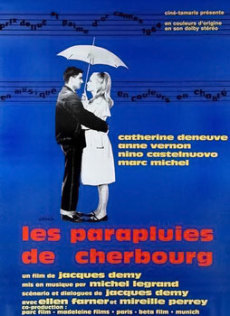
Watch What Happens and I Will Wait For You The film score established composer Michel Legrand’s reputation in Hollywood, where he later scored other films, winning three Oscars . In North America, two of the film’s songs, the main theme “I Will Wait For You” and “Watch What Happens” originally titled Recit de Cassard or Cassard’s Song. They became hits and were recorded by many artists. Both were given new English lyrics by lyricist Norman Gimbel and Tony Bennett’s classic performance of the theme song was added to one version of the soundtrack CD.
The Story: The Umbrellas of Cherbourg or the French translation Les Parapluies de Cherbourg is a 1964 French musical film directed by Jacques Demy, starring Catherine Deneuve and Nino Castelnuovo. The film dialogue is all sung as recitative, even the most casual conversation.
Umbrellas is the middle film in an informal “romantic trilogy” of Demy films that share some of the same actors, characters and overall look; it comes after Lola (1961) and before The Young Girls of Rochefort (1967)
More Posts: comedy,dance,drama,hollywood,instrumental,jazz,musical,suite ta bu,vocal
Hollywood On 52nd Street
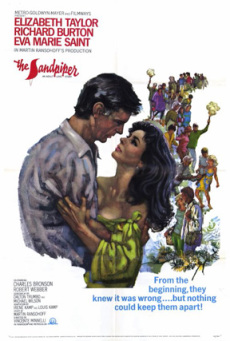
The Shadow Of Your Smile also known as the love theme from the 1965 film The Sandpiper“, is a popular song whose music was written by Johnny Mandel with the lyrics written by Paul Francis Webster.
The song was introduced in the 1965 film The Sandpiper with a trumpet solo by Jack Sheldon and later became a minor hit for Tony Bennett. Johnny Mandel arranged and conducted his version as well). It won the Grammy Award for Song of the Year and the Academy Award for Best Original Song.
The Story: Vincente Minnelli directed the film’s stars Richard Burton and Elizabeth Taylor. Laura Reynolds (Taylor) is a free-spirited, unwed single mother living with her young son Danny (Morgan Mason) in an isolated California beach house. She makes a modest living as an artist and home-schools her son out of concern that he will be compelled to follow stifling conventional social norms in a regular school. Danny has gotten into some trouble with the law through two minor incidents, which are in his mother’s eyes innocent expressions of his natural curiosity and conscience rather than delinquency. Now with a third incident a judge orders her to send the boy to an Episcopal boarding school where Dr. Edward Hewitt (Burton) is headmaster, and his wife Claire (Eva Marie Saint) teaches. Edward and Claire are happily married with two young sons, but their life has become routine and their youthful idealism has been tamed by the need to raise funds for the school and please wealthy benefactors.
Sponsored By

www.whatissuitetabu.com
More Posts: comedy,dance,drama,hollywood,instrumental,jazz,musical,suite ta bu,vocal
Daily Dose Of Jazz…
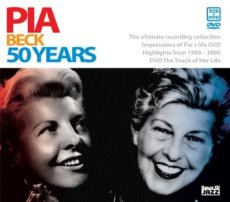
Pia Beck was born Pieternella Beck on September 18, 1925 in Den Haag, Netherlands. She was a natural on the piano without significant musical training. In 1945 she joined the Miller Sextet taking the piano chair and vocalist slot touring Belgium, Germany, Sweden and the Dutch East Indies.
By 1949 she started her own combo and her first composition, Pia’s Boogie, became an instant hit, though she never learned to read sheet music. 1952 saw her first visit the United States, toured the jazz club circuit – an annual event until 1964, was nicknamed “The Flying Dutchess” by Time Magazine who also gave her the cover, and was bestowed honorary citizenship of New Orleans and Atlanta.
In 1965 Beck emigrated to Costa de Sol with her life partner and three children, opened a piano bar and when it went bankrupt she opened a real estate firm and wrote travel guides. By 1975 she was on the comeback trail in Scheveningen, Netherlands and once again enjoyed a successful career, albeit, openly exposing her homosexuality during her U.S. tours by resisting against the anti-gay activist Anita Bryant during the late Seventies.
Pia Beck said goodbye to the general public in 2003. The pianist who Oscar Peterson called the best jazz pianist in the world, died at age 84 of heart failure on November 26, 2009 in Malaga, Spain.
Daily Dose Of Jazz…
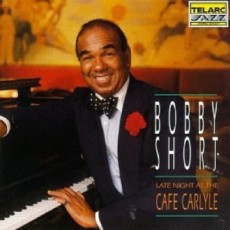
Bobby Short was born Robert Waltrip Short on September 15, 1924 in Danville, Illinois. With his mother’s permission he left home for Chicago and began performing as a busker at the age of eleven.
He started working in clubs in the 1940s and in 1968 he was offered a two-week stint at the Café Carlyle in New York City’s Carlyle Hotel, a relationship that lasted until 2004. His seemingly effortless elegance and vocal phrasing were perfected at the feet of Mabel Mercer and Ethel Waters. Bobby’s presentation of unknown songs worth knowing and his infectious good cheer made him tremendously popular and earned him great respect.
He became best known for his interpretations of songs composed by Rodgers and Hart, Cole Porter, Jerome Kern, Harold Arlen, Vernon Duke, Noel Coward and the Gershwin brothers but was equally adept at championing the works of Duke Ellington, Billy Strayhorn, Eubie Blake, James P. Johnson, Andy Razaf, Fats Waller and Bessie Smith.
Bobby Short, the pianist and cabaret singer, recorded 22 albums from 1955 to 2001, appeared in ten movies and 3 television shows and who was instrumental in spearheading the construction of the Ellington Memorial in his beloved New York City, passed away on March 21, 2005.
Dose A Day – Blues Away