


Daily Dose Of Jazz…
Milton “Shorty” Rogers was born Milton Rajonsky on April 14, 1924 in Great Barrington, Massachusetts. He worked first as a professional trumpeter with Will Bradley and Red Norvo. For two years beginning in 1947 he worked extensively with Woody Herman and then from 1950 to1951 he played with Stan Kenton.
Rogers appeared on Shelly Manne’s 1954 album “The Three and the Two” along with Jimmy Guiffre, later recording with Guiffre showing his experimental side, resulting in an early form of avant-garde jazz. Settling in Los Angeles in the early fifties, by 1953 he was recording as a leader with RCA through 1962 that incorporated avant-garde, cool jazz and the “hot” style of Count Basie, who was a great inspiration for him.
Shorty’s composer credits include Mr. Magoo cartoon “Hotsy Footsy” and the Looney Tune “Three Little Bops”, scored the Brando film “The Wild One” and the Sinatra vehicle “The Man With The Golden Arm”. Becoming better known for his skills as a composer and arranger than as a trumpeter in the early ‘60s he stopped performing on trumpet, left the jazz scene and concentrated on writing for television and film for many years.
In 1982, he returned to the trumpet and jazz and by the 1990s formed a Lighthouse All Stars group with Bud Shank, Bill Perkins and Bob Cooper. Trumpeter, composer and arranger Shorty Rogers, a figurehead in the West Coast era of “cool jazz” passed away on November 7, 1994.

Dose A Day-Blues Away
More Posts: trumpet
Daily Dose Of Jazz…
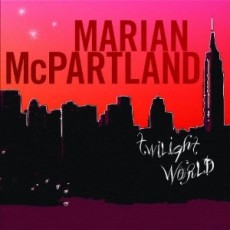
Marian McPartland was born Margaret Marian Turner on March 20, 1920 in Windsor, England. A musical prodigy from the time she could sit at a piano at age three, she pursued classical studies on piano and violin at the Guildhall School of Music and Drama in London. However, much to the dismay of her family, she developed a love for American jazz and musicians such as Duke Ellington, Fats Waller, Teddy Wilson, and Mary Lou Williams among many others.
By 1938, despite her family’s efforts to keep her at Guildhall, Marian left to join Billy Mayerl’s Claviers, a four-piano vaudeville act, performing under the stage name of Marian Page. The group toured throughout Europe during WWII entertaining Allied troops where she met and performed with Jimmy McPartland, and later married, moving to the United States.
1944 saw the McPartlands in New York with Marian forming her own trio and enjoying an 8-year engagement at the Hickory House bringing drummer Joe Morello into the fold. After many years of recording for labels such as Capitol, Savoy, Argo, Sesac, Time, and Dot, in 1969 she founded her own record label, Halcyon Records, before having a long association with the Concord Jazz label.
Marian launched a weekly radio program that featured recordings and interviews with guests in 1964 on WBAI-FM in New York City. This series paved the way for the NPR program Marian McPartland’s Piano Jazz that began on June 4, 1978 and is the longest-running cultural program on NPR as well as being one of the longest-running jazz programs ever produced on public radio.
A master at adapting to her guest’s musical styles and having a well-known affinity for beautiful and harmonically rich ballads, McPartland also has recorded many tunes of her own. Her compositions include “Ambiance”, “There’ll Be Other Times”, “With You In Mind”, “Twilight World”, and “In the Days of Our Love”.
Marian a participated in 60 years of jazz evolution, was awarded a Trustees’ Lifetime Achievement Award Grammy for her work as an educator, writer, and host of Piano Jazz, and was appointed Officer of the Order of the British Empire (OBE) in 2010. Pianist and composer Marian McPartland passed away on August 20, 2013 of natural causes at her home in Port Washington, New York. She was 95 years old.
More Posts: piano
Daily Dose Of Jazz…
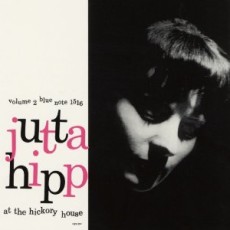
Jutta Hipp was born on February 4, 1925 in Leipzig, Germany. She first studied painting in Germany, but later played jazz during the war and she indicated jazz was important to her during that period. After the war she moved to West Germany due to the Soviet Union working with Hans Zoller and leading a quintet.
In 1954 Jutta played with Attila Zoller where critic Leonard Feather was so impressed with her work that soon after she moved to New York City. She drew some criticism initially from critics who felt she was too similar to her sponsor Horace Silver. In 1956 she played the Newport Jazz Festival and cut a studio album with Zoot Sims that is considered possibly her best.
Hipp went on to work in New York based trios determined to be accepted as an equal amongst her male counterparts, but felt intense nervousness and the anxiety led to her abandoning jazz in 1958. From then on she made her living primarily as a seamstress and returned to her first interest of painting and her portraits of various jazz musicians became popular with musicians.
Although she maintained some contact with musicians like Lee Konitz, she cut herself off from the music industry to the point that by 2000 Blue Note did not know where to send her royalty checks. Jazz pianist Jutta Hipp, who primarily played in the bebop and cool jazz genres during her short musical career, gained new interest after her passing in Queens on April 7, 2003 as a woman instrumentalist in the New York Jazz scene.
More Posts: piano
Daily Dose Of Jazz…
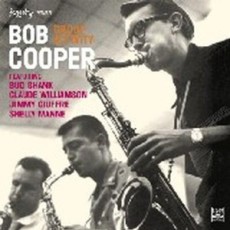
Bob Cooper was born on December 6, 1925 in Pittsburgh, Pennsylvania. He began to study the clarinet in high school and the following year he began working on the tenor saxophone. By 1945 he was joining Stan Kenton’s outfit when he was just 20, and as the new tenor saxophone player played alongside vocalist June Christy on “Tampico” that was to be a Kenton million-selling record. He would marry Christy two years later in Washington, DC.
Coop, as he was affectionately known, stayed with Kenton until he broke up the band in 1951. A naturally swinging jazz musician, Cooper and some other ex- Kenton men were hired to play at the Lighthouse Cafe in Los Angeles by the bassist Howard Rumsey. The Lighthouse became one of the most famous jazz clubs in the world, and the band, Howard Rumsey’s Lighthouse All Stars made history.
With a steady job he could work from home and he expanded his study of the oboe and English horn. While at the Lighthouse he made many momentous recordings, unique amongst them oboe and flute with Bud Shank, and composing a 12-tone octet for woodwind. Bob would go on to lead record sessions as part of a series of long-playing albums under “Kenton Presents” for Capitol Records.
His writing and playing on the album and its successor, “Shifting Winds” in 1955, were seminal in the creation of what was to become known as West Coast jazz. Imaginative writing and a well lubricated polish characterized the session and Cooper’s singing and stomping tenor style on his arrangement of “Strike Up The Band” boosted the record sales considerably.
Cooper would go on to tour Europe, South Africa and Japan with Christy, work as a studio musician in Hollywood, further develop his writing and compose film scores, join Kenton’s huge Neophonic Orchestra and have his composition ‘Solo For Orchestra’ premiered at one of its concerts. Much in demand for his beloved big-band work, he played regularly in other Los Angeles orchestras led by Shorty Rogers, Terry Gibbs, Bill Holman, Bill Berry, Bob Florence and Frankie Capp / Nat Pierce.
Bob Cooper, the West Coast jazz musician known primarily for playing tenor saxophone was also one of the first to play solos on oboe, passed away on August 5, 1993 in Los Angeles, California. Though maturing into one of the finest but least praised tenor saxophonists, he easily ranked with Stan Getz, Zoot Sims and Al Cohn in his talents. His last studio recording, released the year of his death, was on Karrin Allyson’s album Sweet Home Cookin on which he played tenor saxophone.
More Posts: arranger,composer,english horn,oboe,saxophone,vocal
Daily Dose Of Jazz…
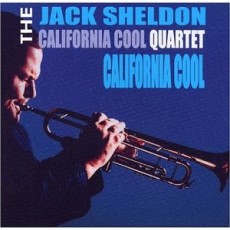
Jack Sheldon was born November 30, 1931 in Jacksonville, Florida became a professional trumpet player at the age of thirteen. It was during his teen years he moved to Los Angeles and subsequently joined the air force playing in military bands in Texas and California. He first gained recognition as part of the West Coast jazz movement in the 1950s performing and recording with Art Pepper, Gerry Mulligan and Curtis Counce.
Sheldon played the trumpet, sang, performed and was the sidekick and comedic foil on the Merv Griffin show. During the sixties he ventured further into television as an actor on such shows as Dragnet, The Girl With Something Extra, the Cara Williams Show and Run Buddy Run. He was also the voice used for “Conjunction Junction” and “I’m Just A Bill” on Schoolhouse Rock. He voice later appeared on such sitcoms as The Simpsons and Family Guy.
He has played with Jimmy Guiffre, Herb Geller, Mel Torme, Wardell Gray, Helen Humes, Gary Burton, June Christy, Rosemary Clooney and the big bands of Stan Kenton, Bill Berry, Tom Kubis and Benny Goodman.
Jack performed the trumpet solo for the theme song “The Shadow Of Your Smile” on the soundtrack of the 1965 movie, The Sandpiper, appeared in the Oscar-nominated documentary “Let’s Get Lost” about the life of fellow jazz trumpeter Chet Baker, performed a trumpet solo in the Coppola film “One From The Heart”, appeared as an ill-fated trumpeter in Radioland Murders, and is the subject of an award winning feature documentary, “Trying to Get God: The Jazz Odyssey of Jack Sheldon”. The trumpeter continued to be an active performer of the bebop and cool jazz schools until his transition on December 27, 2019.
Give A Gift Of Jazz ~ Share

#preserving genius
More Posts: trumpet