

Daily Dose Of Jazz…
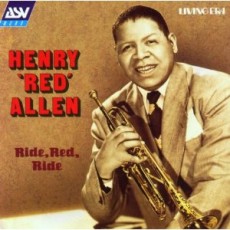
Henry “Red” Allen: The Trumpet Voice That Defined an Era
Born Henry James Allen on January 7, 1906, in the storied Algiers neighborhood of New Orleans, Louisiana, Red Allen grew up surrounded by the very birthplace of jazz. With a trumpet in hand from early childhood, he seemed destined to become one of the instrument’s most distinctive voices.
A New Orleans Beginning
By his late teens, young Henry was already turning heads, performing with Sidney Desvigne’s Southern Syncopators. The education continued: by 1924, he was playing professionally with the legendary Excelsior Brass Band and various jazz dance bands that kept New Orleans swinging. Like so many musicians of his generation, Allen honed his craft aboard the Mississippi riverboats—floating conservatories where the music never stopped and every night brought new challenges.
The Journey North
In 1927, Allen’s talent took him to Chicago, where he joined the great King Oliver and began recording as a sideman with Clarence Williams. But the real prize lay further east. A move to New York City brought him a coveted recording contract with Victor Records—a major breakthrough for any young musician.
The year 1929 marked a pivotal moment: Allen joined Luis Russell’s Orchestra, where he became a featured soloist and remained until 1932. His fiery, inventive playing began appearing on recording sessions with Eddie Condon, and by late 1931, he was making a series of memorable recordings with Don Redman.
A Who’s Who of Jazz Collaborations
From 1933 to 1934, Allen brought his sound to Fletcher Henderson’s celebrated Orchestra. What followed was a dizzying roster of collaborations that reads like a jazz history textbook: he played with the orchestras of Lucky Millinder and Luis Russell, toured Europe with Kid Ory, and worked or recorded with Coleman Hawkins, Tommy Dorsey, Fats Waller, Jelly Roll Morton, Victoria Spivey, and the incomparable Billie Holiday.
Leading from the Front
As a bandleader in his own right, Allen recorded for virtually every major label of the era—ARC, Decca, Okeh, Vocalion, Brunswick, and Apollo. He led his own ensemble at iconic New York venues like the Famous Door and the Metropole Café, toured extensively across the United States and Europe, and even graced television screens with an appearance on “The Sound of Jazz.”
A Courageous Final Chapter
When Allen was diagnosed with pancreatic cancer in late 1966, he faced the news with characteristic determination. Even after surgery, he insisted on one final tour of England—a testament to his lifelong dedication to the music and the audiences who loved him. That tour concluded just six weeks before his death on April 17, 1967, in New York City.
Henry “Red” Allen left behind more than recordings and memories—he left a trumpet legacy marked by innovation, passion, and an unmistakable sound that still resonates through jazz history today.
More Posts: trumpet