


Daily Dose Of Jazz…
Will Goble was born on November 25, 1983 in Durham, NC and became interested in Jazz and related art forms growing up within the creative music scene thriving around his city. Leaving home for Florida State University in Tallahassee in the early 2000s, he quickly flourished under the tutelage of bassist Rodney Jordan and famed pianist Marcus Roberts. His relationship with Roberts extended onto the bandstand as Marcus invited Will to perform with his trio on a number of performances through the years.
Through Roberts, Will met drummer and vibraphonist Jason Marsalis and eventually joined hiss quartet in 2008. He went on to record with Marsalis on Music Update, In a World of Mallets and The 21st Century Trad Band. Relocating to Atlanta, Georgia he set about documenting his work as a bandleader. His debut album, Some Stories Tells No Lies, features his trio with drummer Dave Potter and pianist Austin Johnson, joined by trumpeter Marcus Printup and saxophonist Chad Eby. His sophomore project, Consider The Blues was released in 2016 on OA2 Records with Potter, pianist Louis Heriveaux and saxophonist Gregory Tardy.
Goble returned home to Durham, continuing to tour with Marsalis and perform frequently as a sideman and bandleader. has performed with Marcus and Joan Belgrave, Wessell Anderson, Vincent Gardner, Eric Reed, Warren Wolf, Martin Bejerano, Nick Finzer, Eric Rasmussen, George Colligan, Lew Soloff, Etienne Charles, Michael Kocour, Fred Wesley and many others.
An active educator, he spent several years on the faculty at Scottsdale Community College in Scottsdale, as the coordinator of the College Prep Program at the Phoenix Conservatory of Music where he taught jazz ensembles and music theory, and as a community teaching artist at The Nash, the performance and education home of Jazz In Arizona. Will Goble is steadily carving out a unique space for himself as a bassist, composer, bandleader, and educator.

More Posts: bass
Daily Dose Of Jazz…
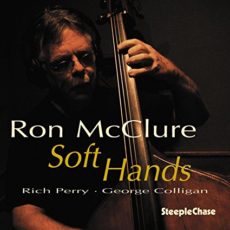
Ron McClure was born November 22, 1941 in New Haven, Connecticut and started on piano at age five, later played accordion and bass. He studied privately with Joseph Ladone and, later, with Hall Overton and Don Sebesky. He attended and graduated from the Hartt School of Music in 1963.
McClure worked in the Buddy Rich Sextet the year he graduated, then joined Maynard Ferguson’s big band. This was followed by a stint with Herbie Mann in 1964; and then he assumed the bass chair in the Wynton Kelly Trio that was vacated by Paul Chambers in 1965.
From 1966 to 1969 Ron was a member of Charles Lloyd’s classic quartet alongside pianist Keith Jarrett and drummer Jack DeJohnette, which was voted Group of the Year in 1967 by Downbeat magazine.
In 1970, with pianist-composer Mike Nock, drummer Eddie Marshall and violinist Michael White, McCkure co-founded the jazz-rock group The Fourth Way. He also recorded on Carla Bley’s album Escalator over the Hill and worked with saxophonist Joe Henderson.
In 1974, h joined Blood, Sweat & Tears, staying through 1975 and performing on three albums: Mirror Image, New City and In Concert. The Eighties saw Ron joining Quest, led by saxophonist Dave Liebman, and included drummer Billy Hart and pianist Richie Beirach. He recorded a duo album with pianist Michel Petrucciani. He would go on to record and/or perform with Lee Konitz, the reassembled Quest, John Scofield, John Abercrombie, Vic Juris, Paul Bley, Richie Beirach, Paul Bley, George Cables, Julian Priester, George Russell, Don Friedman, Stanley Cowell and Randy Brecker among others. Bassist Ron McClure, who has taught at New York University, continues to compose, perform, record and tour.

More Posts: bass
Daily Dose Of Jazz…
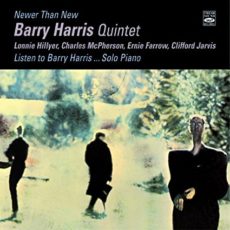
Ernie Farrow was born on November 13, 1928 in Huntington, West Virginia and is the half-brother to Alice Coltrane. It is said that he was responsible for introducing her to jazz. He had his own bands throughout high school and emerged in the professional jazz scene in the first half of the ’50s, working with a series of demanding bandleaders including Terry Gibbs and Stan Getz.
Farrow’s relationship with Yusef Lateef began around 1956, performing alongside Hugh Lawson and drummer Louis Hayes and recording a dozen albums with him from 1957 to 1964. Over the course of his short career he also worked with Barry Harris and John Williams among others.
A few years later he began leading his own group, based out of Detroit and was a strong influence on his younger piano-playing sister. In the ’60s he was featured on bass in a terrific classic jazz piano trio fronted by Red Garland.
Best known as a bassist, he however, started on piano before adding bass and drums. Multi-instrumentalist Ernie Farrow, who played piano, double bass, and drums, passed away on July 14, 1969.

Daily Dose Of Jazz…
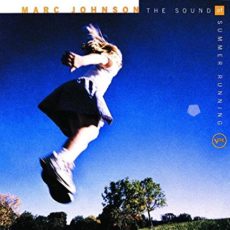
Marc Alan Johnson was born on October 21, 1953 in Omaha, Nebraska but grew up in Texas. By the age of 19, he was working professionally with the Fort Worth Symphony, and during his matriculation at the University of North Texas, he played in the One O’Clock Lab Band and was also the principal bassist in the NTSU Symphony.
1978 saw Johnson joining pianist Bill Evans in what would be Evans’s last trio. He toured and recorded with Evans until the pianist’s death in 1980. In 2007 together with his wife Eliane Elias, he released an Evans tribute album, Something For You.
Marc has recorded albums with Joe Lovano, Michael Brecker, Stan Getz, Bob Brookmeyer, Gary Burton, John Abercrombie, Bill Frisell, Pat Metheny, Eliane Elias, Enrico Pieranunzi, Charles Lloyd, Joey Baron, Philly Joe Jones, Jack DeJohnette, Peter Erskine, Lee Konitz, Paul Motian, Joe Lovano, Toots Thielemans and the list goes on.
As a leader he led Bass Desires, a quartet with Bill Frisell, John Scofield and Peter Erskine, recording several albums for JMT, Verve and ECM record labels. He has received the Danish Music Award for Best Foreign Release, and bassist Marc Johnson continues to collaborate with Eliane as well as compose, record, perform and tour.
More Posts: bass
Daily Dose Of Jazz…
Beverly Peer was born on October 7, 1912 in New York City and started out playing piano professionally early in his career before switching to bass. He worked with Chick Webb from 1936 to 1939 and continued to play in the orchestra under the direction of Ella Fitzgerald.
In 1942 he joined the Sabby Lewis Orchestra and also worked extensively as an accompanist for Sarah Vaughan, Lena Horne, Johnny Mathis, and Barbra Streisand among others. The 1950s and 1960s saw him working with pianists Barbara Carroll and Ellis Larkins. Performing with Bobby Short from the 1970s into the 1990s, Peer was often heard performing with him at the Cafe Carlyle in New York City.
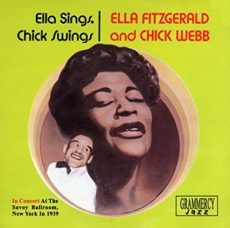
Among his many recording sessions were Ella Fitzgerald’s release Ella Sings, Chick Swings with the Chick Webb Orchestra and Lucky Thompson & His Lucky Seven with Harold “Money” Johnson, Jimmy Powell, Clarence Williams, Earl Knight, Beverly Peer and Percy Brice.
Aside from music, late in his career Peer also had cameo roles in films such as Hannah and Her Sisters and For Love or Money. Double bassist Beverly Peer passed away on January 16, 1997.