

Daily Dose Of Jazz…
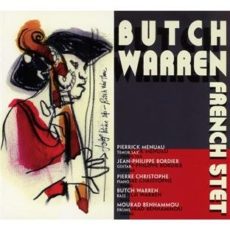
Butch Warren was born Edward Warren on August 9, 1939 in Washington, D.C. and began playing professionally at age 14 in a local Washington, D. C. band led by his father, Edward Warren. He later worked with other local groups, including Stuff Smith as well as with altoist and bandleader Rick Henderson at the historic Howard Theatre on 7th and T Streets.
Moving to New York City in 1958 Butch played first with Kenny Dorham and appeared on his first recording in 1960 along with saxophonist Charles Davis, pianist Tommy Flanagan and drummer Buddy Enlow. During his stay in New York City he became house bassist for Blue Note Records.
As a sideman, he recorded with Miles Davis, Hank Mobley, Donald Byrd, Sonny Clark, Dexter Gordon, Elmo Hope, Grant Green, Slide Hampton, Booker Ervin, Walter Bishop Jr. Horace Parlan, Bobby Timmons, Don Wilkerson, Herbie Hancock, Joe Henderson, Jackie McLean, and Stanley Turrentine. He played with Thelonious Monk in 1963 and 1964 before moving back to Washington, D.C.
Back home he briefly worked in television before becoming seriously ill. Following the onset of his illness he played professionally only occasionally, including a regular gig at the jazz club Columbia Station in the Adams Morgan neighborhood. Bassist Butch Warren, whose solos were inventive and played in the hard bop genre, passed away October 5, 2013.
Sponsored By


#preserving genius
More Posts: bass

Daily Dose Of Jazz…
Cedric Wallace was born August 3, 1909 in Miami, Florida. He moved to New York City in the 1930s, where he first started playing in a band led by Reggie Johnson at the Saratoga Club.
Later in the decade Wallace worked with Jimmie Lunceford before joining Fats Waller’s band from 1938-1942, the association for which he is best known. He played with Waller at the peak of his popularity and plays on many of his biggest hits.
He also recorded with Una Mae Carlisle, Maxine Sullivan, Champion Jack Dupree, Pat Flowers, Gene Sedric, and Dean Martin. Cedric led his own ensemble in New York in the 1940s which featured Eddie Gibbs on bass for a time, and continued to perform well into the 1970s.
Double-bassist Cedric Wallace passed away on August 19, 1985 in New York City.
Sponsored By

#preserving genius
More Posts: bass
Daily Dose Of Jazz…
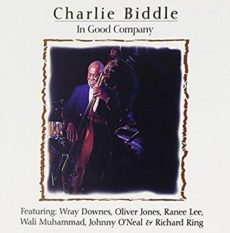
Charles Reed “Charlie” Biddle, CM was born and raised in West Philadelphia, Pennsylvania on July 28, 1926. After completing military duties in the US Armed Forces during World War II, serving in China, India and Burma, he returned home and went on to study music at Temple University, where he started playing bass. In 1948, he arrived in Montreal while touring with Vernon Isaac’s Three Jacks and a Jill. Fascinated by the lack of racism among musicians in Canada, particularly Quebec, where he saw black jazz musicians playing alongside white jazz musicians as the best of friends, he settled in Montreal.
Employed as a car salesman from 1954 to 1972, he performed with pianists Charlie Ramsey, Milt Sealey, Alfie Wade, Sadik Hakim, and Stan Patrick in local Montreal nightclubs. As a promoter, Charlie booked musicians Johnny Hodges, John Coltrane, Pepper Adams, Bill Evans, Art Farmer, Tommy Flanagan and Thad Jones to perform in Montreal.
He performed off and on with guitarist Nelson Symonds between 1959 and 1978, changing leadership and performing as a duo. He was an important supporter and promoter of jazz in Montreal, organizing outdoor festivals of local jazz musicians, particularly Jazz Chez Nous, a 3-day jazz festival in 1979 and another in 1983 which laid the foundation for the Montreal International Jazz Festival, now the world’s largest jazz festival.
In 1981 he lent his name to a jazz club in downtown Montreal that became Biddle’s, now known as House of Jazz. It was featured in the Bruce Willis film The Whole Nine Yards with his daughter Stephanie Biddle on vocals, and he was featured in The Moderns and the French-Canadian film Les Portes Tournantes.
Biddle’s remained at the heart of jazz culture in Montreal during his lifetime. When performing at the club he would use the title, ‘Charlie Biddle on the fiddle‘, led trios at the club on a regular weekly basis, along with pianists Oliver Jones, Steve Holt, Wray Downes, and Jon Ballantyne, and recorded albums with Jones, Milt Sealey and Ted Curson.
Bassist Charlie Biddle was awarded the Oscar Peterson Prize, was made a member of the Order of Canada, was honored with the Prix Calixa-Lavallée and became a Canadian citizen three years prior to his passing away on February 4, 2003 in his Montreal home surrounded by family.
Sponsored By

www.whatissuitetabu.com
#preserving genius
More Posts: bass

Daily Dose Of Jazz…
Kenneth Napper was born July 14, 1933 in London, England. He started out on learning to play the piano as a child, then picked up the bass as a student at Guildhall School of Music. Entering the British military in the early 1950s, he played and recorded with Mary Lou Williams in 1953 while on leave. After completing his term of duty, he went on to play with Jack Parnell, Malcolm Mitchell, Vic Ash, and Cab Calloway.
During the late Fifties and early 1960s Kenny was the house bassist at Ronnie Scott’s Jazz Club for several years and played with many British and American jazz musicians. These musicians include Alan Clare, Ronnie Scott, Stan Tracey, Tubby Hayes, Tony Kinsey, Tony Crombie, Jimmy Deuchar, John Dankworth, Pat Smythe, Phil Seamen, Zoot Sims, Carmen McRae, and Paul Gonsalves.
By the late Sixties he worked with Ted Heath, Tony Coe, John Picard and Barney Kessel, as well as with Gonsalves, Tracey, and Dankworth. In 1970 he played with Stephane Grappelli prior to a move to Germany where he played with Kurt Edelhagen from 1970 to 1972. While residing there, Napper focused more on composition and arrangement and then in the late Seventies he moved to the Netherlands.
Through the remainder of the decade and and the Eighties he put down his bass, arranged for radio ensembles, was the staff arranger and conductor for the 50 piece Metropole Orchestra, and then directed his attention to teaching at the Royal Conservatory in The Hague. At 83 years of age, double-bassist arranger, composer, conductor and educator Kenny Napper, it is assumed he has retired and returned to the United Kingdom.
Sponsored By
#preserving genius
More Posts: bass
Daily Dose Of Jazz…
Chris White was born Christopher Wesley White on July 6, 1936 in Harlem, New York and grew up in Brooklyn. He graduated in 1956 from City College of New York, and in 1968 from the Manhattan School of Music. In 1974, earning his Master of Education from the University of Massachusetts. In 1994, he did postgraduate Advanced Computer Study at Berklee College Of Music.
An occasional member of Cecil Taylor’s band in the 1950s, he is credited on the 1959 Love for Sale album. From 1960 to 1961 White accompanied Nina Simone and subsequently he joined Dizzy Gillespie’s ensemble until 1966.
He later founded the band The Jazz Survivors and was a member of the band Prism. He would go on to collaborate with Billy Taylor, Eubie Blake, Earl Hines, Chick Corea, Teddy Wilson, Kenny Barron, Mary Lou Williams, Duke Ellington, Sarah Vaughan, Carmen McRae and Billy Cobham, among others.
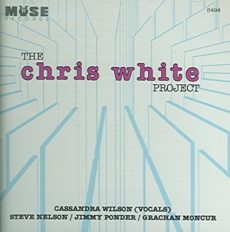
He recorded on album as a leader titled the Chris White Project with Cassandra Wilson, Marvin Horne, Jimmy Ponder, Grachan Moncur III, Michael Raye, Steve Nelson, Keith Copeland and Steve Kroon. He also co-led a session with Lou Caputo in 2010 on the Interface label. As a sideman he recorded with Kenny Barron, Ramsey Lewis, James Moody, Dave Pike, Lalo Schifrin and Quincy Jones.
As an educator he was a part of the creative arts and technology faculty at Bloomfield College in New Jersey. Bassist, arranger, producer Chris White, who won the Downbeat and Playboy Readers Polls among other awards, passed away on December 2, 2014.
More Posts: bass