

Daily Dose Of Jazz…
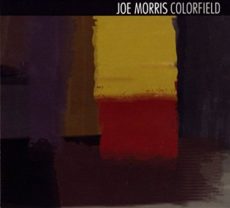
Joseph Francis Michael Morris was born September 13, 1955 in New Haven, Connecticut. Starting on guitar he was primarily self-taught with only a few lessons, and played his first professional gig in 1969 . Jimi Hendrix and other guitarists of that period inspired him to learn to play the blues and John Coltrane’s Om inspired him to learn about jazz. From the age of 17 he worked to establish his guitar voice in the free jazz context, inspired by Cecil Taylor, Eric Dolphy, Leroy Jenkins and Thelonious Monk. After high school he performed in rock bands, rehearsed in jazz bands, and played improvised music until 1975, when he moved to Boston, Massachusetts.
By 1983 he formed his own record company, Riti, and recorded his first album, Wraparound. An early mentor and playing partner was pianist Lowell Davidson. Between 1989 and 1993 he performed and recorded with his electric trio Sweatshop and electric quartet Racket Club. 1994 saw Joe become the first guitarist to lead his own session in the twenty-year history of Black Saint/Soul Note with the trio recording Symbolic Gesture.
Morris has continued to record extensively for Leo, Knitting Factory, AUM Fidelity, Hathut, Clean Feed, ESP and RogueArt record labels. He has led his own groups and has recorded and performed with Matthew Shipp, William Parker, John Zorn, Joe Maneri, Rob Brown, Ivo Perelman, Ken Vandermark and DKV Trio, Jim Hobbs, Steve Lantner, Daniel Levin, Petr Cancura and David S. Ware among others.
He has lectured and conducted workshops throughout the United States and Europe, is a former member of the faculty of Tufts University Extension College and is currently on the faculty at New England Conservatory in the jazz and improvisation department. Guitarist, bassist, improviser and composer Joe Morris continues to perform and record.


Daily Dose Of Jazz…
Lars Danielsson was born on September 5, 1958 in Smålandsstenar, Sweden and was educated at the music conservatory in Gothenburg and studied double bass, electric bass and cello. In 1985, he formed a quartet with saxophonist Dave Liebman, pianist Bobo Stenson and drummer Jon Christensen, producing several albums. He also worked with big bands.
He played and recorded with, among others, John Scofield, Jack DeJohnette, Mike Stern, Billy Hart, Charles Lloyd, Terri Lyne Carrington, Leszek Możdżer, Joey Calderazzo, Gino Vannelli and Dave Kikoski.
Since 1980, he has released eight solo albums with the Lars Danielssons Quartet. In these albums, Alex Acuña, John Abercrombie, Bill Evans, Kenny Wheeler, Rick Margitza and Niels Lan Doky were featured.
As a producer he has been responsible for productions with Cæcilie Norby and the Danish radio orchestra among others. Bassist, cellist, composer and record producer Lars Danielsson continues to compose, record, perform and tour.

Daily Dose Of Jazz…
Gilbert Bibi Rovère was born on August 29, 1939 in Toulon, France and grew up in Nice, where he also attended the Conservatory beginning in 1954. He became part of the jazz scene there and for 17 years played the San Remo Festival.
In 1956, a move to Paris saw him working in the jazz clubs and by 1957 he started playing the double bass with Barney Wilen. Over the coming years he accompanied Duke Ellington, Sonny Rollins and Billie Holiday with Mal Waldron. Between 1962 and 1974 he was always part of the combos of Martial Solal and between 1962 to ‘63 he joined Bud Powell, Kenny Drew, Johnny Griffin, Dexter Gordon and Kenny Clarke.
During the Sixties Bibi went on to play with Art Simmons and Jean-Luc Ponty on his first album Jazz Longplaying. He also worked with the Swingle Singers, René Thomas and Cannonball Adderley. In 1966 he received the Prix Django Reinhardt.
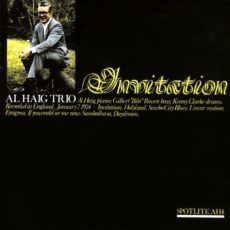
During the Seventies he accompanied Al Haig on his album Invitation and in 1978 he retired from the music industry only to become re-active eight years later, performing with Bud Shank and Jackie McLean. In 1990 he played on Steve Grossman’s album My Second Prime.
On March 13, 2007 double bass and violincello player Bibi Rovère passed away in Menton on the French Riviera.
More Posts: bass,violincello
Daily Dose Of Jazz…
Addison Farmer was born August 21, 1928 an hour after his twin brother, in Council Bluffs, Iowa reportedly at 2201 Fourth Avenue. Their parents divorced when the boys were four, and their steelworker father was killed in a work accident not long after this. He moved with his grandfather, grandmother, mother, brother and sister to Phoenix, Arizona when he was four.
Addison and his brother moved to Los Angeles, California in 1945 and attended the music-oriented Jefferson High School, where they got music instruction and met other developing musicians such as Sonny Criss, Ernie Andrews, Big Jay McNeely, and Ed Thigpen. They brothers earned money by working in a cold-storage warehouse and by playing professionally. He went on to take bass lessons from Fred Zimmermann, and studied at Juilliard and the Manhattan School of Music.
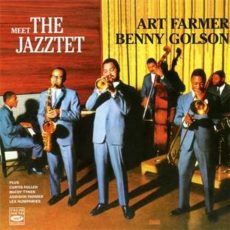
By late 1945, Farmer was with Johnny Alston and His Orchestra recording for the Bihari Brothers’ Modern Music label, backing Jeanne De Metz. Shortly afterwards he recorded on the Blue Moon label with Al “Cake” Wichard and King Fleming and worked with Teddy Edwards’s band. He played and recorded in several groups with his brother and in ensembles led by Benny Golson, Gigi Gryce, Mose Allison, Jay McShann, Charlie Parker, Gene Ammons, Bob Brookmeyer, curtis Fuller, Hampton Hawes, Curtis Fuller, Stan Getz, Teo Macero, Sahib Shihab, Mal Waldron and Miles Davis.
Bassist Addison Farmer recorded extensively for the jazz label Prestige before passing away suddenly from bed death on February, 20, 1963 in New York City at the age of 34.
More Posts: bass
Daily Dose Of jazz…
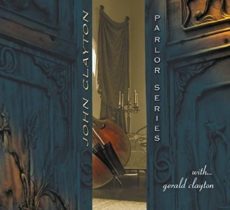
John Lee Clayton Jr. was born on August 20, 1952 in Venice, California. He began seriously undertaking the study of double bass at age 16, studying with bassist Ray Brown. By age 19, he had become a bassist on Henry Mancini’s television series The Mancini Generation. He later graduated in 1975 from Indiana University’s Jacobs School of Music with a degree in bass performance.
He toured with the Monty Alexander Trio and the Count Basie Orchestra before becoming the principal bass in the Amsterdam Philharmonic Orchestra in the Netherlands. Returning to the States after five years and moved towards jazz and jazz composition. Shortly after his return he founded the Clayton-Hamilton Jazz Orchestra with his saxophonist brother Jeff Clayton and drummer Jeff Hamilton. He and his brother also founded The Clayton Brothers which has featured instrumentalists such as Bill Cunliffe and Terell Stafford.
Clayton has composed and/or arranged for The Count Basie Orchestra, Diana Krall, Whitney Houston, Carmen McRae, Nancy Wilson, Joe Williams, Ernestine Anderson, Quincy Jones, Dee Dee Bridgewater, Natalie Cole, Till Bronner, and The Tonight Show Band. He won a Grammy for Instrumental Arrangement Accompanying Vocalist(s): “I’m Gonna Live Till I Die” (Queen Latifah) and was nominated for Best Jazz Instrumental Album, Individual or Group for Brother To Brother by The Clayton Brothers.
From 1999 to 2001 he served as Artistic Director of the Jazz for the Los Angeles Philharmonic program at the Hollywood Bowl, has conducted the All-Alaska Jazz Band and and has been president over the International Society of Bassists. In addition to performing, bassist John Clayton currently serves as Artistic Director for the Lionel Hampton Jazz Festival, Sarasota Jazz Festival, Santa Fe Jazz Party, Jazz Port Townsend Summer Workshop, and Vail Jazz Workshop. He is also an educator, teaching at the University of Southern California Thornton School of Music.

More Posts: bass