

Daily Dose Of Jazz…
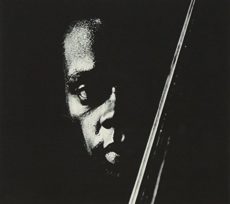
Henry Grimes was born November 3, 1935 in Philadelphia, Pennsylvania and took up the violin at the age of 12, then began playing tuba, English horn, percussion, and finally the double bass in high school. He went on to study at Juilliard, establishing a reputation as a versatile bassist by the mid-1950s.
At a time when bassist Charles Mingus was experimenting with a second bass player in his band, Grimes was the person he selected for the job. At twenty-two he was captured on film in the Bert Stern documentary of the 1958 Newport Jazz Festival’s Jazz on a Summer’s Day and as word spread among the musicians about his extraordinary playing, he ended up playing with six different groups in the festival that weekend: those of Benny Goodman, Lee Konitz, Thelonious Monk, Gerry Mulligan, Sonny Rollins, and Tony Scott.
Gradually growing interested in the burgeoning free jazz movement, Henry performed with most of the music’s important names, including Cecil Taylor, Don Cherry, Steve Lacy, Pharoah Sanders, Archie Shepp, and Albert Ayler. He released one album, The Call, as a trio leader on the ESP-Disk label in 1965 with clarinetist Perry Robinson and drummer Tom Price. By the late 1960s, he moved to California, his career came to a halt and after more than a decade of activity and performance, notably as a leading bassist in free jazz, completely disappeared from the music scene by 1970 and was often presumed dead.it was commonly assumed Grimes had died, having been listed as such in several jazz reference works.
Fortunately Henry was discovered him in 2002 alive but nearly destitute by Marshall Marrotte, a social worker and jazz fan. He was without a bass to play, renting a tiny apartment in Los Angeles, California, writing poetry and doing odd jobs to support himself. He had fallen so out of touch with the jazz world that he was unaware Albert Ayler had died in 1970.
Since his return in 2003 to a hero’s welcome at the free jazz Vision Festival, he has been performing at festivals, teaching lessons and workshops for bassists. William Parker donated a bass nicknamed “Olive Oil” for its distinctive greenish color and with David Gage’s help had it shipped from New York to Los Angeles, and others assisted with travel expenses and arranging performances.
Grimes has made up for lost time and over the course of his career, old and new, he has recorded over 90 sessions and performed with Anita O’Day, Mose Allison, Roy Burns, Andrew Cyrille, Paul Dunmall – Profound Sound Trio, , Walt Dickerson, Shafi Hadi, Roy Haynes, Rolf Kühn, Carmen Leggio, William Parker, Marc Ribot, Pharoah Sanders, Shirley Scott, Marilyn Crispell, Ted Curson, Archie Shepp, Billy Taylor, Cecil Taylor, Marshall Allen, Fred Anderson, Lennie Tristano, McCoy Tyner, Rashied Ali, Bill Dixon, Dave Douglas, Andrew Lamb, Joe Lovano, Roscoe Mitchell, William Parker, High Priest, Wadada Leo Smith, Cecil Taylor John Tchicai, and numerous others.
In the past few years, Grimes has also held a number of residencies and offered workshops and master classes at City College of New York, Berklee College of Music, Hamilton College, New England Conservatory, the University of Michigan at Ann Arbor, the University of Gloucestershire at Cheltenham, Humber College, and more. He has released or played on a dozen new recordings, made his professional debut on a second instrument, the violin, at Cecil Taylor’s side at Lincoln Center at the age of 70, and has been creating illustrations to accompany his new recordings and publications. He has received many honors in recent years, including four Meet the Composer grants and a Lifetime Achievement Award from Arts for Art / Vision Festival.
Bassist, violinist, composer and poet Henry Grimes is now a resident of New York City and has a busy schedule of performances, clinics, and international tours.
Sponsored By


Daily Dose Of Jazz…
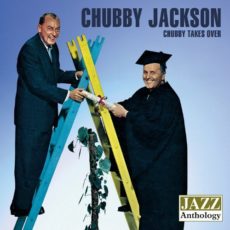
Chubby Jackson was born Greig Stewart Jackson on October 25, 1918 in New York City and began at the age of seventeen as a clarinetist but soon after changed to bass.
In the 1950s, Jackson worked as a studio musician, freelanced, and hosted some local children’s TV shows: Chubby Jackson’s Little Rascals and The Chubby Jackson Show, from 1959 to 1961. He briefly served as the fourth and last emcee of WOR TV’s Looney Tunes Show/The Chubby Jackson Show weekday afternoons, the first six months of 1962.
Jackson performed and/or recorded over the course of his career with Louis Armstrong, Raymond Scott, Jan Savitt, Henry Busse, Charlie Barnet, Oscar Pettiford, Charlie Ventura, Lionel Hampton, Bill Harris, Woody Herman, Gerry Mulligan, Lennie Tristano and others.
Double-bassist Chubby Jackson, who was inducted into the Big Band and Jazz Hall of Fame and is best known for his spirited work both with the Herman bands and as a leader of his own small and big bands, passed away on October 1, 2003 in Rancho Bernardo, California at the age of 84.
Sponsored By
Voices From The Community
More Posts: bass
Daily Dose Of Jazz…
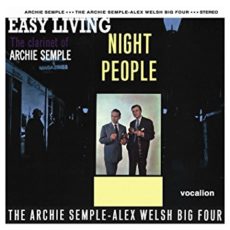
Jack Fallon was born on October 13, 1915 in London, Ontario, Canada and played violin before making double-bass his primary instrument at age 20. During World War II he played in a dance band in the Royal Canadian Air Force, and settled in Britain after his discharge. He joined Ted Heath’s band in 1946 and played bebop in London clubs in his spare time.
1947 saw Fallon playing with Ronnie Scott and Tommy Whittle at the Melody Maker/Columbia Jazz Rally, followed by his working with Jack Jackson, George Shearing and Django Reinhardt. Soon after playing with Reinhardt, he played in a Count Basie ensemble which also included Malcolm Mitchell and Tony Crombie, playing with both of them after leaving Basie. He went on to work together with Hoagy Carmichael and Maxine Sullivan and tour Sweden together with Reinhardt and Stéphane Grappelli.
In the 1950s he accompanied Mary Lou Williams, Sarah Vaughan, and Lena Horne. He was a sideman in the ensembles of Humphrey Lyttelton, Kenny Baker and Ralph Sharon, and was the house bassist at Lansdowne Studios. Working outside of jazz with blues musicians such as Big Bill Broonzy and Josh White, and played with Johnny Duncan’s Blue Grass Boys. As the bass guitar became more popular, Jack became a champion and played both instruments in the latter part of his career.
He became a booker/promoter establishing the booking agency Cana Variety in 1952. Cana booked primarily jazz artists in its early stages but expanded to rock acts by the 1960s, including The Beatles and The Rolling Stones and was requested by the Beatles to play violin on the song Don’t Pass Me By. Bassist Jack Fallon continued to play jazz locally in London, England and in the studios into the 1990s. He published a memoir titled From the Top in 2005, and passed away on May 22, 2006 at age 90 in London, England.

Uplift Someone’s World
#preserving genius
More Posts: bass
Daily Dose Of Jazz…
Lisle Arthur Atkinson was born on September 16, 1940 in New York City and his mother played piano, his father played bass. He began his music lessons on the violin and later switched to bass, attended the High School of Music and Art and the Manhattan School of Music .
Lisle began his career working with Freddy Cole, from 1959 to 1961. From 1962 to 1966 he accompanied Nina Simone and contributed to several of their albums with such Broadway Blues Ballads . The late Sixties saw him performing alongside Norman Simmons and Al Harewood backing Betty Carter and joined with her in 1970 at the Village Vanguard. He has performed and recorded with Michael Fleming, Milt Hinton, Richard Davis, Ron Carter, Sam Jones and with Bill Lee’s New York Bass Violin Choir.
In the early 1970s he worked with Stanley Turrentine, Wynton Kelly, Billy Taylor, Kenny Burrell, Dakota Staton, Frank Foster, Horace Parlan, Grady Tate, Howard McGhee, Johnny Hartman and Joe Williams.
In 1976 he played with Walt Dickerson and Andrew Cyrille. In the early 1980s he worked with Charles Sullivan, Nancy Wilson, Eddie Harris and played 1985 in the formation of Neo Brass Ensemble. In the second half of the 80s he played with Benny Carter in which Grover Mitchell Big Band, with Lee Konitz and in the quintet of Ernie Wilkins and Joe Newman . In 1995 he worked in a trio with Cyrille and James Newton on Good to Go with a Tribute to Bu.
Since 1971, Atkinson taught in the Jazz Mobile project. He also participated in recordings of Richard Wyands, George Coleman , Helen Humes and Hal Singer. In 1979 he recorded as a leader on Storyville Records album Bass Contrabass with Wyands and Al Harewood. Bassist Lisle Atkinson continued to perform and record until he passed away on March 25, 2019, at the age of 78.
Sponsored By
Voices From The Community
More Posts: bass
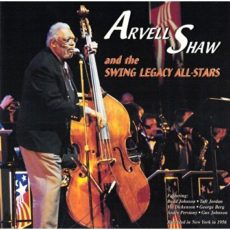
Daily Dose Of Jazz…
Arvell Shaw was born on September 15, 1923 in St. Louis, Missouri and learned to play tuba in high school, but switched to bass soon after. In 1942 he worked with Fate Marable on the Mississippi riverboats, then served in the Navy from 1942 to 1945.
After his discharge Arvell played with Louis Armstrong’s last big band, from 1945 to 1947. He and Sid Catlettthen joined the Louis Armstrong All-Stars until 1950, when he left to study music. He returned to play with Armstrong from 1952 to 1956, and performed in the 1956 musical High Society.
Following this he worked at CBS with Russ Case, did a stint in the Teddy Wilson Trio, recorded with Red Allen in 1957 and played with Benny Goodman at the 1958 Brussels World’s Fair. After a few years living and performing in Europe, he played again with Goodman on a tour of Central America in 1962. From 1962–64 Shaw played again with Armstrong, and occasionally accompanied him through the end of the 1960s.
After the Sixties he mostly freelanced in New York and kept playing until his death. He recorded only once as a leader, a live concert from 1991 of his Satchmo Legacy Band. Double-bassist Arvell Shaw, who recorded with Armstrong and Wilson, passed away on December 5, 2002 in Roosevelt, New York.
Give A Gift Of Jazz – Share
More Posts: bass