

Daily Dose Of Jazz…
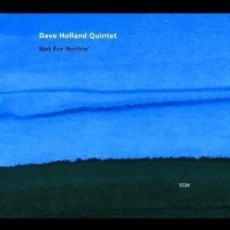
Dave Holland was born on October 1, 1946 in Wolverhampton, England and taught himself to play stringed instruments, beginning at four on the ukelele, then graduating to guitar and later bass guitar. He quit school at the age of 15 to pursue his profession in a top 40 band, but soon gravitated to jazz. After seeing an issue of Down Beat magazine where Ray Brow had won the critics’ poll for best bass player, he went to a record store, and bought a couple of LPs featuring Brown backing pianist Oscar Peterson and also two Leroy Vinnegar albums. He was also drawn to Charles Mingus and Jimmy Garrison.
A move to London in 1964 saw Dave played acoustic bass in small venues and studying with James Edward Merrett, principal bassist of the Philharmonia Orchestra, who taught him to sight read and then recommended he apply to the Guildhall School of Music and Drama. HoBy age 20, he was keeping a busy schedule in school, studios and Ronnie Scott’s Jazz Club. There he played in bands that supported such touring American jazz saxophonists as Coleman Hawkins, Ben Webster and Joe Henderson as well as John McLaughlin, Evan Parker, John Surman, Chris McGregor, John Stevens and Kenny Wheeler.
In 1968, Miles Davis and Philly Joe Jones heard him at Ronnie Scott’s Jazz Club, playing in a combo that opened for the Bill Evans Trio. Jones told Holland that Davis wanted him to join his band, replacing Ron Carter. Two weeks later he was given three days’ notice to fly to New York for an engagement at Count Basie’s nightclub and his two years with Davis began. His first recordings with Davis were in September 1968, and he appears on half of the album Filles de Kilimanjaro with Chick Corea, Wayne Shorter and Tony Williams. He also appeared on the albums In A Silent Way and Bitches Brew that led to his playing more electric bass with a wah-wah pedal as Davis’ music evolved into more electronic and amp-based.
Post Davis, Holland briefly joined the avant-garde jazz group Circle with Chick Corea, Barry Altshul and Anthony Braxton and recorded a few albums. He would go on to work as a leader and as a sideman with many other jazz artists in the 1970s recording and performing with Sam Rivers, Airto Moreira, Steve Grossman, Keith Jarrett Jack DeJohnette, Gary Bartz, Stan Getz, John Abercrombie and Bonnie Raitt. During the 80’s he worked with his first quintet featuring of Steve Coleman, Kenny Wheeler, Julian Priester or Robin Eubanks; formed a trio with DeJohnette and Coleman, and a quartet with Coleman, Kevin Eubanks and Marvin “Smitty” Smith.
From the 1990s onward Holland renewed an affiliation with Joe Henderson to record So Near, So Far, Porgy & Bess and Joe Henderson Big Band. He reunited with Betty Carter for the Feed The Fire recording, Herbie Hancock’s recordings of The New Standard and the Grammy Album of the Year session, River: The Joni Letters.
Dave continued to create new groups, new music and new recordings winning Best Large Ensemble Album Grammys for his work; he has won Down Beat’s Critics Poll for Musician of the Year, Big Band of the Year, and Acoustic Bassist of the Year, the Jazz Journalists’ Association also honored him as Musician and Acoustic Bassist of the Year; and has received the Miles Davis Award at the Montreal Jazz Festival, among numerous other honors and doctorates from Berklee College of Music, New England Conservatory and the Birmingham Conservatory in England..
As an educator, he has served as the artistic director of the Banff Summer Jazz Workshop, has tught workshops and master classes worldwide at universities and music schools, and is President of the UK-based National Youth Jazz Collective. Double bassist, composer and bandleader Dave Holland continues to perform, record and tour.

Give A Gift Of Jazz – Share
More Posts: bass
Daily Dose Of Jazz…
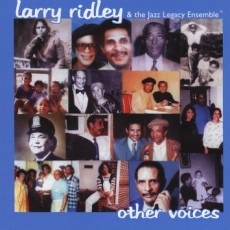
Larry Ridley was born September 3, 1937 in Indianapolis, Indiana and began playing bass professionally while still in high school in the 1950s. He studied at Indiana University School of Music and then would later study at the Lenox School of Jazz. As a college student he would go on to matriculate through be bassist in his mentor’s ensemble, the David Baker Big Band.
Ridley served as chairman of the Jazz Panel of the National Endowment for the Arts (NEA) and was the organization’s National Coordinator of the “Jazz Artists in Schools” Program for five years. He was awarded the Mid Atlanti Arts Foundation’s Living Legacy Jazz Award, the Benny Golson Jazz Award from Howard University, and inducted into the International Association for Jazz Education Hall of Fame,
Over the course of his career Larry has recorded two albums as a leader and performed and/or recorded with Chet Baker, Al Cohn, Dameronia, Red Garland, Dexter Gordon, Stephane Grappelli, Joe Venuti, Roy Haynes, Freddie Hubbard, Jackie McLean, Hank Mobley, James Moody, Lee Morgan and Horace Silver to name a few.
Bassist and music educator Larry Ridley has been involved in jazz education, heading the jazz program at Rutgers University, and Professor of Jazz Bass at the Manhattan School of Music is a Jazz Artist in Residence at Harlem’s New York Public Library/Schomberg Center for Research in Black Culture, and continues to perform with his Jazz Legacy Ensemble.
Give A Gift Of Jazz – Share
More Posts: bass
Daily Dose Of Jazz…
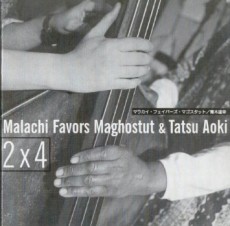
Malachi Favors was born on August 22, 1927 in Lexington, Mississippi. He learned to play the double bass at age fifteen and began performing professionally upon graduating high school. His early performances included working with Dizzy Gillespie and Freddie Hubbard. By 1965, he was a founder of the Association for the Advancement of Creative Musicians and a member of Muhal Richard Abrams’ Experimental Band.
A protégé of Chicago bassist Wilbur Ware, his first known recording was a 1953 session with tenor saxophonist Paul Bascomb. He recorded an LP with Chicago pianist Andrew Hill in 1957. He went on to work with Roscoe Mitchell in 1966 and this group eventually became the Art Ensemble of Chicago.
Malachi worked outside the group, with Sunny Murray, Archie Shepp and Dewey Redman. His most noted records include a solo bass project Nature and the Spiritual in 1977 and Sightsong a duet with Muhal Richard Abrams. In 1994 he played with oudist Roman Bunka at Berlin Jazz Fest where they recorded the German Critics Poll Winner album Color Me Cairo.
Double bassist Malachi Favors, who played in the bebop, hard bop and free jazz genres, passed of pancreatic cancer in 2004 at the age of 76. Though his primary instrument was the double bass, he also plays electric bass, guitar, banjo, zither, gong, and other instruments. At some point in his career he added the word “Maghostut” to his name and because of this he is commonly listed as Malachi Favors Maghostut. He recorded some 46 albums as a member of the Art Ensemble of Chicago and another 24 as a collaborator and sideman.
Put A Dose In Your Pocket
More Posts: bass

Daily Dose Of Jazz…
Mike Davis was born on August 9, 1972 in Rosenberg, Texas not far from Houston. Mike grew up in a small Texas town not far outside of Houston called Rosenberg. Though music was in his blood from a very early age, he didn’t begin seriously playing an instrument until around age 14. His began with the bass and soon was playing in his high school big band as well as in the Symphonic band. He borrowed other instruments from the school and began to practice and experiment with clarinet, trombone, trumpet, French horn, drums and piano. Ultimately the bass was his best fit as he discovered his first great jazz album – Chick Corea’s ‘Now He Sings-Now He Sobs’.
Davis studied bass, theory and jazz with Dave Foster, Eric Late, Shelly Berg and Bruce Dudley. He played gigs in Houston with his first influential peers – Todd Harrison, Mike Wheeler, Harry Shepard, Joe LoCascio, Tony Campisi, Woody Witt, Clark Erickson, Ted Wenglisnski. In 1993 Mike began studying jazz, classical bass, arranging, composition, improvisation, table and North Indian classical music. During this time Mike performed regularly with Dave Zoller, Pete Peterson and the Collection Jazz Orchestra, Allison Wedding, Pablo Mayor and many others. He was a regular member of the bands Little Jack Melody and his Young Turks, Sol Caribe and The Great Escape. Mike also formed his original avant-garde ensemble Sand with guitarist Niclas Höglind, saxophonist Jacob Duncan and drummer Chris Michael.
In 1998 Mike moved to New York City and focused on jazz performance playing with the likes of Lynne Arriale and Steve Davis, Cheryl Pyle, Tom Chang, Rez Abbasi, Dave Phelps, the SoHa Big Band, Jonathan Kreisberg, Dave Wood, Billy Eric and Mike Freeman. He moved into the pop rock and folk genres as a producer, editor and mixer but eventually returned to his own creative endeavors. Launching Tmpf Records he released three albums, I See Better With My Eyes Closed, It Won’t Get Dark and Fortunes and Hat-tricks, Vol. 1, as a leader of a quartet, duo and trio respectively.
Over the years bassist Mike Davis has perform and recorded with Airto Moreira, Norah Jones, Steve Gadd, Ed Thigpen, Doc Cheatham, Bobby Womack, Ellen Greene, Peter Erskine and Poncho Sanchez to name a few. He continues to compose, perform, collaborate and record.
Give The Gift Of Knowledge
More Posts: bass
Daily Dose Of Jazz…
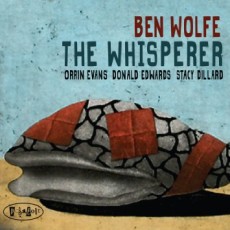
Ben Wolfe was born on August 3, 1962 in Baltimore, Maryland but was raised in Portland, Oregon. Early on in his career he formed a duo with Harry Connick Jr. and went on to be his musical director, recording over a dozen albums and soundtracks. He then joined the Wynton Marsalis Septet, remaining until it disbanded. This engagement was followed being an part of Diana Krall’s touring band, playing on many of her recordings, including the Grammy Award winning project When I Look In Your Eyes.
As a member of The Jazz at Lincoln Center Orchestra (JLCO), Ben has performed with Joe Henderson, Doc Cheatham, Jon Hendricks, Harry “Sweets” Edison, and Billy Higgins as well as recording with Branford Marsalis, James Moody, Eric Reed, Carl Allen, and Benny Green.
Wolfe has been awarded the 2004 New Works: Creation and Presentation Program Grant by Chamber Music America and funded through the Doris Duke Charitable Foundation. As a result he composed his extended composition Contradiction: Music for Sextet. He has also composed the score for Matthew Modine’s film short I Think I Thought.
Double bassist, composer and educator Ben Wolfe currently performs, records and teaches in the Jazz Division of the Juilliard School in New York City.
Put A Dose In Your Pocket
More Posts: bass