

Daily Dose Of Jazz…
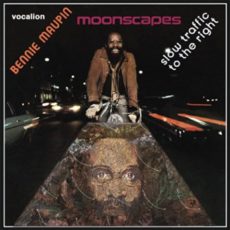
Bennie Maupin was born August 29, 1940 in Detroit, Michigan. He started playing tenor saxophone in high school and attended the Detroit Institute for Musical Arts, while playing locally. He moved to New York in 1963, freelancing with many groups, including ones led by Marion Brown and Pharoah Sanders.
Well known for his playing as a part of Herbie Hancock’s Mwandishi sextet and Headhunters band and for performing on Miles Davis’s seminal fusion record, Bitches Brew. Maupin has collaborated with Horace Silver, Roy Haynes, Woody Shaw, Lee Morgan and many others. He has also performed on several Meat Beat Manifesto albums.
Noted for having a harmonically-advanced, “out” improvisation style, while having a different sense of melodic direction than other “out” jazz musicians such as Eric Dolphy.
Maupin was also a member of Almanac, a group with bassist Cecil McBee, pianist Mike Nock and drummer Eddie Marshall. He has recorded a half dozen albums as a leader and another three dozen as a sideman with John Beasley, Marion Brown, Mike Clark, Miles Davis, Jack DeJohnette, Eddie Henderson, Andrew Hill, Darek Oles, Lonnie Smith, McCoy Tyner, Lenny White, Patrick Gleeson and Jim Lang.
Multireedist Bennie Maupin, who plays various saxophones, flute and bass clarinet, failed to catch on as a bandleader, thus maintained a low profile during the past 15 years, until emerging in 2006 with the critically acclaimed Penumbra followed two years later Early Reflections on the Cryptogramophone label, then on Vocalion with Slow Traffic To The Left, Moonscapes. He continues to perform and tour.
Sponsored By


Daily Dose Of Jazz…
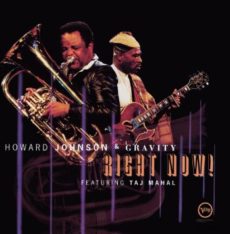
Howard Lewis Johnson was born August 7, 1941 in Montgomery, Alabama. In the 1960s he worked with Charles Mingus, Hank Crawford, Rahsaan Roland Kirk, Archie Shepp, and Hank Mobley on the album A Slice of the Top.
He began a long association with Gil Evans in 1966, arranger of a horn section that backed Taj Mahal on Mahal’s 1971 live album, The Real Thing, which featured three other tubists/multi-instrumentalists, Bob Stewart, Joseph Daley and Earl McIntyre. Howard played with The Band on their Rock of Ages live album, The Last Waltz and into the late 2000s with The Band drummer, Levon Helm’s Band. During the 1970s, he was the band conductor of the Saturday Night Live Band; he can be seen in several musical numbers, including playing bass saxophone in the King Tut sketch.
He has also led three tuba bands, collaborated with Tomasz Stanko, Substructure, Tuba Libre and GRAVITY, perhaps his best-known band. In 1981 he performed at the Woodstock Jazz Festival, held in celebration of the tenth anniversary of the Creative Music Studio.
He had a minor role in the 1983 film, Eddie and the Cruisers as Wendell’s replacement and also appeared in episodes of Matlock and Hill Street Blues. Johnson famously accompanied James Taylor in a performance of Jelly Man Kelly on Sesame Street in 1983, and also on tin whistle when Taylor sings to Oscar The Grouch.
Tubist, baritone saxophonist, arranger, conductor and bandleader Howard Johnson, who also plays bass clarinet, trumpet and other reed instruments, continues to perform, record and tour.

Dose A Day-Blues Away

Daily Dose Of Jazz…
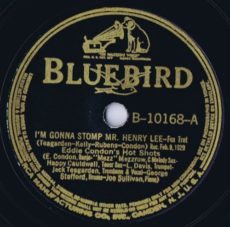
Happy Caldwell was born Albert W. Caldwell on July 25, 1903 in Chicago, Illinois. He began on clarinet at age 16, playing in the Eighth Illinois Regimental Band and soon after in an Army band. He studied to be a pharmacist but eventually gave up his medicinal studies for jazz.
He worked with Bernie Young early in the 1920s in Chicago, where he recorded for the first time in 1923 and began doubling on tenor saxophone. In the middle of the 1920s he played with Mamie Smith’s Jazz Hounds, Bobby Brown’s Syncopaters, Elmer Snowden, Billy Fowler, Thomas Morris, Willie Gant, and Cliff Jackson. By 1929 he had recorded with Louis Armstrong.
The 1930s saw him playing with Vernon Andrade, Tiny Bradshaw, and Louis Metcalfe, and leading his own band, the Happy Pals. He played at Minton’s in New York City for a short time before moving to Philadelphia, where he played with Eugene Slappy and Charlie Gaines. Returning to New York he put together a new ensemble in the Forties and continued to work in small settings for several decades. In the 1970s he played with Jimmy Rushing, including on international tours. Never leading his own sessions, clarinetist and tenor saxophonist Happy Caldwell, sometimes misspelled as Cauldwell, passed away on December 29, 1978 in New York City at age 75.
Take A Dose On The Road
Daily Dose Of Jazz…
Omer Victor Simeon was born on July 21, 1902 in New Orleans, Louisiana, the son of a cigar maker. His family moved to Chicago, Illinois but he learned to play the clarinet from the New Orleans master Lorenzo Tio, Jr., and started playing professionally in 1920.
He worked in Chicago and Milwaukee, Wisconsin with various bands, including Jimmy Bell’s Band and Charlie Elgar’s Creole Orchestra. Starting in 1926 he began playing with Jelly Roll Morton, and made a well regarded series of recordings with Morton’s Red Hot Peppers and smaller groups.
By 1927 he was a member of King Oliver’s Dixie Syncopators with whom he moved to New York City. After time back in Chicago with Elgar, he joined Luis Russell in Manhattan, New York then again returned to Chicago in 1928 to play with the Erskine Tate Orchestra. 1931 saw him beginning a 10-year stint with Earl Hines.
In the 1940s he worked with Coleman Hawkins and Jimmie Lunceford. After some recordings with Kid Ory’s band, he spent most of the 1950s with the Wilbur de Paris band, including a tour of Africa in 1957. In 1954 he played saxophone in a duet on Louis Armstrong’s popular dixieland recording of Skokiaan.
Clarinetist Omer Simeon, who taught music and also played soprano, alto, and baritone saxophones and bass clarinet, passed away of throat cancer on September 17, 1959 in New York City at the age of 57.

Daily Dose Of Jazz…
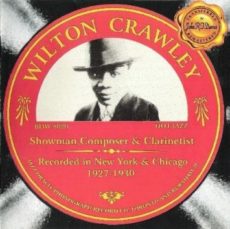
Wilton Crawley was born on July 18, 1900 in Virginia with his family moving to Philadelphia, Pennsylvania. Some of his musical influences may be traced back to Virginia and its many farms and barnyards with cackles and clucks like a chicken, oinks like a pig, and neighs like a goat that he . It was in Philadelphia that along with his reed-playing brother Jimmy that they formed their first band. During the ’20s and ’30s, the clarinetist found success with a variety act featuring his singing and playing. Though not the most versatile musician he had a sound and style that utilized weird speech-like sound effects and extended use of slap tonguing, sometimes filling out whole lines of a solo with obnoxious little pops.
Between 1927 and 1930 Wilton recorded his own compositions for OKeh and Victor Records, working with Paul Barbarin, Lonnie Johnson, Henry “Red” Allen, Pops Foster, Luis Russell, Jelly Roll Morton, Eddie Heywood and Eddie Lang among others. After splitting with Morton in the 1930s he toured England and after the death of his father and his friend guitarist Eddie Lang, his personal problems derailed his career and slipped into oblivion.
His most famous pieces include Crawley Clarinet Moan, She’s Forty With Me, Put a Flavor to Love, Futuristic Blues and Irony Daddy Blues. Much of this music reveals his attempts to recreate jazz sounds from other instruments, particularly the muted trumpet effects that might have been done by an artist such as Bubber Miley. While some of this sound effect activity have may influenced Anthony Braxton, he may have more in common with the clarinetists who worked with Spike Jones or even later rock showmen like Arthur Brown. Some of the membership in his ensembles such as Wilton Crawley & His Orchestra or the Washboard Rhythm Kings remains unknown, however, banjoist Johnny St. Cyr and blues guitarist Lonnie Johnson show up in his bands.
It is unfortunate that many of the recordings originally done under his own name have all been reissued in various Jelly Roll Morton retrospectives, as he went on to become a lasting legend of early jazz while the clarinetist went into obscurity. Clarinetist, composer, contortionist and vaudevillian Wilton Crawley passed away in 1948 in Maryland.
Sponsored By

Voices From The Community
More Posts: clarinet