

Daily Dose Of Jazz…
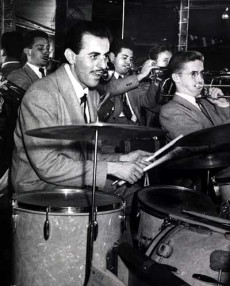
Arthur Mardigan was born February 12, 1923 in Detroit, Michigan. As early as 1942 age 19 he was playing drums with Tommy Reynolds prior to a two-year stint in the Army. After his discharge he worked extensively on the New York City jazz scene, playing and recording with George Auld, Charlie Parker, Dizzy Gillespie, Dexter Gordon, Kai Winding, Wardell Gray and Fats Navarro.
In the 1950s he went on tour with Woody Herman and Pete Rugulo, he recorded as a leader of a sextet that included Al Cohn in 1954 for The Jazz School, recorded with Stan Getz also in 1954 and then moved back to Detroit. There he played with Jack Brokensha in 1963, returning to work with Getz near the end of his life. Drummer Art Mardigan passed away on June 6, 1977 in his hometown of Detroit.
More Posts: drums
Daily Dose Of Jazz…
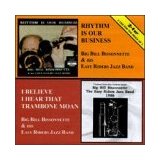
Big Bill Bissonnette was born February 5, 1937 in Bridgeport, Connecticut who became a jazz trombonist and producer. A strong advocate of New Orleans jazz played by Black musicians in the Sixties he led his group The Easy Riders Jazz Band.
During that period Bill also established his own Jazz Crusade label and organized northern tours for such veterans as Kid Thomas Valentine, George Lewis and Jim Robinson. After a period off the jazz scene, Bill successfully published of his 1992 memoirs, “The Jazz Crusade” that told many stories about New Orleans’ musicians.
Bissonnette reactivated his label and began to play trombone again. He has produced and recorded over 100 jazz sessions for his Jazz Crusade label, appearing as trombonist or drummer on over 50 recording sessions of New Orleans jazz.
He has spent much of the 1990s documenting the British jazz scene with his “Best of the Brits” CD series. He published a newsletter several times a year. Trombonist, drummer, producer, bandleader and writer retired from music and now resides in Concord, North Carolina in 2006.
More Posts: bandleader,drums,writer
Daily Dose Of Jazz…
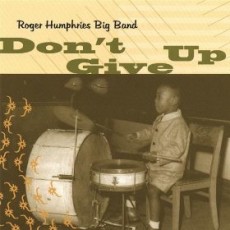
Roger Humphries was born January 30, 1944 in Pittsburgh, Pennsylvania and began playing drums at age four, and went professional at age 14. He led an ensemble at Carnegie Hall at age 16. Early in the 1960s, he began touring with jazz musicians; one of his more prominent gigs was in a trio with Stanley Turrentine and Shirley Scott in 1962.
In 1964, he played with Horace Silver on Song For My Father, following this Humphries drummed for Ray Charles. He led his own band “R. H. Factor” in the 1970s, and led ensembles under other names into the Nineties, recording under his own name in 1993, 2003 and 2011. He held teaching positions at the University of Pittsburgh and the Pittsburgh High School for the Creative and Performing Arts.
Humphries’s list of credits in jazz, R&B, and pop is extensive playing with Lee Morgan, Grant Green, Billy Taylor, Benny Green, Coleman Hawkins, Clark Terry, Dizzy Gillespie, Jack McDuff, Jon Faddis, Joe Williams, Herbie Mann, Gene Harris, Milt Jackson, Slide Hampton and the list goes on. Drummer and big band leader Roger Humphries continues to perform.
More Posts: drums
Daily Dose Of Jazz…
Marilyn Mazur was born on January 18, 1955 of Polish and African American descent in New York but grew up on Denmark from the age of six. Primarily a self-taught percussionist and drummer, she got a degree in percussion at the Royal Danish Academy of Music.
From 1975, Mazur has worked as a percussionist with various groups, among others, the group Six Winds with Alex Riel. She has performed with such notables as Niels-Henning Orsted Pederson, Jan Garbarek, Miles Davis, Gil Evans, Wayne Shorter Jeanne Lee and Palle Mikkelborg to mention a few.
By 1989, Marilyn founded her band Future Song, a sextet with her husband Klavs Hovman. A second project, Percussion Paradise, brought together percussionists Benita Haastrup, Lisbeth Diers and Birgit Løkke.
Marilyn Mazur is also a composer, pianist, dancer and bandleader and has been selected by Down Beat in 1989, 1990 and 1995 as a “percussion talent deserving wider recognition”. In 2001, she was awarded the Jazzpar Prize, the world’s largest international jazz prize. She continues to record, perform and tour.
More Posts: bandleader,drums
Daily Dose Of Jazz…
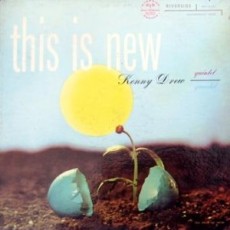
Wilbert Granville Thodore Hogan Jr., better known as G. T., was born January 16, 1929 in Galveston, Texas. He started out playing saxophone into high school but then switched to the drums. He started playing professionally with Earl Bostic from 1953-55 prior to his move to New York City.
During this period G. T. worked with Randy Weston, recorded with Elmo Hope and was closely associated with Bud Powell during his Parisian sojourn. Over the course of his career he worked with Kenny Drew, Walter Bishop Jr., Ray Charles, Kenny Dorham, Cecil Payne, Wilbur Ware, Julian Priester and Hank Crawford.
A brilliant drummer whose backbeat personified the kind of rhythmic approach that easily made Hogan recognizable as a Texas drummer and whose magnificence shone when teamed with an individualistic pianist. By the 70s he became less active in music but continued into the 90s when he began to suffer from emphysema. Recording on more than 50 albums and credited in a variety of ways as Granville Hogan, Wilbert Hogan, G. T. Hogan, W. T. Hogan and Wilbert G. T. Hogan, the drummer passed away on August 7, 2004 in San Antonio, Texas.
More Posts: drums