

Daily Dose Of Jazz…
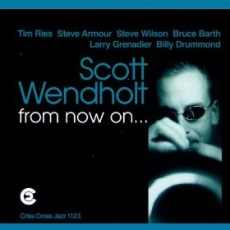
Scott Wendholt was born on July 21, 1965 in Denver, Colorado. He first picked up the trumpet in the third grade and began improvising in the fifth. Linda Walker and Ed Barnes, were two teachers he was inspired by, the latter ran a citywide elementary school group that played some Blues and a reasonable facsimile of jazz and provided at least some tools for jazz improvisation.
His major influences at the time were Al Hirt, Chuck Mangione, and Spyro Gyra until the ninth grade, when Greg Gisbert, a classmate and trumpeter, hipped him to Art Blakey’s “Straight Ahead,” featuring Wynton Marsalis and he started taking trumpet lessons in high school. Scott went on to study At Indiana University in David Baker’s Jazz Studies Program earning his bachelor degree.
A move to Cincinnati was fortuitous for the young trumpeter getting on the scene, landing him at the King’s Island amusement park with a Rock-and-Roll band. From there he went to work with the Blue Wisp Big Band, and working sideman gigs. It was a good training ground to be a leader, for learning appropriate tunes for small group gigs and learning how to hang out.
In 1991 Scott put together a quartet to play at Augie’s, a Harlem bar near Columbia University and the group lasted three and a half years. Then 1992, saw Vincent Herring hiring him for his first real legitimate sideman gig. Then a year later in 1993 Scott recorded his debut album The Scheme of Things on the Criss Cross Jazz label. He would go on to work inside the big band culture in New York City with the likes of Toshiko Akiyoshi, Bob Mintzer, the Maria Schneider Orchestra, the Carnegie Hall Big Band and the Vanguard Jazz Orchestra.
Wendholt has worked with Gisbert, Javon Jackson, John Gunther, Ralph Bowen, Chris Botti, Don Braden, Rim Ries, Roberta Piket, Bobby McFerrin, Dwayne Burno, Mike Abbott, Al DiMeola, Lounge Lizards, Sophie B. Hawkins, Peter Abbott, Brad Leali, John Fedchock, Woody Herman, Ira Coleman, Billy Drummond, Eric Alexander, Anthony Wonsey, Bob Mintzer, Bill Cunliffe, Phil DeGreg, Vincent Herring, Jim McNeely, Mingus Big Band, Buddy Rich and the list goes on and on.
Not one to reside in a single musical genre, the Mile High City trumpeter and flugelhorn player Scott Wendholt continues to perform, record and compose.

Give The Gift Of Knowledge
More Posts: flugelhorn,trumpet
Daily Dose Of Jazz…
Miles Dewey Davis III was born May 26, 1926 in Alton, Illinois into an affluent family, father a dentist and his mother a blues pianist. They owned a substantial ranch in the Delta region of Pine Bluffs, Arkansas. When he was one years old the family moved to East St. Louis and it was between there and Pine Bluffs that his appreciation for music came out of the Black church.
His musical studies began at 13, when his father gave him a trumpet and arranged lessons with local musician Elwood Buchanan. He learned to play with out vibrato which gave him his clear signature tone. By age 16, Davis was a member of the music society and, when not at school, playing professionally first at the local Elks Club. At 17, he spent a year playing in Eddie Randle’s band, the Blue Devils and during this time, Sonny Stitt tried to persuade him to join the Tiny Bradshaw band, then passing through town. His mother insisted that he finish his final year of high school and he graduated from East St. Louis Lincoln High School in 1944.
In 1944, the Billy Eckstine band visited East St. Louis with Dizzy Gillespie and Charlie Parker in tow. Miles was brought in on third trumpet for a couple of weeks because the regular player, Buddy Anderson, was out sick. Even after this experience, once Eckstine’s band left town, Davis’ parents were still keen for him to continue formal academic studies.
However, In the fall of 1944, following graduation from high school, Davis moved to New York City to study at the Juilliard School of Music. His arrival marked a new chapter and he spent his first weeks attempting to contact Charlie Parker, against all advice even from Coleman Hawkins. Finally locating his idol, he became one of the cadre of musicians who held nightly jam sessions at Minton’s Playhouse and Monroe’s, both Harlem nightclubs. He was among future leaders of bebop Fats Navarro, Freddie Webster, J. J. Johnson as well as the established Thelonious Monk and Kenny Clarke.
Dropping out of Juilliard after asking permission from his father, Miles began playing professionally, performing in several 52nd Street bands led by Coleman Hawkins, and Eddie Lockjaw Davis. By 1945, he entered a recording studio for the first time, under the leadership of Herbie Field. This was the beginning of his many sideman recordings until 1946 when he recorded as a leader with the Miles Davis Sextet plus Earl Coleman and Ann Hathaway. Though a member of the groundbreaking Charlie Parker Quintet, he can be heard accompanying singers. He would play with Max Roach, Al Haig, Sir Charles Thompson, Duke Jordan, Curley Russell, Tommy Potter and Leonard Gaskin. This gave him numerous recording sessions and the beginning of what would become his cool jazz style.
After Parker’s breakdown and committal to Camarillo State Mental Hospital while on tour in Los Angeles, Davis, found himself stranded. He roomed and collaborated for some time with Charles Mingus, got a job with Billy Eckstine and eventually got back to New York. He would freelance and sideman in some of the most important combos on the New York jazz scene.
By 1948 Davis grew close to Canadian composer and arranger Gil Evans and his basement apartment had become the meeting place for several young musicians and composers such as Davis, Roach, John Lewis and Gerry Mulligan who were unhappy with the bebop scene. Together they created the tuba band sound that included French horn and tuba in the nonet line-up. The objective was to achieve a sound similar to the human voice, through carefully arranged compositions and by emphasizing a relaxed, melodic approach to the improvisations.
A contract and recording sessions between 1949-1950 with Capitol Records brought about the release of Birth Of The Cool in 1956, which gave its name to the cool jazz movement. Though met with resistance, years later it was co-opted by white musicians like Mulligan and Dave Brubeck and the critics who hailed it as a success.]
By the first half of the 1950s Davis was on tour in Paris with Tadd Dameron, Kenny Clarke and James Moody, and living the life of a black musician abroad. He was involved with French actress and singer Juliette Greco for a time and then returned to the States to be underappreciated by the critics and a liaison with the mother of his two children unraveled. This is when his heroin addiction began, with subsequent arrests. But iwas during this period that he became acquainted with Ahmad Jamal’s music and his elegant approach and use of space influenced him deeply and he definitely severed all ties to bebop.
Through the decade he would record for Prestige, work with Art Blakey, Sonny Rollins and John Coltrane, began using the Harmon mute creating a signature sound and phrasing. The most important Prestige recordings of this period were Dig, Blue Haze, Bag’s Groove, Miles Davis and the Modern Jazz Giants and Walkin’. This placed him in the center of the hard bop movement. It also hailed his period of withdrawal, being distant, cold, contempt for critics, and his quick temper.
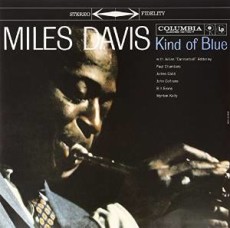
His first great quintet included John Coltrane, Red Garland, Paul Chambers and Philly Joe Jones. This group brought forth such titles as Relaxin’, Steamin’, Workin’ and Cookin’ all with The Miles Davis Quintet. From 1957 to 1963 Davis recorded a series of albums with Gil Evans playing often trumpet and flugelhorn on Miles Ahead, Porgy and Bess, Sketches of Spain, and Quiet Nights. In 1959 with Bill Evans, Wynton Kelly, John Coltrane, Cannonball Adderley, Paul Chambers and Jimmy Cobb he recorded his magnus opus Kind Of Blue.
Through the Sixties he recoded with a number of musicians, Hank Mobley, Sonny Stitt, Jimmy Heath, George Coleman, Ron Carter, Tony Williams, Herbie Hancock and Sam Rivers. But it was Hancock, Williams, Carter and Wayne Shorter that became the nucleus of his second great quintets.
He would work with Chick Corea and Dave Holland, enter into his electric period playing with Joe Zawinul, John McLaughlin, Jack DeJohnette, Airto Moriera, Bennie Maupin and recorded the landmark Bitches Brew. He would create the Cellar Door Band before retiring in 1975. By 1979, he overcame his cocaine addiction and regained his enthusiasm for music and put together new smaller combos playing up until his death.
Miles Davis is regarded as one of the most innovative, influential and respected figures in the history of music. He has received numerous Grammy Awards, and according to the RIAA, the album is the best-selling jazz album of all time, having been certified as quadruple platinum (4 million copies sold. In 2009, the US House of Representatives voted 409–0 to pass a resolution honoring the album as a national treasure. On September 28, 1991 he passed away in Santa Monica, California.
Dose A Day – Blues Away
More Posts: flugelhorn,trumpet
Daily Dose Of Jazz…
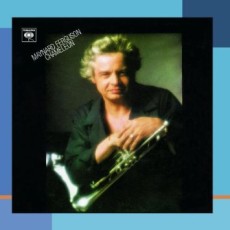
Maynard Ferguson was born Walter Maynard Ferguson on May 4, 1928 in Verdun, Quebec, Canada. Encouraged by his musician parents he was playing piano and by the age of four. A child prodigy violinist, at nine he heard a cornet and ask for one. By thirteen, he was heard soloing regularly with the Canadian Broadcasting Corporation Orchestra, featured on “Serenade for Trumpet in Jazz, and won a scholarship to the Conservatoire de Musique du Quebec a Montreal where he studied from 1943 through 1948.
Dropping out of Montreal High School at 15 to pursue his music career ore actively, Ferguson began playing in various dance bands and then took over his saxophonist brother Percy’s band. He played around Montreal and became an opening act for touring bands. This brought him to the attention of many bandleaders in the U.S. and he started getting offers to cross the border.
Maynard eventually relocated to the United States in 1948, intent on joining Stan Kenton’s organization. However, it had just disbanded so he started playing with Boyd Raeburn, Jimmy Dorsey and Charlie Barnet’s bands. When Barnet retired he went to work with Stan Kenton’s newly formed 40-piece Innovations Orchestra in 1950. For three years running, 1950, 1951, and 1952, he won the Down Beat Readers’ Poll as best trumpeter. In 1953, become a session player for Paramount Pictures, soon becoming the first-call player and appeared on 46 soundtracks, and to get around the studio contract that prevented him from playing jazz clubs he would appear under aliases Tiger Brown, Foxy Corby and others.
By 1956, Ferguson became the leader of the Birdland Dream Band, a 14-piece all-star big band formed by Birdland’s owner Morris Levy. He has played with Slide Hampton, Don Ellis, Don Sebesky, John Bunch, Joe Zawinul, Joe Farrell, Jaki Byard, Nino Tempo and others as well as arrangers Bob Brookmeyer, Jimmy Guiffre, Bill Holman and Marty Paich to name a few.
He went on to guest with the New York Philharmonic, then moved to the Hitchcock estate with Timothy Leary, Ram Dass and their Harvard community in 1963 and experimented with LSD, psilocybin and other psychedelic drugs for spiritual awakening. After three years he moved to India, engaged with a guru and established the Sri Sathya Sai Institute of Higher Learning Boys Brass Band and taught for several years.
By 1969, Maynard was in England, signed with CBS Records, formed a big band with British musicians and performed on television then returned to debut his new band in New York. He would recruit young talent from jazz programs from institutions like Berklee College of Music, North Texas State University and the University of Miami and targeting young audiences.
For the next couple of decades he would play the Olympics, work with large ensembles, formed the Big Bop Nouveau, backed vocalists such as Diane Schuur and Michael Feinstein, performed, toured and recorded big band albums. Ferguson has been an influence in the worlds of big band, swing, bebop, cool jazz, Latin, jazz-rock, fusion classical and opera. As an educator he has conducted scores of master classes with amateurs and professional trumpeters over the course of his career. In addition to trumpet he plays the flugelhorn, valve trombone, baritone horn and French horn.
He has been inducted into the Down Beat Jazz Hall of Fame, is a member of Kappa Kappa Psi, honorary member of Phi Mu Alpha’s Xi Chi Chapter, received Phi Mu Alpha Sinfonia Charles E. Lutton man of Music Award, has an honorary doctorate from and The Maynard Ferguson Institute of Jazz Studies at Rowan University, and his extensive memorabilia is housed at the Sherman Jazz Museum in Texas. He passed away on August 23, 2006 at age 78 in Ventura, California.
Take A Dose On The Road
More Posts: flugelhorn,saxophone,trumpet,valve trombone
Daily Dose Of Jazz…
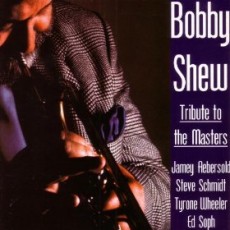
Bobby Shew was born Robert Shew on March 4, 1941 in Albuquerque, New Mexico. He began playing the guitar at the age of eight but by ten switched to the trumpet. By thirteen he was playing at local dances with various groups and at fifteen put together his own group. This gave him the opportunity to play dances, concerts, jazz coffee houses and dinner clubs.
After leaving college in 1960 he was drafted into the U.S. Army and played trumpet with the NORAD band in Colorado Springs and on tour. After leaving the Army he joined the big bands of Tommy Dorsey and Woody Herman, Della Reese and followed by the Buddy Rich Big Band in the mid to late 1960s.
By 1972 Bobby had moved from Las Vegas to Los Angeles where he became a top shelf studio musician. He also played with some of the top big bands of the era through the end of the 1970s: Toshiko Akiyoshi, Lew Tabackin, Louis Bellson, Maynard Ferguson and numerous others. In addition to playing on several notable Big Band recordings starting in the 1960s, he recorded several albums as leader starting with his 1978 debut recording Telepathy.
Shew has held the position of Trumpet chairman of the International Association of Jazz Educators, has authored numerous books on trumpet performance and technique, andis on the Board of Directors of the International Trumpet Guild.
Trumpeter and flugelhorn player Bobby Shew, now living near his hometown of Albuquerque, spends time mentoring jazz musicians in the area and leading the local Albuquerque Jazz Orchestra. As an educator he is a member of the faculty at the Skidmore Summer Jazz Institute, a two-week residential jazz workshop primarily for high school students, located in Saratoga Springs, New York. He continues to perform, record and tour.
Inspire A Young Mind
More Posts: flugelhorn,trumpet
Daily Dose Of Jazz…
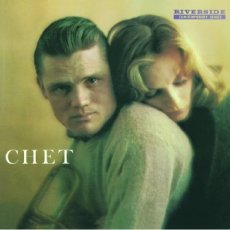
Chet Baker was born Chesney Henry Baker, Jr. on December 23, 1929 in Yale, Oklahoma. Raised in the musical household of a professional guitar player, he began his musical career singing in church, and then introduced to the trombone, but proved to large it was replaced with the trumpet.
Baker received some musical education at Glendale Junior High School, but left school at age 16 in 1946 to join the Army, serving in the 298th Army band. After his discharge in 1948, he studied theory and harmony at El Camino College in Los Angeles, dropped out in his second year and re-enlisting joined the army band at the Presidio but was soon spending time in San Francisco jazz clubs such as Bop City and the Black Hawk. Once again discharged he pursued his career as a professional musician.
Chet’s earliest notable professional gigs were with saxophonist Vido Musso band and with Stan but earned much more renown in 1951 when Charlie Parker chose him to play a series of West Coast engagements. In 1952, Baker joined the Gerry Mulligan Quartet, which was an instant phenomenon due to contrapuntal touches.
With Mulligan serving a sentence on drug charges, Pacific Jazz picked up Baker in 1956 releasing Chet Baker Sings to the consternation of purists, but it increased his profile. He would go on to perform and record with Russ Freeman, Carson Smith, Joe Mondragon, Jimmy Bond, Art Pepper and Shelley Manne among others, win the Downbeat Jazz Poll, make his acting debut in Hell’s Horizon, front his own combos, and become an icon in the West Coast cool jazz movement.
However successful Baker became his lifelong battle with heroin brought a decline to his musical career, pawning instruments, serving prison sentences, encountering expulsion and deportation from European countries, savagely beaten and losing his teeth and ability to play. Chet’s comeback came with being fitted with dentures, relocating to New York and Europe, playing with Philip Catherine, Phil Markowitz, Stan Getz and returning with his most prolific recording era between 1978 and 1988, though on mostly small European labels that never reached wide audience attention.
Chet Baker, composer, flugelhornist and trumpeter who popularity was due in part to his matinee-idol good looks and well publicized drug habit, and who was associated most prominently with his rendition of My Funny Valentine and his documentary Let’s Get Lost, passed away on May 13, 1988 in Amsterdam, Netherlands.
Take A Dose On The Road
More Posts: flugelhorn,trumpet,vocal